Sunday, August 11, 2013

Lots of Planets Have a Scotland: A Doctor Who Book Report on Peter Capaldi


At age 14, Peter Capaldi started writing in to Doctor Who frequently asking for photos.  At his announcement special, they read one of the letters he wrote in after the 10th anniversary special saying he hoped that there would be a 25th anniversary special in another 15 years.  But when he wrote in demanding to be the head of the Doctor Who fan club and was told the post was filled, he both started harassing the BBC and the current head of the fan club.  The producer's secretary, Sarah Newman, became so enraged that she was once recalled saying "I wish the Daleks or someone would exterminate him or something to that effect."

Now he's the fucking Doctor!

Who is Peter Capaldi?  I've been asking myself that since his announcement as the 12th Doctor.  As I've gone on a Peter Capaldi marathon since the announcement, I've learned a few things about him.  He doesn't have a lot of leading roles in his long career, but he does seem to have been nominated for awards in the few that he does have.  That's a pretty good sign of an underappreciated actor.  In fact, it's how you could describe most classic series Doctors in their pre-Doctor Who careers:  someone who has worked tirelessly in the background, only to get a few good parts here and there.  People like this are usually known as "character actors," but, to be honest, character actors usually play the same kind of character in every single thing they play.  But that's not what Peter Capaldi is.  Peter Capaldi has the one attributes I admire most in any actor, the attribute I judge most of my fellow slam poets by, the attribute I judge my favorite musical artists by, and the attribute that makes me so admire Steven Moffat:

Range!

Peter Capaldi has played a sniveling middle man (John Frobisher in Torchwood: Children of Earth), a fallen angel (The Angel Islington in Neverwhere), and--most famously--a hypermasculine bulldog (Malcolm Tucker in The Thick of It/In the Loop), plus a ton of other very diverse roles.  And he can handle each one with the same level of talent.  When watching him as Frobisher in in Torchwood and watching him as Tucker in The Thick of It/In the Loop, you can forget that he's the same person and, if you watched the two with a long gap in between them, you might not even remember him as his character in the other one.  He transforms into very different people in those two roles, and not just because he can slip easily back and forth between a Scottish accent that's even thicker than the one he has in real life and a basic British accent.

A Dashing Doctor?

Like I said in the last blog I posted, we've had older Doctors, and we've had attractive Doctors, but we've never really had an attractive older Doctor.  In fact, and I can't believe this is true, but, depending on when you count from (his first appearance as the Doctor or his first full episode as the Doctor) Peter Capaldi will actually be either the second oldest or the oldest person to play the Doctor, based on their exact age at the time they debuted in the role.  The difference between the age William Hartnell was when he debuted as the Doctor and Peter Capaldi's age right now is a matter of months, not years.  And yet clearly, Capaldi has aged much better than Hartnell ever did:

It's like Hartnell is looking into a magical mirror that shows you what you wish you looked like.

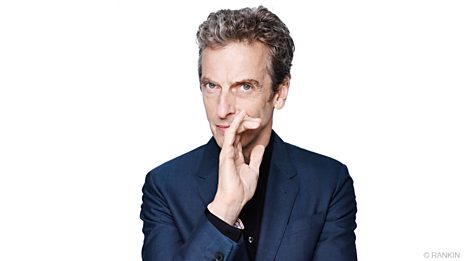
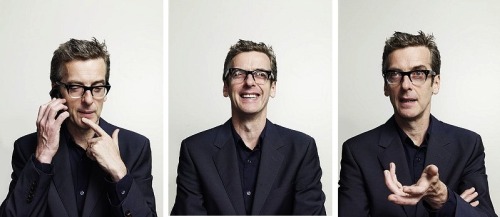
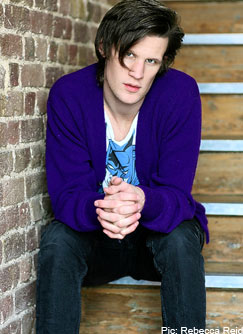
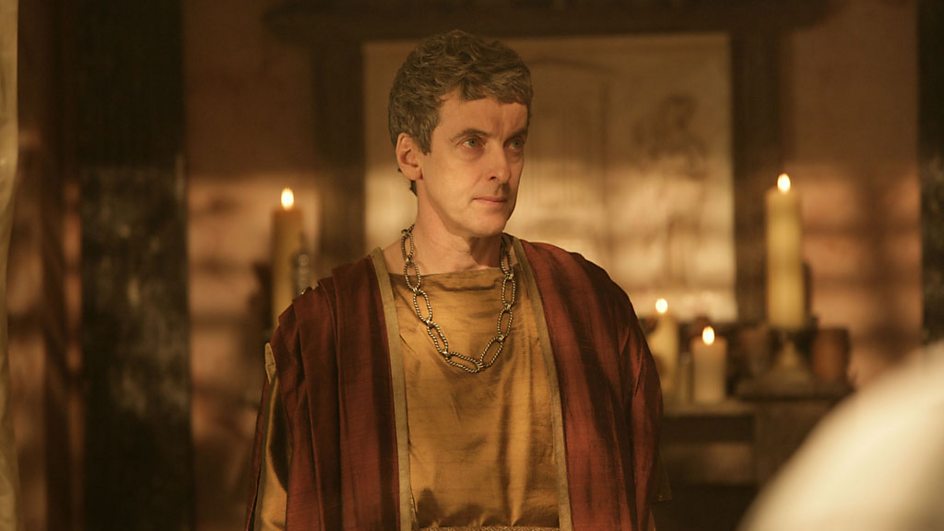
The following are pictures of Peter Capaldi looking very dashing and handsome:


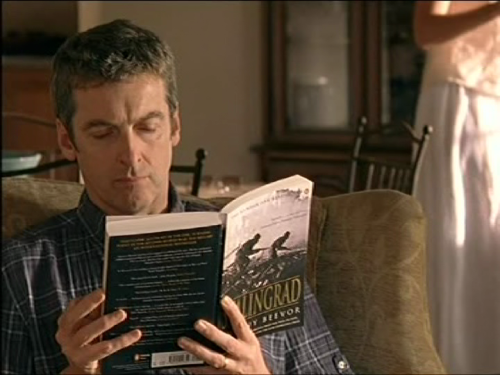
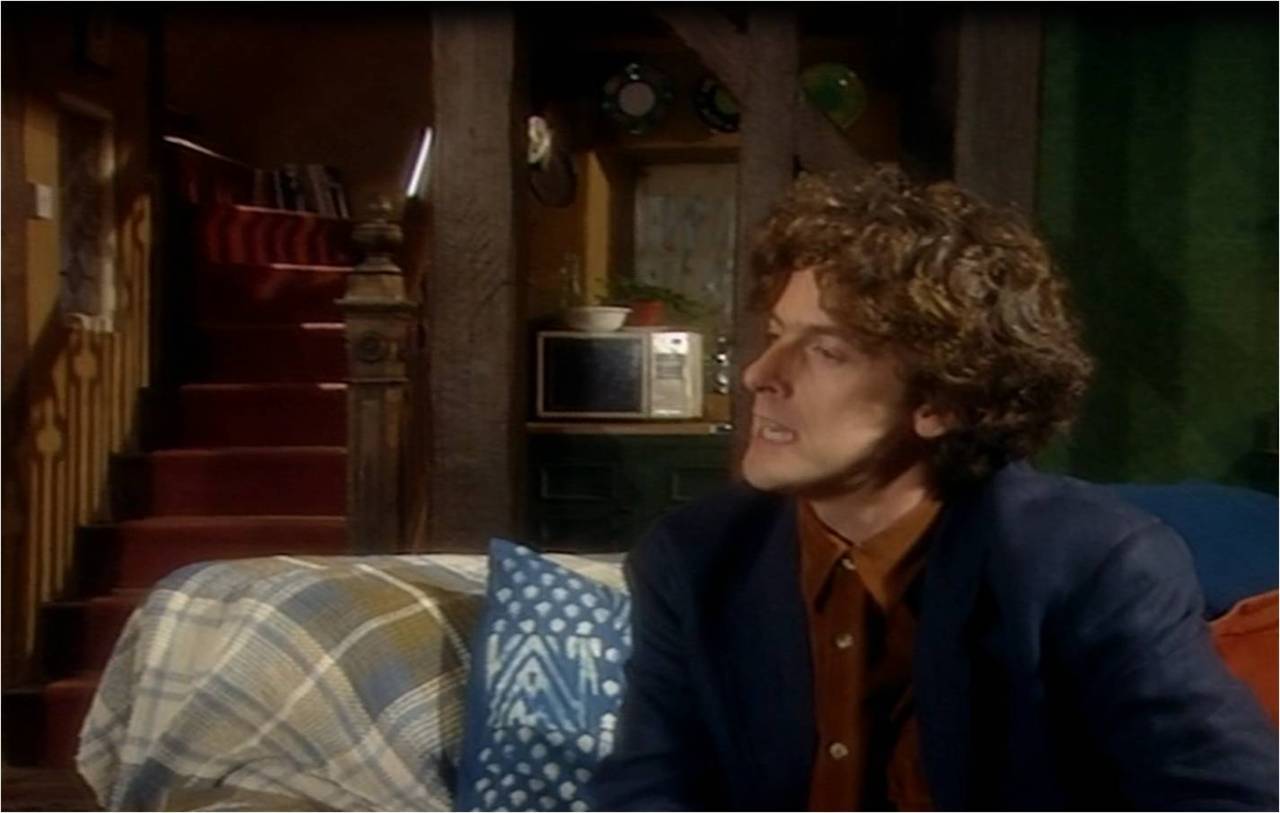
And now these are some pictures of Capaldi looking like a frumpy doofus:
Some of these pictures are thanks to what I swear to God is a real Tumblr that I did not create:
Fuck Yeah Peter Capaldi's Hair
Now, what's the difference between the pictures on the top and the pictures on the bottom?  Capaldi isn't in character for anything in the pictures on top.  Peter Capaldi can be a quite handsome man, when he isn't playing some sort of funny-looking loser.  So, obviously, we hope, for the sake of the screaming fangirls, that the hair and make-up people allow Capaldi to actually be a good looking man.  The hardest part in going older with this Doctor is that Tennant and Smith built up such a female audience with their sex appeal, that the next Doctor has to be sexy.  This is about as sexy of a 55 year old man that they could have gotten.

A Scottish Doctor?

Most Scottish actors can do a British accent.  It's pretty necessary.  Just like American actors from the South should probably know how to do a neutral American accent.  Scotland is, after all, technically still part of the United Kingdom, so at least half of your work is going to be asked to do a lot of roles where a Scottish accent just isn't appropriate.  Peter Capaldi is no different.  The question is, what accent will he use to play the Doctor?

Capaldi will be the third Scottish actor to play the role.  The first was Sylvester McCoy, the second David Tennant.  I always thought it particularly strange that McCoy played the role with his natural accent, where Tennant did it in his fake British accent.  My friend Victor once joked that the reason was because, by the time they hired David Tennant, they knew people were actually watching the show.  But it does demonstrate that, in canon, it has been established that the Doctor can change accents upon regenerations.  As the 9th Doctor said when questioned about his Northern accent, "Lots of planets have a north!"  (I'd love to hear Peter Capaldi say at some time "Lot's of planets have a Scotland!")

Capaldi's Scottish accent actually sounds better to me.  It's his natural accent, it makes him seem more like his natural self.  And it's a sexy accent, unlike Tennant's natural accent.  Tennant's natural accent makes him sound like a dog with a 10 foot tongue is barking at you.  The only problem is that Capaldi's Scottish accent is way harder to understand, at least to an American ear.  Just watch Thick of It and see how many jokes you miss because of that accent.  However, Moffat's a Scot too, and he might be more open to a Doctor with a Scottish accent than Davies was when he cast Tennant.  After all, Karen Gillan offered to play Amy Pond with her British accent, and Moffat wouldn't have it.  Instead, he rewrote the character to be Scottish.

Now, to look at some of the roles our future renegade Time Lord has done in the past:

Local Hero

This is considered to be Capaldi's big break, really.  It was his first major part, and he was in a movie with Burt Lancaster, so it must have seemed like a pretty big deal at the time.  What I found really strange about this movie is how much I really enjoyed it...without understanding why.  The movie seems to have very little discernible plot and virtually no conflict whatsoever, but I still found it wonderfully pleasant to watch.  Maybe it's just because the village it was shot in is so fucking beautiful.

It's about a company in Houston that decides that they want to build an oil refinery in Scotland, which requires them to buy out this entire small village.  "Mac" MacIntyre (Peter Riegert) is sent to try to talk the village into selling because of his success with past deals like this, but also because the company mistakes him for a Scot because of his last name, which is actually an Ellis Island special.  Danny Olsen (Peter Capaldi) is the representative of the company in Scotland and accompanies Mac in his mission.  Mac finds little resistance from the town, as they're actually so excited they have to hide their town meetings about it because they worry that Mac will lower the price when he sees how ecstatic they are about selling.  But he still starts to doubt that he should be buying this village.

Capaldi's role is central, yet subdued.  His character is a young up and comer who is eager to please, but also shy.  He has the only love interest in the whole movie, and it seems like that was on purpose so they'd actually have some slight love story in it.  But the main reason I want to bring up Local Hero is because of the absolutely, brilliantly hilarious way that Peter Capaldi runs in the movie.  Watch (I tried to link it to the specific second he runs, but I can't, so just watch from 1:44:40 for about 30 seconds just to watch him in all his silly running glory):


Wee, I'm an airplane!

The Vicar of Dibley

Capaldi has done a lot of small roles here and there that really don't amount to much and didn't allow me to get a good idea of what his acting abilities are like.  One of these is the long running sitcom The Vicar of Dibley where he appeared twice.  His second appearance is simply bizarre and I don't know why they even bothered to bring him back.  But his first, while not giving me an idea of what kind of actor he is, made me think of one particular thing:

Interestingly enough, the bottom image in my list of frumpy looking haired versions of Capaldi was from The Vicar of Dibley where he was described as very attractive and female characters were swooning over him.  Even for the crazy hair of the early- to mid-90's, that seems a bit of a stretch to say that that's an attractive hairstyle.  I think people were told to pretend that he was attractive, the same way that classic series Doctor Who actors were told to pretend that ridiculous monsters in big, obviously fake rubber suits are scary.

Franz Kafka's It's a Wonderful Life

This isn't something that Capaldi was in, but rather a short film he wrote and directed.  The entire thing is on YouTube, in all it's fucked up, bizarre splendor:


The film stars the Great Intelligence himself, Richard E. Grant, as Franz Kafka writing his famous work, The Metamorphosis and finding inspiration in what appears to be some sort of drug addled dream.  It actually won an Oscar and a BAFTA.  The film looks like some sort of over-the-top experimental college film, but it was actually commissioned by BBC Scotland as an official comic skit.  I'm glad, because if this wasn't meant to be funny, I'd lose a lot of respect for Capaldi.

Peep Show, Midsomer Murders, Foyle's War

Like I said, Capaldi pops up in a lot of little roles here and there.  These are three that I found just because they were on Netflix and I was curious.  My girlfriend and I are watching his most famous work, The Thick of It, together, so when she's not around I look into some of Capaldi's smaller roles.  It whets my curiosity for his more significant roles.

I lump these all together because of the general similarity of his characters in these three shows.  Peep Show is a great Seinfeld-ian sitcom that I've watched all the way through before.  Midsomer Murders is one of those detective dramas for people over 70 like Murder She Wrote that just allow them to pass time until they die.  Foyle's War is a period drama about civilian life during World War II with a kind of detective angle.  In both Peep Show and Foyle's War he plays your typical left-wing radical college professor/intellectual, while in Midsomer Murders he plays an overzealous choir director.  They're all the same general type of character:  educated, stuffy, stuck up.  If there's anything close to a Peter Capaldi stock character, this is it.  He does have range, but it seems that a lot of people want to pick him up to play stuffy intellectuals.

Neverwhere

That which takes the image of an angel, does not necessarily become, itself, an angel.
Like I've said before, Capaldi has been in a lot of things I've seen that I didn't remember him from because I never bothered to learn who he was.  Funny thing how he's now going to be the star of my favorite show.  I had seen Neverwhere in college and didn't remember him, but I remembered his character and I loved his character.

Neverwhere is the creation of the legendary fantasy/sci-fi writer who recently became a Doctor Who writer, Neil Gaiman.  It started out as a TV mini-series, but Gaiman, disappointed with the TV version, decided to turn it into a novel to tell the story the way he really intended to.  Then it became a radio drama.  And a comic book.  And a play.  And, for $10,000, Neil Gaiman will come to your bedside with a lute and perform a musical version of it in perfect iambic pentameter.  Seriously, Neverwhere has been made into too many different things.  And, as Gaiman himself pointed out in a tweet recently, Benedict Cumberbatch played the Angel Islington in the radio play version of Neverwhere, so one Islington is now the Doctor and one is Sherlock Holmes, both working under Steven Moffat.

This is going to get pretty spoilerish about Neverwhere and since, upon rewatching the mini-series recently, I found it to be much better than I remembered, I don't want to spoil it for you.  Neverwhere was made with such a small budget and is shot on poor quality video that I think I wrote it off when I was a pretentious film student.  In reality, they did some really great things to make a really creepy story with some really inexpensive special effects.  So go watch it if you haven't, and highlight the following to read it if you have seen it.

Okay, so if you've highlighted this, you should know the plot already:  the Angel Islington, who had once watched over Atlantis, was banished to London Below to take care of that city in a way that he failed to with Atlantis, having let Atlantis fall.  To escape from his prison, required a key protected by the Black Friars and the key had to be operated by the Lady Door.  This was to ensure he wasn't released until his punishment was up.  Islington, however, chose to take matters into his own hands and trick Door into getting the key for him using an elaborate ruse that began with having her family killed.

What Neverwhere does that I've always found interesting (Gaiman might have said this on one of the audio commentaries, but it's been so long since I listened to them and I don't feel like doing it again) is that it reverses the symbolism of black and white.  Black is associated with evil in our society, where white is associated with good.  "White hats" and "black hats" are terms used to describe good and evil characters, derived from the imagery used in westerns. Some have pointed out the unfortunate racial implications of this, suggesting it contributes to an association in the mind with darkness and evil.  While I understand this argument, we also have to keep in mind that the dark is something that humans are naturally afraid of because it takes away their sense of sight.

Neverwhere reverses these black and white symbols.  Dark colors and even dark lighting seem to denote good people, where white and brightness--particularly in the case of Islington--are associated with evil.  Partially, of course, that's because Islington is an angel, but I still feel like it's a wonderful reversal.

Neverwhere demonstrates one of Capaldi's defining characteristics, and that's his ability to play the line between good and evil very well.  Islington is the villain of the story, but he is also an angel, an angel that begins the story by tricking Door and Richard into thinking he's on the side of good.  He has to be a wolf in sheep's clothing, and he does it very well.  Even when we see the true face of Islington, he performs this evil role with a frighteningly sweet and soothing tone in his voice.  It adds to the creepiness of Islington's betrayal.

Strictly Sinatra

The only feature length film that's been written and directed by Capaldi.  I got literally 10 minutes of this movie before I got so bored I gave up.  I love you as an actor, Peter.  Stick to acting.

Torchwood:  Children of Earth


It was actually pretty funny and coincidental that I chose to rewatch my favorite season of Torchwood about one week before the big announcement, having no idea that I was starting my 12th Doctor viewing marathon a week early.  I never would have dreamed in a million years that I was watching the next Doctor.

No spoiler warnings here.  If you're reading this, you should know Children of Earth.

Frobisher is a pathetic character, even in the classic Greek sense of the term.  He evokes pity and sympathy from the audience.  His everyman/middleman character leads the viewer to wonder what they would be brought to do in such a horrible situation.  Again, Capaldi shows his strength at playing the line between good and evil.  Is Frobisher a good or a bad person?  That's a tough question to debate.  By certain concepts of morality, particularly utilitarian morality, he makes a morally correct choice.  By other concepts of morality, he's doing a horribly immoral thing.

Even his final action, killing himself and his family, can be conceived as moral, since it is an attempt to save his family from a fate much more horrible.  There was nothing, in his view, that could be done to save his children from living a vegetative life as the drug that an alien race gets high off of.  So he euthanized them, in a way.

Frobisher is another example of Capaldi's impressive range, because I don't see a speck of the pathetic Frobisher in his performances as the Angel Islington or as Malcolm Tucker, as we shall see in a bit.

Thick of It/In the Loop
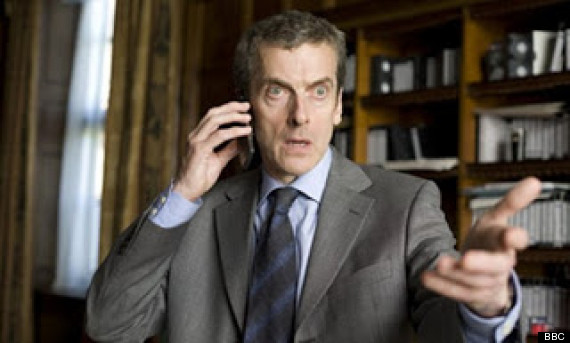
"We're being invaded by aliens with bloody plungers for hands? We really are at the bottom of the fuckin' food chain."
Now to the meat of the piece.  This is Capaldi's most famous work, and with good reason.  Thick of It is a brilliantly funny political comedy that is like a cross between House of Cards and the British version of The Office.  In the Loop is a related movie, shot in both England and America, which stars many of the same actors as Thick of It playing very similar characters to their Thick of It characters, but with different names and positions.  Peter Capaldi is one of only three people in the movie who actually play their own characters, making it a sort of half-spin off to Thick of It.  It seems to me that they wanted to do something bigger than Thick of It, but wanted it to take place in a sort of separate universe so that it wouldn't have lasting implications for the plot of Thick of It.

Capaldi's character is Malcolm Tucker, is the government director of communications, a sort of bulldog from the Prime Minister to keep everyone's public image in check.  He does this by screaming profanities left and right, bullying government employees into submission.  The show follows the fairly irrelevant office of the Secretary of State for Social Affairs and Citizenship.  The Secretary of State changes between Seasons 2 and 3, and that was a pretty big shift in the show as it seems to have enhanced Capaldi's role.  In the first two seasons, the pathetic Hugh can be easily bullied, so Tucker didn't have to keep showing up to shout him into towing the line.  The third and fourth seasons feature Hugh's replacement, the more assertive (yet still not that assertive) Nicola Murray.  This leads to Malcolm Tucker being a heavier focus of the show as he fights it out with Nicola.  It seems to me that Hugh was supposed to be the center of the show, but after two seasons they realized how much better of a focal point Malcolm Tucker was and shifted it towards him.

Is Tucker a good guy or a bad guy?  Again, Capaldi shows a talent for playing moral ambiguity.  His primary focus seems to be keeping the government stable.  As the Christmas Special, "Spinners and Losers," demonstrated, his desire to keep the government stable is mainly to protect his own job.  He doesn't show a lot of loyalty to anyone in particular in "Spinners and Losers."  Does he care about the government's job to serve the people?  Doubtful.  He's part of the liberal party, so it's possible that deep down he tears people to shreds and fights to keep the government stable so that it can help the people, but I doubt that he cares much either way what the government policies are.

In In the Loop, he does, in the end, start to push to start the war in the Middle East.  But I think it becomes pretty clear that Tucker didn't care whether the UK and the US went to war with the Middle East or not.  If the government told him that they wanted him to stop the war, he would probably have done his job just as well, barking and threatening to disembowel everyone around him to get it done.  For all of his forceful controlling of other people, Tucker is, himself, a puppet.  He'll do whatever the Prime Minister thinks is appropriate.

I think this was really the role that won Capaldi the spot as the Doctor.  He was a middling actor until this, mostly playing small roles and rarely getting first billing for anything.  Capaldi really gained his notoriety for this role in particular.  It's won him nominations for dozens of awards.  He deserves this fame for this role in particular.  His expletive fueled tirades are pulled off so effortlessly that you believe Tucker would have to be a raging genius to be able to come up with all of this bizarre violent imagery off the top of his head.  And, most importantly, as I pointed out, I don't see a touch of any of his other characters in his portrayal of Malcolm Tucker.  Tucker is a different man with a different face from Islington or Frobisher.  And he fits perfectly into the skin of all three disparate characters.


Conclusion:  A Great Doctor!

After studying all of his work, I'm really satisfied with the casting of Peter Capaldi as the 12th Doctor.  I can see the grandfatherly wisdom of the first 3 Doctors in his face.  Yet, despite being the oldest Doctor now (more or less), there have been several who have looked older than him.  He has the wisdom of age in him, and yet the vitality of youth.  The diversity of his work leaves a lot of avenues open for how he will choose to portray the Doctor.

A lot of people have suggested that he can bring some darkness back to the role, like Christopher Eccleston.  (Personally, I think that people who call Eccleston's Doctor dark confuse darkness with meanness.)  I don't know if he will or not.  He could bring a lot of depth and many layers to his Doctor.  I can imagine someone both stern and loving.

I've said that the two main characteristics of the Doctor across all of the regenerations are compassion and curiosity.  In some Doctors, one or both of these traits aren't easily visible, but they are always there in abundance, even if they're hidden.  Capaldi's talent for the mixing of good and evil can bring out the darker more violent side of the Doctor, but will not likely hide the compassion and curiosity at the same time.

"The Doctor lives his life in darker hues" the Great Intelligence warned us.  "And he will have other names before the end.  The Storm, the Beast, the Valeyard."  Will Peter Capaldi bring us the darker hues?  He'll be supported by the writing of the great Moffat, master of the dark fairy tale.  Peter Capaldi's seasoned acting ability and Moffat's writing (assuming he gets some of the magic back in Season 8) is a perfect combination for a really strong outing for the first older Doctor since the classic series.

Peter Capaldi, on behalf of Whovians everywhere:  We can't wait to see you get started!

Sunday, August 4, 2013

They Say He's the Same, But He's Not the Same: Comments on the 12th Doctor Announcement

Ladies and gentlemen:  The 12th Doctor!
Did you ever stop and think about the things and people that meant nothing to you when you first encountered them, but wound up being extremely important to you later on?  The first time you were in a room with your future spouse, did you even necessarily notice them?  I can remember the first time I ever saw my current girlfriend, and I can tell you that I didn't immediately think this was someone I'd fall in love with and who would move out to Denver to live with me.  I'm sure I heard of Doctor Who in my younger days at some point, but never assumed it would play such a big part in my life.  When I was first taught the word "poetry," I probably never thought it was something that I would become a semi-professional in.  These things circle around at the periphery of our lives and they aren't important until they actually are.

Enter:  Peter Capaldi.  Twice Capaldi has graced the screen in the Doctor Who universe:  first as Lucius Caecilius Iucundus in "Fires of Pompeii," and, much more notably, as John Frobisher in Torchwood:  Children of Earth.  His role in the franchise is so minor, that I probably wouldn't have even remembered him as Frobisher if I hadn't been rewatching Children of Earth last week.  I certainly didn't remember him as Caecilius until someone pointed it out to me.  He is someone who was never on my radar in any capacity.  I had seen him in a few things here and there, but never did I care enough to look up who he was.  Now, he's the 12th Doctor.  He wasn't important, and now he is.

Okay, we'll start off with the bad news, because there's really only one piece of it:  He's a white guy.  I, as well as many others, were looking for, at the very least, a black Doctor.  Even if a female Doctor is a bridge too far, a black Doctor is not.  There's no good reason for him to have been 12 white guys in a row and, frankly, it seems rather unlikely, doesn't it?

I did seem to be right about my list of the 5 "candidates" who were definitely not getting the job, but I do seem to have been wrong about one thing:  I was wrong about all betting odds being bullshit.  Because about 2 days ago, bookies started to refuse taking any bets on Capaldi.  How the fuck did they know?  I'll remember this for next time.

That being said, Capaldi is a very interesting choice.  First of all, Steven Moffat said that, when he took over as head writer, he wanted to go with an older Doctor because he believed the Doctor should be old, but Matt Smith was so perfect he decided to cast him.  Whether this is true or not (I think the BBC probably pushed him to cast a younger Doctor) he genuinely seemed to be very pleased with Matt Smith's performance.  Now, he apparently finally got to go through with his original idea of bringing the Doctor back to an older man.

But while most of the classic series Doctors were middle-aged or older, one thing that most of them were not were fit, trim, or handsome.  Those are adjectives that really only apply to the younger Doctors like David Tennant or Peter Davison.  There's never been a dashingly handsome, grey haired Doctor before.  This is probably a big advantage if casting an older Doctor, because the biggest danger in doing so is alienating the screaming fangirls who have gone ga-ga over the pretty Doctors like David Tennant or Matt Smith or even Christopher Eccleston.  I guess you could always bring back John Barrowman.

GF:  He looks like David Tennant?
Me:  Fair enough.  I could by him as Tennant's father.

When I first heard the announcement, I only knew him from Torchwood, but found that a lot of people knew him better than I did.  My girlfriend and a few friends just kept talking about him swearing a lot.  A Google Image search for pictures of him usually turns up pictures of him yelling with some vulgar caption under it.  I thought "How can someone be known for swearing?  Lots of people swear in movies and television, especially after the watershed hour in England.  How can swearing be someone's 'thing'?  It seems too general."

Then my girlfriend showed me his show The Thick of It, which I understand also folds into the movie In the Loop.  We watched the first three episodes of The Thick of It and I got it.  It's a show that takes place in the British government, It's kind of a comedic version of House of Cards with Capaldi in sort of the Francis Urquhard/Frank Underwood role, only less of a scalpel than a hatchet, being less of a sly manipulator than a foul-mouthed screaming bully who gets things done through intimidation.  I can understand why he's known as a swearer.

GF:  I know more about the new Doctor than you do!

I'll be watching the rest of that series, and everything else I can find of his, and I'll do a big ol' book report on Capaldi.

It's not the first time a Time Lord has regenerated into the image of someone he already met.  Colin Baker played Commander Maxil, a Gallifreyan security guard, before becoming the 6th Doctor.  Romana II said she based her regeneration off of Princess Astra, a woman they had met in the previous episode.  This is the only indication in the series that Time Lords have an ability to choose their regeneration, and almost everything else in the history of the series contradicts this and says that they have no control over what they regenerate into.  But it is possible that the image of Caecilius somehow imprinted on the Doctor and caused him to regenerate into that image (Frobisher never met the Doctor, but could very well be a descendent of Caecilius, explaining the similar appearance).

The biggest thing I thought of when I saw Capaldi was that I can really see the spirit of the older Doctors emanating from him.  I can see the brain of the 1st Doctor in his head.  I can't imagine the personality of 11 in his head.  He's going to be a very big departure from the last few Doctors.  The fatherly figure of the first 3 Doctors is really what I see in Capaldi.  I imagine him being quick to anger, yet gentle and loving.

Perhaps he'll create a better chemistry with Clara than Matt Smith had, as that's probably my only complaint about Clara so far.  She's a great companion, but due to the very nature of her plotline, there had to be a very big emotional distance between her and Matt Smith, which made for poor chemistry.  Hopefully Capaldi and Louise-Coleman can strike up a good chemistry.  An old fashioned, father-daughterish Doctor-companion relationship.

While researching Capaldi, I tried to follow him on Twitter.  The Twitter handle petercapaldi is a page with literally two posts, both of which are flat out nazi statements.  Obviously, this is fake.  I'm saving a screen cap of it in case it gets shut down, which I'm sure the BBC will do their best to do.  I don't think nazi shit is funny, but I think it's ridiculous that someone did that in the name of Peter Capaldi.  "But not in the name of the Doctor."

UPDATE:  Looks like the Nazi Capaldi page has already been removed, so here it is for you to gaze at in abject horror:

Click to enlarge.  Trigger warning.

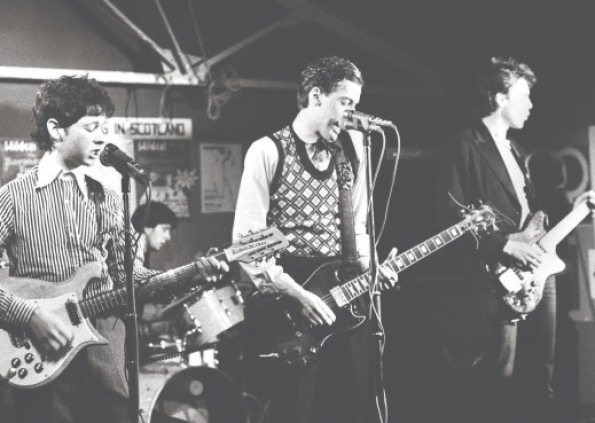
It also turns out that Capaldi is a very close friend of Craig Ferguson.  This is a picture of their high school band, The Dreamboys:

I understand that Capaldi was supposedly the lead singer, so I think that's him in the middle?  God knows which one is Ferguson.
Ferguson, as most people know, is possibly the most obsessive Whovian currently residing in America (after me, of course).  Capaldi, thankfully, is just about as big of a Whovian as Ferguson, which is great but certainly not a requirement of the job.  Tennant was a huge Who fan before being cast, but Matt Smith knew nothing of it, and I consider them the two best to play the role.

Random Fact:  Up to, and including, the casting of Matt Smith, no two actors to play the Doctor had the same first name, although two of them had the same last name.  John Hurt being cast as True 9 is the first repeated first name, although admittedly with a different spelling than Jon Pertwee, and Capaldi becomes the 2nd Peter to play the role.

Random Fact #2:  Moffat is now responsible for casting both the youngest and the oldest Doctor of the new series.

Now the only question that remains is:  What will his costume be?  When I look at pictures of Capaldi, honestly, all I can think of is a Hugh Hefner style bathrobe.

Bathrobes are cool.

One last thing I'd like to address is the accusations that Moffat made a sexist comment about the idea of a female Doctor.  As a Moffat fanboy, I'm often defending him against his accusations of sexism (some of which I, admittedly, can't defend).  But this time, while his joke might have been slightly sexist, it was more playful than it was reported.  Tor.com maliciously misquoted what Moffat said during the reveal special, claiming that he said that casting a woman as the Doctor would be like casting a man to play the queen.

He did not say those exact words. What happened is that he brought up the fact that Helen Mirren wanted the Doctor to be a woman. What Moffat said was "I would like to go on record and say that the queen should be played by a man." Without the context it just looks like a sexist line and comparing the importance of the Doctor to the Queen. In context, when you explain that it's in response to Helen Mirren who played the fucking queen, you realize it's actually a playful joke.


Hopefully, when the next Doctor is cast, they'll pick someone who isn't a white male.  Maybe a Richard Ayoade.  Maybe even a Helen Mirren.  Or, my newest idea, Peter Dinkladge:


Just lower the TARDIS console, and you have a recipe for awesome!

Friday, August 2, 2013

White Smoke Rises: The 12th Doctor Has Been Chosen

Either the new Doctor has been chosen, or this is how Moffat wrote "The Name of the Doctor"
The BBC has announced that the new Doctor has been chosen.  Sunday at 7PM (GMT) a special will air live that will announce the 12th Doctor, including interviews with 12, Matt Smith, and Steven Moffat.  Finally people's ridiculous and fruitless speculation about who the Doctor is going to be will come to an end.

 
This is just getting out of hand.
My hopes for Richard Ayoade getting the job, as he should, are dwindling.  But I'm still pretty sure of my "shutup" list of candidates people keep tossing around who are clearly never getting the job (Benedict Cumberbatch, Helen Mirren, Russell Tovey, Rupert Grint, and David Tennant).  I'm pretty sure that whoever is chosen, we're going to be completely surprised and have no idea who this guy is.

Who knows, they might cast some no-name hipster who looks like Davey Havok.
So I'm going to try to find a live feed of the BBC to watch around noon my time when the special airs.  I'll have a response on Sunday, and then I'll be doing some research on whoever it is once its announced.  I'll watch as much as I can of this new actor, and put together a book report.

Let's just hope they don't screw this up.

I would kill Steven Moffat slowly with a straight razor.

Sunday, July 28, 2013

Let Them Eat Trailers and Scripts: An Operation Blue Harvest Update


Someday I will attend San Diego Comic Con.  But this year, when Matt Smith, Jenna Louise-Coleman, and Steven Moffat were all there, was unfortunately not the year.  I guess I'll have to wait until Matt Smith is all washed up before he'll appear at another Comic Con to talk about Doctor Who.  So I wasn't there when they showed the awesome teaser trailer at Comic Con, I had to wait for it to come out online like everybody else did.  Nobody managed to steal a quick video from it like the trailer for "The End of Time."  So when I woke up this morning and found that the trailer was released, I was glad I would have something to write about in my blog besides people's various and fruitless attempts to predict the 12th Doctor.

The trailer is amazing!  I think my favorite part is probably the awesome, ominous music.  If that's Murray Gold's doing, he might have just outdone himself.  (Well, okay, nothing beats "Abigail's Song" from "A Christmas Carol).  But it sets the stage for what looks like a very dark episode.  Of course, there's bound to be much more lighthearted humor in this episode than the trailer suggests.  That's Moffat's style:  dark, but funny.

The moment of the Doctor meeting the Doctor in this is fantastic, even though the 10th Doctor's facial expression says "Who just farted?".  That first meeting is going to be one of the highlights of the revived series.  And the trailer pretty much proves that this is the actual 10th Doctor, not Meta-Crisis 10, which is what I was afraid of.  Meta-Crisis 10 could still have been fun, but I want the 11th Doctor to meet the actual 10th Doctor, not his half-human off-shoot from a ridiculous and convoluted plot.  But with both Doctors standing directly in front of their TARDISes--one with the St. John's Ambulance badge on it, one without--it shows that this is definitely the proper 10th Doctor.  Meta-Crisis 10 doesn't have a TARDIS.

If you start the trailer at exactly 0:24 you'll see a shot of the 10th Doctor walking into a TARDIS where the 2nd Doctor, and someone else, are controlling the TARDIS panel.  But there's something I'm confused about:  I guess if I went back and watched all of "The Three Doctors" I might recognize what scene that was.  The 2nd Doctor in a color scene with that quality camera work and that TARDIS design is almost certainly a multi-Doctor episode.  And I checked "The Five Doctors" and the design doesn't match up.  It has to be "The Three Doctors."  But as the 10th Doctor's shoulder slowly starts to move out of the way, you can see the head of someone else at the TARDIS console.  It looks like the 1st Doctor.  And this is why I'm confused:  the 1st Doctor never appeared in the TARDIS during "The Three Doctors."  Hartnell was in such poor health that they had to write in a way for him to spend the entire serial sitting down, so he was in the television for the whole serial.  What is that shot from?  Again, if I were to go through all of "The Three Doctors" I might find it, and maybe I'll go through it later, but I can't for the life of me imagine where that shot might be from.  Perhaps it was an early outtake of "The Three Doctors" before they decided to keep Hartnell in the TV.  That's what they did with the 4th Doctor in "The Five Doctors":  put in footage of him that had never made it to air.

But it does tell us one very interesting thing:  the special will incorporate, at the very least, archive footage of past Doctors.  I'll be interested to see how that works in.  They certainly did a very good job of it in "The Name of the Doctor."

And what the fuck is with the knight walking towards the tent?

-------------------

Now, in other news, you might have heard that Stephen Moffat recently released copies of the audition scripts he's using to try out potential 12th Doctors.  This has led to a lot of people trying to guess who the new Doctor is going to be based on the tone and word choice in the Doctor's dialogue.  These are clearly people who do not know what an audition script is.  Moffat even said that these scripts will never be in an episode of the show.  So don't try to read into it.  Moffat is trying to whet our appetites for the 12th Doctor without actually telling us anything about him at all.  So enjoy the scripts, they're deliciously clever in a very Moffat-y kind of way, but don't pretend that they're going to help you figure anything out.

Wednesday, July 17, 2013

Five "Potential" Twelfth Doctors Everyone Needs to Stop Talking About

Part of the reason that I'm not posting much anymore is that all that people want to talk about in Doctor Who fandom right now is who they think is going to be the next Doctor.  I think that all of that speculation is ridiculous.  None of us have any idea who the next Doctor is going to be.  But, while all of this speculation is silly, I'm going to talk about the names people are throwing around as possible 12th Doctors that are absolutely ridiculous and who will never become the Doctor.

5.  Benedict Cumberbatch

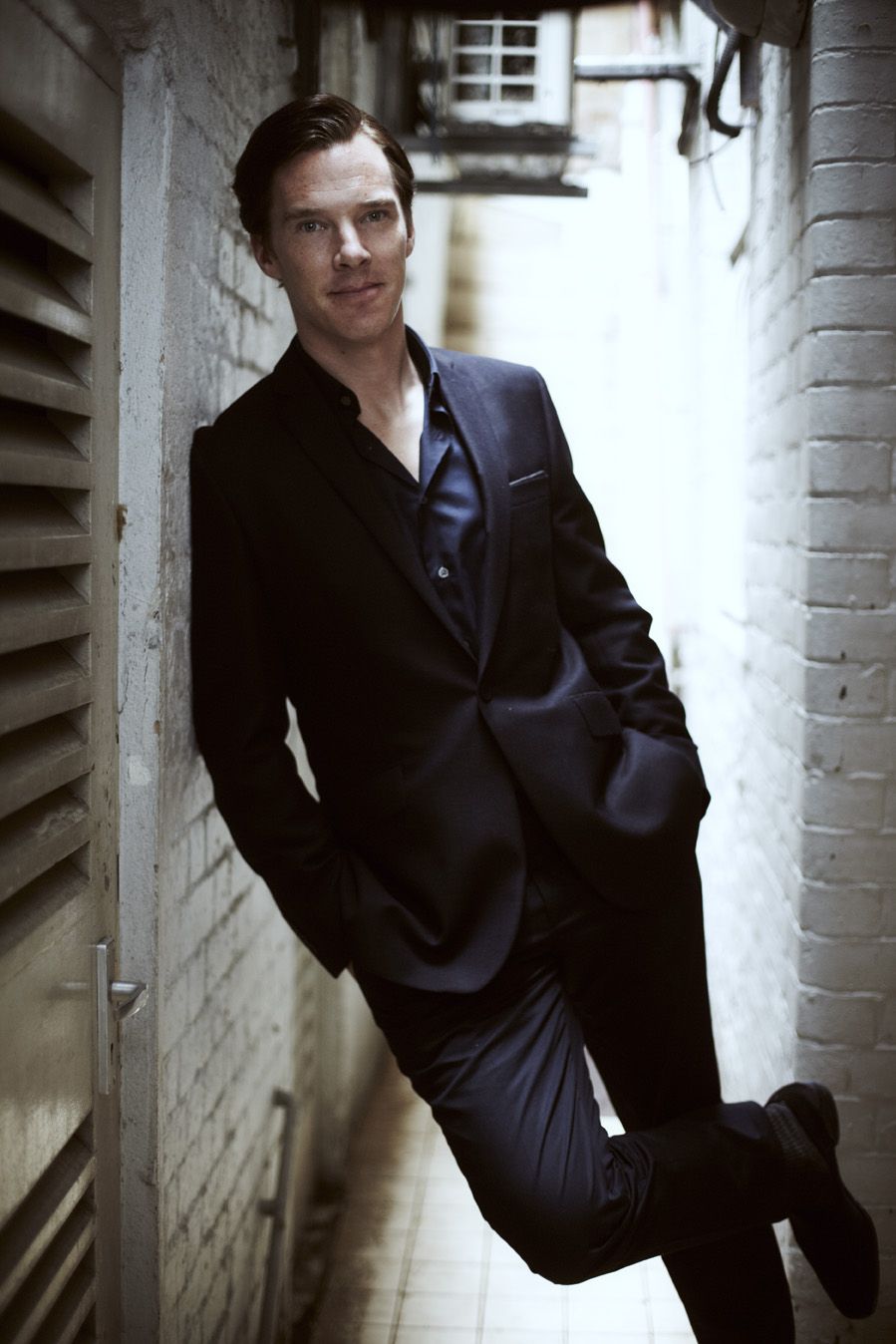
Much like with David Tennant, it's very hard to pick out the sexiest picture
of Benedict Cumberbatch on the Internet.
People have been talking about Cumberbatch as the Doctor since his first episode of Sherlock.  First of all, it's bad enough that we have the show runner splitting his attention between Doctor Who and Sherlock without the star doing the same thing.  Having two big hit shows on the BBC with the same head writer and star would be, at the very least...a bit weird.

But here's the biggest problem with Cumberbatch:  Have you ever seen him play a lighthearted, good, happy character?  His version of Sherlock Holmes makes Sir Arthur Conan Doyle's look like a happy little wood nymph.  There's a certain way in which the original Holmes was a bit of a dark loner and a pompous ass, but Cumberbatch's portrayal takes it to a truly darker level.  It's all summed up in some of his final lines from the last episode, "The Reichenbach Fall":  "Oh, I may be on the side of the angels, but don't think for one second that I am one of them"

The only time I saw Cumberbatch as a potential Doctor was from this past week's episode of Top Gear when Cumberbatch was their Star in the Reasonably Priced Car.  Cumberbatch, in his interview, was laid back, friendly, and personable.  But I've yet to see him put that forward in any of his characters.  They're always dark, cold, and distant.  Those are things the Doctor absolutely cannot be.

The main point, though, is that he can't be Sherlock and the Doctor at the same time.  And playing the Doctor, Sherlock Holmes, and Khan Noonien Singh might be too much awesome for any one person's career.  But most importantly...he'd make a much better Master!


4.  Dame Helen Mirren

Sexiest woman over 60 in the world!
I've given my opinions on the idea of a female Doctor in a previous blog.  And I agree with people who say that Mirren might very well be the only actress who could pull off the Doctor's first gender transition.  But there are two things standing in the way:  the fans don't want a woman, and she doesn't want to do it.  Those are fairly big hurdles to overcome before she could become the Doctor.

The simple fact is that a lot of people don't want to see a female Doctor.  Moffat ran a poll at a conference and everyone said they'd stop watching.  No, I don't think all of the people who say they don't want a female Doctor are sexist.  Some of them are, but some of them just don't think that Time Lords should be able to change genders between regenerations.  There's not a clear example of it happening in canon.

Helen Mirren stated pretty unequivocally that she doesn't want to do it.  She did say, however, that she wanted a "gay, black, woman Doctor."  I understand the desire to see either a black or female Doctor, but can the show, at this point, really said to be lacking in LGBT advocacy?  So yes, I think it would be absolutely fascinating to see Helen Mirren in the role, but you will never, ever see it.

3.  Russell Tovey

Oh come on, if you were searching Google Images for a picture of
Russell Tovey and this came up, you'd choose this one too.
Are you kidding me?!  If Cumberbatch has been typecast as cold and dark, Tovey only plays shy and awkward.  His performance in Being Human is brilliant because the whole idea is: "what if the most socially awkward and kind person in the world became a werewolf and had to deal with all of the emotional baggage that comes with being a supernatural killer?"  His role as Midshipman Alonzo Frame in "Voyage of the Damned" (and briefly again in "The End of Time (Part 2)") was endearing because he was so meek, but put aside that meekness to show his bravery when it was absolutely necessary.  Even his character in the Sherlock episode, "The Hounds of Baskerville," was shy and skiddish.

I know every actor has to have range, but I haven't seen it yet from Russell Tovey, and I've probably seen more of his work than I've seen of the work of anyone else I've put on this list.  He's kind of like a British version of Michael Cerra:  they both play the same "adorably" shy character in every role they're cast in.  I can't imagine Russell Tovey bouncing around the TARDIS with a big smile on his face, or threatening the Daleks with a steely stare.  Maybe he could surprise me, but he hasn't shown me enough to believe that he could be the Doctor.

2.  Rupert Grint

This is not remotely a metaphor for impotence.
I'm not even going to dignify this one with a response.

...okay, it seems like you're going to make me.  Ron Weasley cannot be the Doctor.  Period.  I'd love to see Rupert Grint branch out into other roles that are really different from what he did in Harry Potter, but there's no way he's going to be allowed to do it as the Doctor.  He's too recognizable in one role right now.  He needs to become established in more diverse roles before he'd even be considered for another big, iconic role.  Furthermore, Doctor Who is not really new territory for Rupert Grint.  He'd just be moving from a fantasy franchise to a science-fiction franchise which, if it didn't have its very, very thin scientific rationales, would pretty much be a fantasy franchise.  It would be a bad decision for both Doctor Who and for Grint's career.

1.  David Tennant

I'm going to stab the next fangirl who asks me to come back.
One month ago I read a report that said that Skybet had placed 50/1 odds on David Tennant coming back.  I can't find any such bets on Skybet at the moment.  Hopefully, someone realized that it was a ridiculous thing to bet on because every single person would lose as nobody has any idea who is going to be the next Doctor.

But I would bet everything I own (which, admittedly, isn't much) that David Tennant will never, ever return to the role full time.  Doctors don't come back.  No actor ever has, ever will, or ever should become the Doctor.  Nobody is going to Grover Cleveland this thing.  Doctor Who is a show about time travel.  Much like time travel, it's a show that has to move both forwards and backwards at the same time.  It can bring back past enemies and past monsters, but it absolutely cannot move back to a previous regeneration of the Doctor.  It would be a cheap ploy that any true fan would reject, leaving nothing but a fan base of 13 year old girls.

It simply will never happen.  Get over it.

Sunday, July 14, 2013

A Doctor's Dozen: A Doctor Who Book Report on the Thirteen Doctors Problem

Why is there a monkey dressed as a German soldier in WWI?


"When they came [to America] to launch The Eleventh Hour, I went along to this screening in LA and journalists put their hands up, and one of the first questions was, 'WHat will happen when he reaches the thirteenth regeneration?' There's a fascinating academic study to be made out of how some facts stick and some don't--how Jon Pertwee's Doctor could say he was thousands of years old, and no-one listens to that, and yet someone once says he's only got thirteen lives, and it becomes lore.  It's really interesting, I think.  That's why I'm quite serious that that 507 thing won't stick, because the 13 is too deeply ingrained in the public consciousness.  But how?  How did that get there?"

-Russell T. Davies

I've said sometimes that Moffat bases his version of Doctor Who on a mis-remembering of what the classic series really was.  This quote makes it clear that Davies is mis-remembering the classic series as well.  The Doctor's age has fluctuated so much over the years that, no, nobody remembers him saying that he was thousands of years old. The First Doctor claimed to be about 100, the Fourth Doctor claimed to be about 700, and then pretty much every Doctor between 6 and 11 claimed to be 900.  How could any of these numbers stick in anybody's head?  We've all just assumed he's lying.  Rule 1, after all.

It was first established in the Fifth Doctor episode "Mawdryn Undead" that Time Lords can only regenerate 12 times.  For those who failed elementary school math, you'll realize that that doesn't mean that there can only be 12 Doctors, but that there can only be 13.  Davies, as shown above, seems to mis-remember the number of times the 13 Doctor's issue was brought up.  He thinks it was just once.  He is very wrong.  It was not a minor plot point in "Mawdryn Undead," as the episode was about someone trying to steal the Doctor's remaining 8 regenerations.  The Valeyard was said, by the Master, to be created between the Doctor's 12th and final incarnations.  It was established in the Fourth Doctor episode "The Deadly Assassin" that the Master had already used up all of his regenerations, which is why he was clinging to life and needed to steal a body.  The Eighth Doctor said in the narration to the Doctor Who that the Master had used up all of his thirteen lives.  There were a few other casual references, but it was used as main plot points in a number of episodes.  That's why 13 stuck in the public consciousness, Russell.

When Davies mentions the number 507 here, he is referring to the fact that, the one time he got to write for the Eleventh Doctor, in his guest appearance in the Sarah Jane Adventures episode "Death of the Doctor," the Doctor was asked how many times he could regenerate, and he answered "507."  The number was Davies's little "fuck you" to the fans, as the digits in that number add up to--you guessed it--thirteen!  507 has not only failed to stick in the public consciousness, fans are rejecting it because we flat out find it insulting that he thinks you can just throw away a piece of the mythology like that.  It's easier to throw away the Doctor's claim of 507 under Rule 1.

Now we find ourselves in an interesting situation.  The number thirteen was obviously chosen during the Fifth Doctor era because nobody thought they had to worry about the show going through another 8 regenerations.  Now we're here decades later and Moffat has decided to speed up the process.  By adding "True 9," or the "John Hurt Doctor," every Doctor number since 9 has to be bumped up by one.  Eccleston was truly the 10th Doctor, Tennant the 11th, Smith the 12th, and the new Doctor who will take over for Smith in December...will technically be the 13th, and final, Doctor!  That means that Steven Moffat will most likely be the person to decide how the 13th Doctor problem is to be resolved.  Moffat is going to decide how to pull off the impossible regeneration.

So why do I call this the Thirteen Doctors Problem?  The first reason is that it's a narrative problem.  We have no doubt that this show is going to keep going, so it's a narrative hurdle we know that they have to overcome before the show moves forward.  But my biggest concern is whether or not they're even going to bother addressing it.  To use Davies's solution--to take Route 507, if you will--would be insulting to the fan base.


We know the lore better than you do.  Don't try to change it without really thinking about it and researching it and coming up with a solution that doesn't insult our intelligence.  So my fear that Moffat is going to listen to Davies and just ignore the issue is the main "problem" to which I refer.

Someone at Comic Con mentioned to me his theory:  that, in "Let's Kill Hitler," when River saved the Doctor with her regeneration energy, it was said she used up the rest of her regenerations to save him, so maybe she gave him her remaining regenerations.  We only know for sure that she had regenerated at least 2 times before that.  It's unlikely that she regenerated any more than two times (but it's not impossible).  Thus, she would give him probably 9 more regenerations, and keep us from having to deal with this problem again for another few decades.  Interesting idea.

Do Gallifreyan sex-ed teachers teach you that sex can lead to things like babies, STDs, or losing 9 of your lives?
Personally, I think the Cartmel Masterplan gets us easily out of the problem.  The Doctor is a god, so how can he die?  I do believe in the Cartmel Masterplan, as you know if you've been reading me for a while.  But I don't think anybody will--or necessarily should--state explicitly on the show that the Cartmel Masterplan is canon.

I'm going to do something I don't do often and tell you what I would do if I was the head writer of Doctor Who (and, damn, do I wish I was):  The Doctor is injured one last time.  As he starts to become weaker, he starts to say his goodbyes to those around him, thinking the true end has finally come.  Suddenly, he regenerates, and the 13th Doctor appears and says "That's not possible!"  Then I'd wait for a while to explain it, if I bothered to explain it at all.  Nobody explained what regeneration even was until the 3rd time it happened.  Maybe I'd just let the mystery of why the Doctor can still regenerate hang around for a while for someone far down the line from me to solve.  I think that adding some of that mystery back to the show would be a lot of fun.

Also, as we get closer to the "final" regeneration, it's important to ask:  Will the Doctor start to become more afraid of his death since he thinks the last one is coming soon?  Being in your final regeneration must be pretty terrifying for a Time Lord.  Will he start to become more cautious?  Or will he become even more reckless, hoping to squeeze as much as he can out of the last of his lives?  If I know Moffat's writing, I think the latter is more likely.

I'm really glad that Davies is not in the driver's seat right now, but it's not entirely clear where Steven Moffat stands on this issue.  So let this be my plea to Moffat:  When the time comes for the "12th" Doctor to regenerate, address the Thirteen Doctors Problem.  I don't give a single shit how you do it, as long as it's something that does not insult our intelligence (like Route 507).  Just address it.  Somehow.

Oh, and also, make Richard Ayoade the 12th Doctor!

Sunday, June 30, 2013

Is The Answer in the Question?: A Further Rundown of The Eleventh Prophesy


The Universe is cracked.  The Pandorica will open.  Silence will fall when the question is asked.  The first question. The oldest question in the universe. Hidden in plain sight.  On the fields of Trenzalore, at the fall of the Eleventh, when no living creature can speak falsely, or fail to answer, a question will be asked. A question that must never, ever be answered.  "Doctor who?"

Above is what I'm going to start calling The Eleventh Prophesy.  It is a combination of three interconnected prophesies given to the Doctor in the course of the three seasons, all of them copied verbatim, their only changes that were made were made to fit them together into one coherent paragraph.  The words have not been rearranged in a way that might cover up a second meaning that Moffat hid in the words.  The first comes from Prisoner Zero, the second from the Teselecta, the third from Dorium.  If you put them together, you kind of get one full prophesy about the entirety of the Eleventh Doctor era.  An entire religion was created with the sole mission of preventing the fulfillment of this prophesy.  Essentially, every single episode of the Eleventh Doctor era, from "The Eleventh Hour" to "The Name of the Doctor" is held together with this one, strong, overarching prophesy.


So let's start taking another look at that prophesy.  Because I thought it had come to a terribly unsatisfying conclusion in "The Name of the Doctor."  But it occurred to me that I might have something wrong.  Maybe the prophesy's fulfillment just hasn't ended yet.  What if we're not done yet?

My biggest problem with "The Name of the Doctor" was that it failed to fulfill The Eleventh Prophesy.  On the fields of Trenzalore, the Doctor was asked the question that must never be answered.  But, the prophesy said that "no living creature could speak falsely, or fail to answer."  As a matter of fact, the Doctor distinctly failed to answer.  I had a problem with that, because I took it from the prophesy that it meant that the fields of Trenzalore were a place that acted like truth serum and forced any person there to answer any question posed to them truthfully.  Clearly, this didn't happen in "The Name of the Doctor."

But there's one thing that can't be overlooked:  "the fall of the Eleventh."  The Doctor did not really "fall" in any way in "The Name of the Doctor."  He was attacked in every part of his timeline, but Clara saved him.  So it's hard to believe that the events in "The Name of the Doctor" were "the fall of the Eleventh."  But I think I was expecting this episode to be the fulfillment of the prophesy so badly that it ruined my enjoyment of it when it turned out not to be what I thought it was.


It became clear at the end of the episode that the title "The Name of the Doctor" was a mislead.  Moffat wanted us to think that we'd learn the Doctor's name in this episode, as that was assumed to be his greatest secret.  Instead, his greatest secret was True 9, who he said didn't deserve "the name of The Doctor."  Essentially, this explains the title of the episode, and Moffat's promise that the Doctor's greatest secret will be revealed, in a way that has absolutely nothing to do with what we thought he meant when he named and teased the episode.  I was pissed because I thought that this meant that he had chosen to just throw out entire sentences of the prophesy and pretend they weren't even there to begin with.  But now I've realized:  just because this was a mislead from Moffat doesn't mean that he's not going to do what we were expecting.  It just means it didn't happen in this episode.

Okay, hopefully I'm still making myself clear.  This is the simple of it:  We all thought that "The Name of the Doctor" was going to be the fulfillment of the prophesy.  It failed to fulfill the prophesy.  But that doesn't mean the prophesy won't be fulfilled.

Credit where credit is due, it was my friend Dawn Gabriel who helped me realize something I hadn't thought of:  just because the Doctor went to Trenzalore in "The Name of the Doctor," doesn't mean he can't go back.  It's possible that this planet does have such "truth serum" properties, but only at certain times of the day, or the week, or the year, or every few millenia.  The prophesy does not say "where no living creature could speak falsely, or fail to answer."  It says "when."  The situation in which no living creature can speak falsely or fail to answer might not simply happen in a place, it might happen only at a particular time, most likely a particular time in a specific place.  That time has not come yet.

"The Fall of the Eleventh" is obviously meant to be the Eleventh Doctor's regeneration into the Twelfth.  This could be Moffat lying or misleading us, but remember that sometimes, when we think Moffat's being too obvious, it's because he actually is being obvious.  The best example was "The Impossible Astronaut" where many people guessed River was the astronaut, and many of us said "No, she can't be, because that's what Moffat wanted us to think."  I try to remember that now.  It's possible that, when he says "The Fall of the Eleventh," it really is the "Fall" of the Eleventh.


With Matt Smith's announcement that he's leaving after the Christmas special, it all makes sense now.  There are only 2 more episodes of the Eleventh Doctor era.  One will be the 50th Anniversary special.  We know that that will involve the Tenth and Eleventh Doctors teaming up to fight the Zygons and that somehow True 9 will become involved.  The Christmas Special will be Matt's farewell.  At the end of the Christmas special, the Doctor will probably face the moment on the fields of Trenzalore when he is asked the question and cannot fail to answer.  He will then somehow be rescued from having to say it aloud, but will then regenerate, possibly due to the effect of the answer itself, or from what he has to do to be able to keep from answering.  It's also fairly likely that there is a strong arc from "The Name of the Doctor" through both the 50th Anniversary special and The Christmas Special that will slowly bring us to the Fall of the Eleventh.

What I find fantastic about this is that, if I'm correct, then Moffat has engineered one entire story arc that covers the exact lifespan of one whole Doctor.  One whole Doctor played out one long plot that pretty much made up his entire era.  Season arcs have been tried before, but never has there been an arc that literally ran from a single Doctor's first to last episodes; from regeneration to regeneration.  The slow march towards the Eleventh Doctor's farewell literally started on the first day of the Doctor's life when he first encountered the cracks that were made (presumably) by The Silence to kill him, and heard the first third of the prophesy.  That is a huge and amazing accomplishment, with the one arc being separated into three, equally fascinating sub-arcs, each of which took up one season.  Everything has interconnected perfectly, from the Doctor meeting Amy, to Amy's daughter turning out to be created by The Silence, an Order of the Question.  It wove in and out of the story so much that we almost forgot it was there sometimes, or thought it was about to resolve itself.  And every time we learned that there was at least one more corner we had to go around to finally get to it.

This would mean that True 9 isn't the end of the story, although it's possible that the 50th Anniversary special is so tied in to the prophesy and the overarching plot of the Eleventh Doctor era that Moffat actually thought up the plot for this special before writing "The Eleventh Hour."  Somehow, I think True 9 is the first to last surprise Moffat has in store for us.  Will the last one wow us even more than True 9 did?

It's possible that my faith in Moffat is misplaced and he'll just come up with something that doesn't satisfy the prophesy at all.  But I take back some (not all) of my comments about "The Name of the Doctor" very tentatively, and will reaffirm my complaints if the later specials fail to fulfill the prophesy properly.  Perhaps "The Name of the Doctor" was actually only part 1 of a 3 part answer to the questions we've been asking since 2010.

Or perhaps Moffat just gave up on the prophesy and doesn't care anymore.