Showing posts with label Rassilon. Show all posts

Friday, January 1, 2016

Hybrid Moments: An Overanalysis of "Hell Bent"

If you want to scream, scream with me!
At this point, I'm starting my damn blog post so late that, by the time it's finished and published, we'll be welcoming Rupert Grint as the 16th Doctor (that sounds like a Mark Gatiss casting choice if I've ever heard one), but I guess better late than never, so here we go...

Star Trek:  Deep Space Nine had an amazing episode in the fourth season in which a freak accident causes Captain Sisko to wander lost through time, never able to decide where or how long he will appear, and his son, Jake, spends his entire life trying to figure out how to save him. Executive producer Ira Steven Behr said about the episode: "A love stronger than death. Usually that's romantic love, but for this show, this series, we chose the love between a father and son. And it worked like gangbusters. Everyone could relate to it."  It's true that when people think of great love stories, they think of romantic love.  But for most of us, our significant other isn't the only person we love so much that we're willing to go to any lengths to save them.  For many of us, that's also a parent, a sibling, a child, or even a friend.  "Hell Bent" is the great story of one man's love for a friend.  Not a romantic love--well, there was a little flirting towards the beginning of their relationship--but the slightly paternal, always challenging, strong friendship between two people, and a non-romantic love between them so strong that one was willing to literally break the Universe in half to save the other.  And that makes for a beautiful story.

I watched this episode at a viewing party at a bar with my friends from Mile High Who, with a bunch of new members there to join us, so I was trying my hardest not to start bawling openly during this episode, but at the moment when the Twelfth General told Clara that the Doctor spent 4.5 billion years trapped in the confession dial, I lost it and couldn't stop myself from crying.
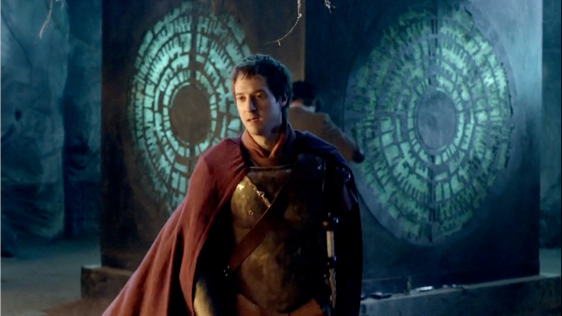
Mostly the Doctor was just trying to one-up Rory.

A lot of people, since this episode have aired, have claimed that this revelation now means that the Doctor is even older, clocking in at a whopping 4,500,002,000 years old.  However we need to remember that, while "Heaven Sent" takes place over the course of 4.5 billion years, it only occurred to the Doctor as 3 days.  He may have experienced it over and over again, but he was essentially reborn each time and never retained the memories of his previous times through the confession dial, so from his perspective only added 3 days to his lifetime.  I think we can still say that the Doctor is about 2,000 years old.  He didn't really live and feel the 4.5 billion years, so I don't think that can count as his age.

I predicted that the Doctor's statement at the end of "Heaven Sent" meant that he was the Hybrid because he's half human and half Time Lord according to an often ignored line from the 1996 movie where the Eighth Doctor says that he is "half human on [his] mother's side." My Mile High Who cohost Shelley said that she thought his statement meant that Ashildr was the Hybrid.  As Shelley and I were both in the same room together as we watched this episode, we both shouted "No!" at the screen when Ashildr asked if the Doctor truly was half human.  We were both quite pleased at where Moffat went with that bit of the script, managing to quite deftly avoid a huge civil war within the fandom, or a straight up Han-Shot-First style revolt, by refusing to either confirm or deny the "half human" line.  The Doctor's simple response of "Does it matter?" doesn't force Moffat to do any major rewrites of cannon, but also makes it quite clear that we are not going to explore the possibility, even if it is true, and I'm fine with leaving it there.

The episode never specifically names who exactly the Hybrid is, but I actually like Ashildr's suggestion that the Hybrid doesn't actually refer to a single person, but the combination of two people, who together become the most dangerous creature in the Universe.  I was originally skeptical of the part about the Doctor and Clara playing Russian roulette with a mind eraser, but in hindsight, it makes perfect sense.  It wasn't just because the Doctor wanted to keep Clara safe, but to destroy the Hybrid, one of them had to stop remembering the other, or else the Universe would be at risk of fracturing as the Doctor tried to save Clara.  Many people at the event I went to called this the "Donna Noble thing," but I had to correct them and remind them that, in fact, in the series as a whole, Donna was the third companion to have her memory of the Doctor erased upon departing the TARDIS.  It happened to Jamie and Zoe before her (although, admittedly, that was retconned in a weird combination of fan theories and external Universe material called "Season 6b" that the BBC has inexplicably declared to be cannon).  Still, I feel very bad for the Doctor in losing his best friend.  He'll probably need some cheering up (from River, of course!).

Fear the hybrid!


I had this inkling in the back of my head that I never quite expressed out loud that Steven Moffat might just put some sort of twist on Clara's death.  I find that Moffat, whenever he kills off a character, likes to find a way to allow them to sort of keep living but not really.  River got saved in The Library.  Amy and Rory got to live out the rest of their lives, just not in their own time period.  It only makes sense that he would have found a way to kind of save Clara while still killing her off.  As some of the people around me at the viewing party suggested, a spin-off about Clara and Ashildr traveling through time together in a TARDIS disguised as a 50's themed diner would be pretty amazing.

And I loved Clara's take on her death, because it really put a weirdly positive spin on it.  Her insistence on not having her memory erased spoke so much about who Clara is now and who she has become.  She never asked the Doctor for safety, that's true.  She wanted to live the life she could with the Doctor, regardless of the consequences.  There were episodes this season that hinted that Clara was getting to be too much of a daredevil, a thrill seeker, an adrenaline junkie, that she was starting to act like she was immortal.  Quite the contrary, she simply didn't care because the risk of death was always worth it to experience life with the Doctor in the TARDIS.  It's a different take on being a companion than I've ever seen before, and certainly gave her a dignity in death that the only other dead companion, Adric, never achieved.  The little trick of this episode bringing her back only temporarily, trapped in a moment in time, also gives her the chance to say everything that's important for her to say to the Doctor before she leaves him.  He needed more than just her warning at the end of "Face the Raven" to keep him from turning cruel and hateful from the death of his companion.  He needed a partial memory wipe combined with a big cathartic sense of closure with Clara, followed by a reminder that what made him special to her in the first place was that he was never cruel nor cowardly.  I'm not saying it will erase the pain of losing Clara completely, but it's probably just what he needed to keep him from spinning completely out of control in Clara's absence.

I have to say, from watching "The Day of the Doctor," I somewhat wondered if Moffat had forgotten about the events of "The End of Time."  I know many people are going to respond to that by saying that "I wish I could forget that episode, too," and they're not wrong.  It's not a very good episode, but it has excellent parts to it.  To be more precise, I really think there's a very good 42 minute episode in there that got excruciatingly dragged out into 2 1/2 hours.  The revelation of why the Doctor had to destroy the Time Lords was mind-blowing and perfectly dark, and I really wanted to see that followed up on, yet "The Day of the Doctor" seems to go out of its way to avoid talking about the evils that the Time Lords have committed, namely wanting to destroy the Universe.  Yet Moffat didn't forget about these atrocities, but was perhaps just keeping them out of "The Day of the Doctor" to avoid turning such a celebratory anniversary episode into a humungous bummer.  But "Hell Bent" makes it quite clear that Moffat has forgotten nothing about what happened in "The End of Time," and the Doctor's showdown with Rassilon makes that quite clear.  Rassilon has now regenerated into Donald Sumpter, as Timothy Dalton was busy, but it gave them an opportunity to make him probably the only actor to ever appear alongside both the 3rd and 12th Doctors in an episode.  That the Doctor begins by banishing Rassilon and the High Council from Gallifrey works perfectly and lines up very neatly with cannon, allowing us now to reestablish Gallifrey in the Doctor Who Universe without the complications brought into it from "The End of Time."  Gallifrey will be a rebuilding planet, certainly, and the Doctor is, again, the Lord President for the umpteen millionth time in his life, but I'm pretty sure he handed that duty off to someone else shortly after the events of this episode, most likely The General.

I do have to comment on the brand new Sonic Screwdriver.  I know a lot of crybabies complained about the temporary retirement of the screwdriver at the beginning of this season, but I liked it, as it forced the writers to find some other ways to get around things.  Plus, the Sonic Sunglasses look really good on Peter Capaldi.  Since I'm writing this after "The Husbands of River Song"aired, I know that the Sonic Sunglasses have not been retired now that the Sonic Screwdriver is back, and I'm fine with that.  The Screwdriver got a much deserved short rest.  But I do have to say that the new one, while a nice pretty blue color, is the most phallic design they've ever done for a Sonic.
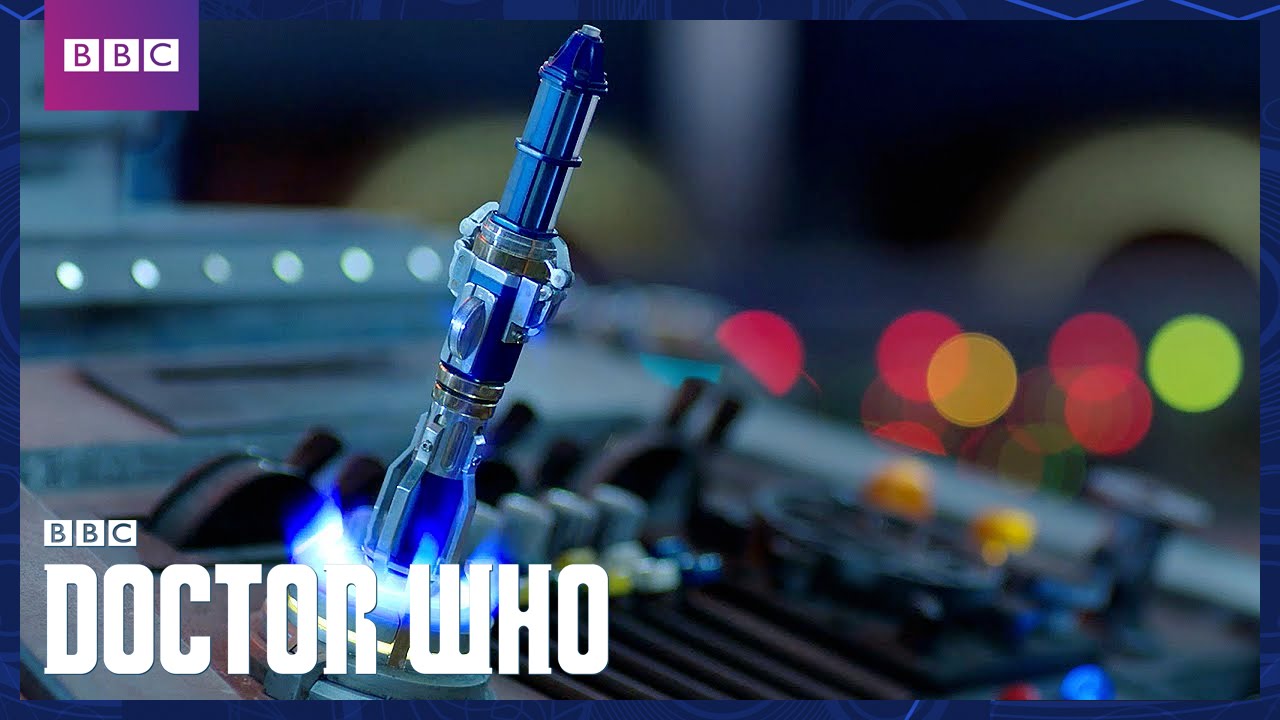
It looks like a Transformer's robot penis.

One thing I'm not entirely sure about, and this is something that many of the Mile High Whovians also brought up, is where Gallifrey stands now.  Is it back in the Universe?  Or is it still hiding in a corner somewhere, terrified to reestablish its presence.  I guess that's for us to see next season.  But first, it's time to revisit our old friend, River Song, for Christmas!


Wednesday, March 27, 2013

Never Trust Anyone Over 50 (Part I): A Preview of Season 7 (Part 2)


Just because Moffat decided to be a spoilsport this season and get rid of all the twoparters doesn’t mean we have to.  Welcome to the new home of my Doctor Who musings, “The Horror of Fan Blog.”  We’re going to start things off here with a two-part introduction to the season in the days leading up to the March 30th premiere.  I had so much to say about the 50th anniversary season, that I had to chop it up into separate pieces.


SPOILERS!!!


Okay, so, in retrospect, I realize now that Moffat might have had the 50th Anniversary on his mind for longer than we thought, because, if you think about it, he’s been rolling out the whole rogues gallery this season.  First we started off with the all time most iconic villain of the series, the Daleks themselves.  Then we had sort of a Silurian episode, albeit without many actual Silurians appearing on screen.  But it was still Silurian-centric.  Then we saw, once again, the most popular recurring villain to have originated in the new series: the Weeping Angels.  Hell, even the Christmas Special was actually the return of an old recurring villain, The Great Intelligence, even though they only revealed it to be The Great Intelligence in the last seconds of the episode.  On top of that, the special even had a Sontaran and a Silurian (as good guys!).  Now, in the second half of the season we’re going to see the return of the Cybermen and the Ice Warriors, and who knows what else is there to surprise us.  Because, on Doctor Who, there really should always be surprises.  That’s what the classic series was always about.  But that won’t stop me from trying to guess what those surprises are going to be.

First, let’s talk about Villains We Know Are Coming:

The Cybermen:
We’ve all been getting bored with the Cybermen, to be honest.  Frankly, how the series has ever had room for both Daleks and Cybermen has always baffled me.  You’d think they’d be so similar that people would lose interest in the Cybermen.  But since their appearance in the 1st Doctor’s final episode, their popularity has endured.

Moffat, realizing that the Cybermen had grown dull, decided he wanted to make them scary again.  While Moffat is really good at making something scary out of something mundane, he doesn’t really seem to have much desire to try to do that with classic Doctor Who villains too much.  So, what did he do?

He called Neil Mother Fucking Gaiman, that’s what he did.

That’s right, “The Last Cybermen” will be the Sandman genius himself’s second episode of the series.  Keep this up, Neil, and hopefully you’ll take over the series after Moffat leaves (#anyonebutgatiss).  If there’s anyone who can make the Cybermen scary again (or, well, creepy anyway), it’s Gaiman.  He’s said that he took the Cybermen from their first two appearances in the black and white era (“The Tenth Planet” and “The Tomb of the Cybermen”) and tried to bring back that style, but without forgetting everything that’s happened with them since.

The Ice Warriors:
The Ice Warriors were introduced in the 2nd Doctor era and were last seen in the 3rd Doctor era, although they haven’t appeared as a villain since the 2nd Doctor era.  Rumors have been floating around of their return forever.  If the classic series hadn’t been cancelled in 1989, the writers said they would have brought the Ice Warriors back in the next year in an episode on a college campus in the 1960s.  In deleted material (that I wish they had never deleted) it would have been revealed that what happened in “The Waters of Mars” was actually a trap set by The Ice Warriors (it still probably was).  And they’ve appeared many times in expanded universe material.  If you wonder why they haven’t been around much, it’s probably because they’re a little too much like the Silurians and, even though the Ice Warriors came first, the Silurians seem to have captured more people’s imaginations.

The Ice Warriors are the ancient inhabitants of Mars who had a flourishing civilization 250 million years before even the most basic forms of life formed on Earth.  That’s why there is no sign of life on Mars:  It’s been so long, the civilization has faded to dust.  Somehow or another some of their race were frozen (I don’t remember how) and, over time, they eventually thawed out with the intention of turning Earth into their new home so their race can survive.

Also they hiss a lot.  Like snakes.  It sounds really cool.

The Ice Warriors episode, called “Cold War,” is going to involve an Ice Warrior stuck in a submarine.  That sounds awesome!  It’s written by Mark Gatiss.  That sounds much less awesome.  (#anyonebutgatiss)

The Trickster:

A promotional poster about this coming second half of the season was released recently and it has some clues hidden in the image.  The image shows the Doctor and Clara crashing through a giant window and, if you look at the images in the reflections, you can see some of the villains who are going to be in this second half of the season.  The largest version of the image I’ve been able to find was right here (click to enlarge):


Now, there aren’t too many things that this taught me.  There are some Cybermen and Ice Warriors who are very visible, but we already knew about them.  There are creatures in the bottom left and right of the image (who look like they might be the same creature) but I don’t recognize them, although they look vaguely like the Sycorax.  The middle right and left have some strange image in them that look like old gas station pumps with oval heads coming out of them.  Don’t ask me what that’s supposed to be.

But then, up in the left corner, not all the way up, but more than halfway up, and all the way up to the top right you see a man in a top hat without eyes.  Creepy looking, ain’t he?  That, my friends, is The Trickster.

For those of you who haven’t heard of the Trickster, that’s because, for the most part, you’re not supposed to have heard of the Trickster, because he’s not a Doctor Who villain.  He’s a villain from the Doctor Who spin-off, The Sarah Jane Adventures, which was a fun but much more kid-based show than Doctor Who.  SJA was a very wholesome show about a journalist and a group of very age inappropriate children who hung out at her house and went on life threatening adventures with her without their parents knowing about it.  As much as we all love Sarah Jane, when you think about it, that show was really weird.

As most of you know, SJA was cut short by the shocking death of Elizabeth Sladen, who played Sarah Jane Smith, after her long but very silent battle with cancer.  She died around the same time that Nicholas Courtney, who played an equally iconic character in the same era as when Sladen started out (The Brigadier), and the show has made two in-universe tributes to the Brigadier.  The first in “The Wedding of River Song” where the Doctor tries to call the Brigadier and finds he’s dead, the second in “The Power of Three,” when the Brig’s daughter is now in charge of UNIT.  Hopefully, the appearance of the Trickster means that there will be some sort of tribute to Sarah Jane.  It would be offensive to try and suggest that Sarah Jane died of anything other than natural causes, but bringing in the Trickster might mean the Doctor is extra motivated by the death of his old friend.

And, while I haven’t watched much of SJA (just the pilot and the two episodes the Doctor is in), I’m sure there are some loose ends to clear up.  The show didn’t get a finale since the lead actress died unexpectedly.  Maybe we’ll see some of the characters from SJA show up to give the show its real finale.  That’s a pretty old tradition with spin-offs and shows from the same creator:  to finish off your story on your other show.  Remember that horrible show from the creator of the X-Files called Millennium?  Since that got cancelled early and they didn’t get to finish the story, they tied up the loose ends of Millennium in an X-Files episode.  Same with the X-Files spin-off, The Lone Gunmen.

The Trickster has been forced outside of time and space and can only barely push his way into our world sometimes.  The only way he can gain access back into our universe is to feed off of the chaos that he creates.  The Trickster created The Trickster’s Brigade, a group that seeks to make changes in history simply to feed off of the ensuing chaos it creates in the timeline.  You’ve actually met a member of the Trickster’s brigade on Doctor Who:  she put the scarab on Donna’s back.  It was only mentioned in passing dialogue at the end of the episode that the scarab was part of the Trickster’s brigade, hence why there was this woman who seemingly had no motive to change time.  She wanted to create chaos.

Now, the fact that the Trickster’s never been on Doctor Who doesn’t mean that the Doctor has never met the Trickster.  The Tenth and Eleventh Doctors both made guest appearances on SJA, and the Tenth Doctor was in an episode called “The Wedding of Sarah Jane Smith” where the Trickster tricked Sarah Jane into thinking she was in love with a human and about to get married, but there was some sinister plot behind it.  I don’t remember the whole thing.  SJA wasn’t very good.

Still, I’m excited at the idea of an SJA crossover.  The Trickster’s a cool idea for a villain, someone who cares about nothing other than creating chaos in the universe.  He could be a force to be reckoned with.  Some people have already suggested online that, perhaps, Clara’s splintering across the timeline was something the Trickster did.  Far fetched, but not more impossible than River being Amy and Rory’s daughter.


Villains I Think Might Be Coming Back

The Master:  Okay, okay, okay, hear me out!  I know some of you are bored with the Master, and frankly I don’t understand why.  He’s the anti-Doctor.  Sometimes it’s fun to see a hero up against a villain who plays to the heroe’s greatest weaknesses.  The Joker is chaotic, and Batman can’t understand chaos.  Lex Luthor is an intellectual villain, and Superman is a brute force hero.  But sometimes it’s fun anyway to see a hero matched up against someone who has his exact same strengths but uses them for evil.

Now, John Simm has denied rumors that he’s returning, but we all know what denial means on this show.  But here’s the reasons I think the Master is coming back anyway:

1.  The Master doesn’t have to be played by John Simm.  Simm was, more or less, the 6th Master.  (The Masters are a little hard to count because, in the classic series, he was out of regenerations so he didn’t regenerate, he just stole bodies to stay alive.  The first Master we ever saw was, presumably, the 13th Master.  Then there was the Master in “The Deadly Assassin” who was supposedly the same Master as the one played by Roger Delgado, but he was shown as being burnt to a crisp like a piece of overcooked bacon, allowing another actor to play him.  Then there’s whoever played the imprisoned Master at the beginning of the 1996 movie, and we have no idea what incarnation he’s supposed to be.  It’s all complicated.)  In the new series, he’s regained his ability to regenerate, so he can be played by whoever they want.  Also, last year reports were coming out that the rumors that Benedict Cumberbatch (who plays Sherlock Holmes in Moffat’s 21st Century adaptation of Sherlock) was going to be the new Master were not just rumors, but that he was in serious conversations with the producers about replacing Simm.  Personally, I can’t think of a better actor to play the Master.

2.  Like I’ve said, the entire rogues gallery is coming back this season.  The Daleks, the Cybermen, The Silurians, The Sontarans, The Ice Warriors, the Weeping Angels, and even the Great Intelligence.  This isn’t an accident. This is an anniversary celebration, for certain.  Moffat’s trying to make this season a full on celebration of everything that makes Doctor Who great.  Where Davies did a good job of bringing the original unholy trinity of Doctor Who villains (The Daleks, The Cybermen, and The Master), Moffat’s done a lot to bring back all the recurring villains, even the minor ones.  With such a parade of classic villains, it seems hard to believe that Moffat would overlook The Master.

3.  The Master’s appearances should always be unadvertised surprises.  This was especially true of the 5th Doctor era.  In every episode in which the Master appeared, he spent at least the first 30 minute segment in disguise.  Unlike Dalek, Cybermen, and Sontaran episodes, his episodes were never labeled with his name in the title.  Sometimes, Anthony Ainsley would even volunteer to not be credited in the first episode so that it wasn’t obvious that he was in the episode in disguise.  Not only does it make sense to bring back The Master, it makes perfect sense for his return to remain a surprise.

The Rani:  No villain has received so much demand from fans to return without the fans wishes being fulfilled.  She only appeared in two episodes, one Sixth Doctor episode, “The Mark of the Rani,” and the Seventh Doctor’s first episode, “Time and the Rani.”  Still, she seems to have made quite of an impression on fans, perhaps because she was the one to kill the least popular Doctor in the history of the series.  The Rani was a Time Lady who, in her youngest years, was part of a popular social circle at the Gallifrey Academy which was made up of her, The Master, The Doctor, possibly the Meddling Monk, and a few others.  The Doctor seems to be the only member of this group to come out of it with a conscience.  At the end of “Last of the Time Lords,” one of the producers called the hand that took the Master’s fob watch “the hand of the Rani,” completely as a joke that he thought nobody would take seriously because he thought nobody would remember who the Rani was.  He was wrong, and had to apologize for giving them a false hint.

And there was a very large segment of fans who thought River Song was going to turn out to be a regeneration of The Rani.  Thank God that isn’t true.

The Rani is a brilliant concept for a villain.  Not so much a megalomaniac (although she kind of was in her second appearance), but her main purpose was as a biochemist.  She studied the chemicals in brains.  The problem was, she had no sense of scientific ethics.  She would play with people’s minds as an experiment without any regard for how it would affect the subjects.  While she became more bent on universe domination in her second appearance, her first appearance made her very interesting in that she wasn’t immoral, merely amoral.  That can make for a pretty dangerous villain.

The problems with this are that The Rani does come from the least popular era of Doctor Who history, the notoriously reviled, gruesome, dark, and generally rejected Season 22.  While the show wouldn’t be cancelled for a few years after that, the show was forced into hiatus for about a year because of the complaints about how violent the show became and the meaner attitude of the new, Sixth Doctor.  While they squeezed a few more seasons out of the show, I honestly believed that those were just a courtesy and that Season 22 was the reason the show was cancelled.  The producers might be reluctant to bring back a villain from that era.  Additionally, as a Time Lady, she can’t return unless we find she somehow avoided the Time War, which would contradict the Oracle’s prediction in “The End of Time (Part 2)”.  But, let’s face it, there will be more Time Lords somewhere down the line, and so, sooner or later, somebody is going to have to contradict the Oracle.  The plus side of bringing back the Rani, of course, is that, as a Time Lady, you could cast literally any woman in the world to play her.

Omega:  Before the Time Lords were the Time Lords, they were just the Gallifreyans.  Three men—Rassillon, Omega, and The Other—came up with an idea that they thought might give them the power of time travel.  This idea involved harnessing the power of a supernova.  Obviously, that was dangerous.  Rassillon and The Other survived, but Omega was sucked into the black hole, putting him in a universe of anti-matter.  Twice he tried to escape his universe, but anti-matter and matter, when they touch each other, create a huge explosion (which is one of the few instances of Doctor Who being scientifically accurate).  He still desires revenge on the Time Lords for abandoning him and not trying harder to rescue him after he gave them the gift of time travel.

(Most of this story was only hinted at in the series, and more fully articulated in a short comic called “Star Death” by Alan Moore.)

In “The Big Bang,” many fans thought that the voice that said “Silence will fall!” and then cracked the Doctor’s viewscreen in the exact pattern of the cracks in time, was Omega.  It’s possible that some still believe it since, once we saw a Silent, we could hear that their voice didn’t sound like that voice in “The Big Bang.”  I’m more inclined to chalk that up to the producers not having decided yet, by the time they made “The Bing Bang,” what the Silence should sound like.

Omega is another character a lot of people want back.  And, if they’re going to finally acknowledge that the Doctor is really a reincarnation of The Other, which I think they’re going to (more on that later), then a great plot line could be made out of Omega.  Of course, if the Doctor is the Other, and Omega is coming back, you need to bring back one more person…

Rassilon:  In the classic series, Rassilon was long dead.  He was a great historic figure in Time Lord history, by far the most honored.  He had managed, somehow, to leave a form of his own consciousness behind in his tomb to warn those who would disturb his tomb (and other stuff, long story), but he was still dead.

In “The End of Time,” Rassilon was alive again with no explanation.  I think the only thing that established him as Rassilon was the Doctor saying it at the very end, as Rassilon was being sucked back into the time lock.  So now you’ve established, twice that the Time Lords can somehow bring people (or, at least, other Time Lords) back to life.  The Master flat out said that that’s what they did to him, and now somehow they have the ability to resurrect their greatest historical figure.  All of this seems to have been just for the Time War.  Where the fuck did they get that technology?  Do the Time Lords have a Lazarus Pit?  I guess that's why Rassilon became evil only when he came back from the dead.