Showing posts with label Doctor Who Book Report. Show all posts

Sunday, August 11, 2013

Lots of Planets Have a Scotland: A Doctor Who Book Report on Peter Capaldi


At age 14, Peter Capaldi started writing in to Doctor Who frequently asking for photos.  At his announcement special, they read one of the letters he wrote in after the 10th anniversary special saying he hoped that there would be a 25th anniversary special in another 15 years.  But when he wrote in demanding to be the head of the Doctor Who fan club and was told the post was filled, he both started harassing the BBC and the current head of the fan club.  The producer's secretary, Sarah Newman, became so enraged that she was once recalled saying "I wish the Daleks or someone would exterminate him or something to that effect."

Now he's the fucking Doctor!

Who is Peter Capaldi?  I've been asking myself that since his announcement as the 12th Doctor.  As I've gone on a Peter Capaldi marathon since the announcement, I've learned a few things about him.  He doesn't have a lot of leading roles in his long career, but he does seem to have been nominated for awards in the few that he does have.  That's a pretty good sign of an underappreciated actor.  In fact, it's how you could describe most classic series Doctors in their pre-Doctor Who careers:  someone who has worked tirelessly in the background, only to get a few good parts here and there.  People like this are usually known as "character actors," but, to be honest, character actors usually play the same kind of character in every single thing they play.  But that's not what Peter Capaldi is.  Peter Capaldi has the one attributes I admire most in any actor, the attribute I judge most of my fellow slam poets by, the attribute I judge my favorite musical artists by, and the attribute that makes me so admire Steven Moffat:

Range!

Peter Capaldi has played a sniveling middle man (John Frobisher in Torchwood: Children of Earth), a fallen angel (The Angel Islington in Neverwhere), and--most famously--a hypermasculine bulldog (Malcolm Tucker in The Thick of It/In the Loop), plus a ton of other very diverse roles.  And he can handle each one with the same level of talent.  When watching him as Frobisher in in Torchwood and watching him as Tucker in The Thick of It/In the Loop, you can forget that he's the same person and, if you watched the two with a long gap in between them, you might not even remember him as his character in the other one.  He transforms into very different people in those two roles, and not just because he can slip easily back and forth between a Scottish accent that's even thicker than the one he has in real life and a basic British accent.

A Dashing Doctor?

Like I said in the last blog I posted, we've had older Doctors, and we've had attractive Doctors, but we've never really had an attractive older Doctor.  In fact, and I can't believe this is true, but, depending on when you count from (his first appearance as the Doctor or his first full episode as the Doctor) Peter Capaldi will actually be either the second oldest or the oldest person to play the Doctor, based on their exact age at the time they debuted in the role.  The difference between the age William Hartnell was when he debuted as the Doctor and Peter Capaldi's age right now is a matter of months, not years.  And yet clearly, Capaldi has aged much better than Hartnell ever did:

It's like Hartnell is looking into a magical mirror that shows you what you wish you looked like.

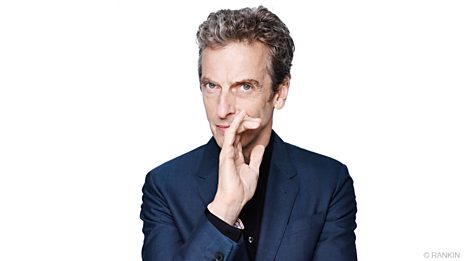
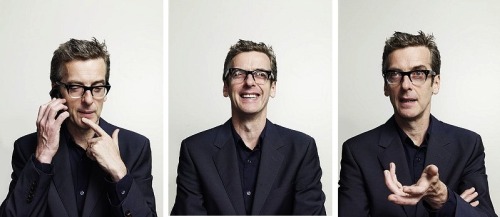
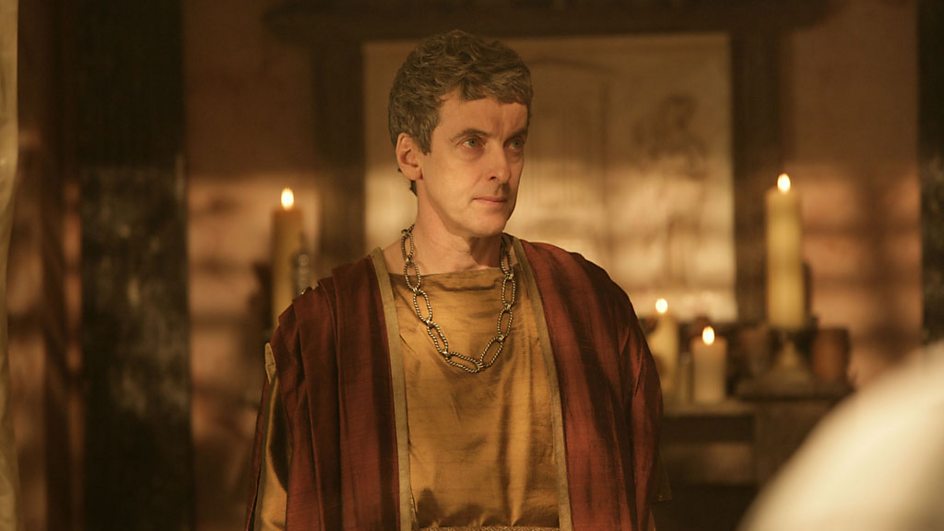
The following are pictures of Peter Capaldi looking very dashing and handsome:


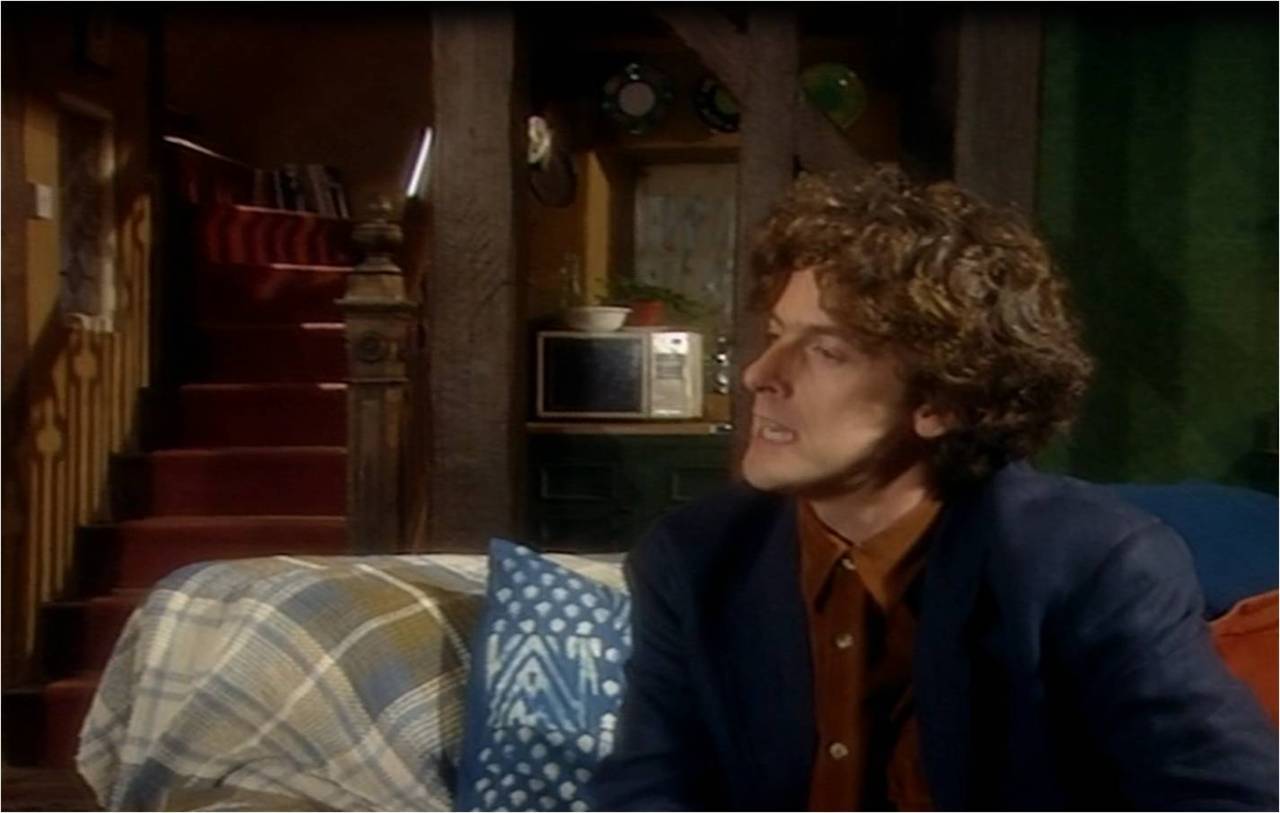
And now these are some pictures of Capaldi looking like a frumpy doofus:
Some of these pictures are thanks to what I swear to God is a real Tumblr that I did not create:
Fuck Yeah Peter Capaldi's Hair
Now, what's the difference between the pictures on the top and the pictures on the bottom?  Capaldi isn't in character for anything in the pictures on top.  Peter Capaldi can be a quite handsome man, when he isn't playing some sort of funny-looking loser.  So, obviously, we hope, for the sake of the screaming fangirls, that the hair and make-up people allow Capaldi to actually be a good looking man.  The hardest part in going older with this Doctor is that Tennant and Smith built up such a female audience with their sex appeal, that the next Doctor has to be sexy.  This is about as sexy of a 55 year old man that they could have gotten.

A Scottish Doctor?

Most Scottish actors can do a British accent.  It's pretty necessary.  Just like American actors from the South should probably know how to do a neutral American accent.  Scotland is, after all, technically still part of the United Kingdom, so at least half of your work is going to be asked to do a lot of roles where a Scottish accent just isn't appropriate.  Peter Capaldi is no different.  The question is, what accent will he use to play the Doctor?

Capaldi will be the third Scottish actor to play the role.  The first was Sylvester McCoy, the second David Tennant.  I always thought it particularly strange that McCoy played the role with his natural accent, where Tennant did it in his fake British accent.  My friend Victor once joked that the reason was because, by the time they hired David Tennant, they knew people were actually watching the show.  But it does demonstrate that, in canon, it has been established that the Doctor can change accents upon regenerations.  As the 9th Doctor said when questioned about his Northern accent, "Lots of planets have a north!"  (I'd love to hear Peter Capaldi say at some time "Lot's of planets have a Scotland!")

Capaldi's Scottish accent actually sounds better to me.  It's his natural accent, it makes him seem more like his natural self.  And it's a sexy accent, unlike Tennant's natural accent.  Tennant's natural accent makes him sound like a dog with a 10 foot tongue is barking at you.  The only problem is that Capaldi's Scottish accent is way harder to understand, at least to an American ear.  Just watch Thick of It and see how many jokes you miss because of that accent.  However, Moffat's a Scot too, and he might be more open to a Doctor with a Scottish accent than Davies was when he cast Tennant.  After all, Karen Gillan offered to play Amy Pond with her British accent, and Moffat wouldn't have it.  Instead, he rewrote the character to be Scottish.

Now, to look at some of the roles our future renegade Time Lord has done in the past:

Local Hero

This is considered to be Capaldi's big break, really.  It was his first major part, and he was in a movie with Burt Lancaster, so it must have seemed like a pretty big deal at the time.  What I found really strange about this movie is how much I really enjoyed it...without understanding why.  The movie seems to have very little discernible plot and virtually no conflict whatsoever, but I still found it wonderfully pleasant to watch.  Maybe it's just because the village it was shot in is so fucking beautiful.

It's about a company in Houston that decides that they want to build an oil refinery in Scotland, which requires them to buy out this entire small village.  "Mac" MacIntyre (Peter Riegert) is sent to try to talk the village into selling because of his success with past deals like this, but also because the company mistakes him for a Scot because of his last name, which is actually an Ellis Island special.  Danny Olsen (Peter Capaldi) is the representative of the company in Scotland and accompanies Mac in his mission.  Mac finds little resistance from the town, as they're actually so excited they have to hide their town meetings about it because they worry that Mac will lower the price when he sees how ecstatic they are about selling.  But he still starts to doubt that he should be buying this village.

Capaldi's role is central, yet subdued.  His character is a young up and comer who is eager to please, but also shy.  He has the only love interest in the whole movie, and it seems like that was on purpose so they'd actually have some slight love story in it.  But the main reason I want to bring up Local Hero is because of the absolutely, brilliantly hilarious way that Peter Capaldi runs in the movie.  Watch (I tried to link it to the specific second he runs, but I can't, so just watch from 1:44:40 for about 30 seconds just to watch him in all his silly running glory):


Wee, I'm an airplane!

The Vicar of Dibley

Capaldi has done a lot of small roles here and there that really don't amount to much and didn't allow me to get a good idea of what his acting abilities are like.  One of these is the long running sitcom The Vicar of Dibley where he appeared twice.  His second appearance is simply bizarre and I don't know why they even bothered to bring him back.  But his first, while not giving me an idea of what kind of actor he is, made me think of one particular thing:

Interestingly enough, the bottom image in my list of frumpy looking haired versions of Capaldi was from The Vicar of Dibley where he was described as very attractive and female characters were swooning over him.  Even for the crazy hair of the early- to mid-90's, that seems a bit of a stretch to say that that's an attractive hairstyle.  I think people were told to pretend that he was attractive, the same way that classic series Doctor Who actors were told to pretend that ridiculous monsters in big, obviously fake rubber suits are scary.

Franz Kafka's It's a Wonderful Life

This isn't something that Capaldi was in, but rather a short film he wrote and directed.  The entire thing is on YouTube, in all it's fucked up, bizarre splendor:


The film stars the Great Intelligence himself, Richard E. Grant, as Franz Kafka writing his famous work, The Metamorphosis and finding inspiration in what appears to be some sort of drug addled dream.  It actually won an Oscar and a BAFTA.  The film looks like some sort of over-the-top experimental college film, but it was actually commissioned by BBC Scotland as an official comic skit.  I'm glad, because if this wasn't meant to be funny, I'd lose a lot of respect for Capaldi.

Peep Show, Midsomer Murders, Foyle's War

Like I said, Capaldi pops up in a lot of little roles here and there.  These are three that I found just because they were on Netflix and I was curious.  My girlfriend and I are watching his most famous work, The Thick of It, together, so when she's not around I look into some of Capaldi's smaller roles.  It whets my curiosity for his more significant roles.

I lump these all together because of the general similarity of his characters in these three shows.  Peep Show is a great Seinfeld-ian sitcom that I've watched all the way through before.  Midsomer Murders is one of those detective dramas for people over 70 like Murder She Wrote that just allow them to pass time until they die.  Foyle's War is a period drama about civilian life during World War II with a kind of detective angle.  In both Peep Show and Foyle's War he plays your typical left-wing radical college professor/intellectual, while in Midsomer Murders he plays an overzealous choir director.  They're all the same general type of character:  educated, stuffy, stuck up.  If there's anything close to a Peter Capaldi stock character, this is it.  He does have range, but it seems that a lot of people want to pick him up to play stuffy intellectuals.

Neverwhere

That which takes the image of an angel, does not necessarily become, itself, an angel.
Like I've said before, Capaldi has been in a lot of things I've seen that I didn't remember him from because I never bothered to learn who he was.  Funny thing how he's now going to be the star of my favorite show.  I had seen Neverwhere in college and didn't remember him, but I remembered his character and I loved his character.

Neverwhere is the creation of the legendary fantasy/sci-fi writer who recently became a Doctor Who writer, Neil Gaiman.  It started out as a TV mini-series, but Gaiman, disappointed with the TV version, decided to turn it into a novel to tell the story the way he really intended to.  Then it became a radio drama.  And a comic book.  And a play.  And, for $10,000, Neil Gaiman will come to your bedside with a lute and perform a musical version of it in perfect iambic pentameter.  Seriously, Neverwhere has been made into too many different things.  And, as Gaiman himself pointed out in a tweet recently, Benedict Cumberbatch played the Angel Islington in the radio play version of Neverwhere, so one Islington is now the Doctor and one is Sherlock Holmes, both working under Steven Moffat.

This is going to get pretty spoilerish about Neverwhere and since, upon rewatching the mini-series recently, I found it to be much better than I remembered, I don't want to spoil it for you.  Neverwhere was made with such a small budget and is shot on poor quality video that I think I wrote it off when I was a pretentious film student.  In reality, they did some really great things to make a really creepy story with some really inexpensive special effects.  So go watch it if you haven't, and highlight the following to read it if you have seen it.

Okay, so if you've highlighted this, you should know the plot already:  the Angel Islington, who had once watched over Atlantis, was banished to London Below to take care of that city in a way that he failed to with Atlantis, having let Atlantis fall.  To escape from his prison, required a key protected by the Black Friars and the key had to be operated by the Lady Door.  This was to ensure he wasn't released until his punishment was up.  Islington, however, chose to take matters into his own hands and trick Door into getting the key for him using an elaborate ruse that began with having her family killed.

What Neverwhere does that I've always found interesting (Gaiman might have said this on one of the audio commentaries, but it's been so long since I listened to them and I don't feel like doing it again) is that it reverses the symbolism of black and white.  Black is associated with evil in our society, where white is associated with good.  "White hats" and "black hats" are terms used to describe good and evil characters, derived from the imagery used in westerns. Some have pointed out the unfortunate racial implications of this, suggesting it contributes to an association in the mind with darkness and evil.  While I understand this argument, we also have to keep in mind that the dark is something that humans are naturally afraid of because it takes away their sense of sight.

Neverwhere reverses these black and white symbols.  Dark colors and even dark lighting seem to denote good people, where white and brightness--particularly in the case of Islington--are associated with evil.  Partially, of course, that's because Islington is an angel, but I still feel like it's a wonderful reversal.

Neverwhere demonstrates one of Capaldi's defining characteristics, and that's his ability to play the line between good and evil very well.  Islington is the villain of the story, but he is also an angel, an angel that begins the story by tricking Door and Richard into thinking he's on the side of good.  He has to be a wolf in sheep's clothing, and he does it very well.  Even when we see the true face of Islington, he performs this evil role with a frighteningly sweet and soothing tone in his voice.  It adds to the creepiness of Islington's betrayal.

Strictly Sinatra

The only feature length film that's been written and directed by Capaldi.  I got literally 10 minutes of this movie before I got so bored I gave up.  I love you as an actor, Peter.  Stick to acting.

Torchwood:  Children of Earth


It was actually pretty funny and coincidental that I chose to rewatch my favorite season of Torchwood about one week before the big announcement, having no idea that I was starting my 12th Doctor viewing marathon a week early.  I never would have dreamed in a million years that I was watching the next Doctor.

No spoiler warnings here.  If you're reading this, you should know Children of Earth.

Frobisher is a pathetic character, even in the classic Greek sense of the term.  He evokes pity and sympathy from the audience.  His everyman/middleman character leads the viewer to wonder what they would be brought to do in such a horrible situation.  Again, Capaldi shows his strength at playing the line between good and evil.  Is Frobisher a good or a bad person?  That's a tough question to debate.  By certain concepts of morality, particularly utilitarian morality, he makes a morally correct choice.  By other concepts of morality, he's doing a horribly immoral thing.

Even his final action, killing himself and his family, can be conceived as moral, since it is an attempt to save his family from a fate much more horrible.  There was nothing, in his view, that could be done to save his children from living a vegetative life as the drug that an alien race gets high off of.  So he euthanized them, in a way.

Frobisher is another example of Capaldi's impressive range, because I don't see a speck of the pathetic Frobisher in his performances as the Angel Islington or as Malcolm Tucker, as we shall see in a bit.

Thick of It/In the Loop
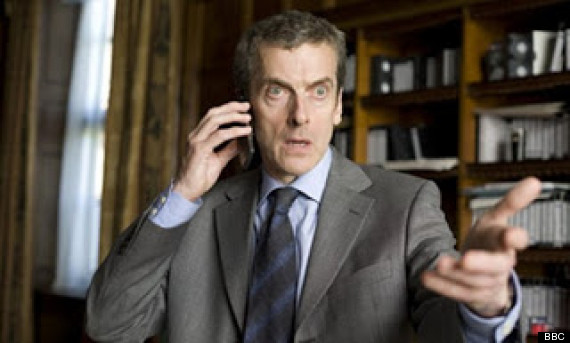
"We're being invaded by aliens with bloody plungers for hands? We really are at the bottom of the fuckin' food chain."
Now to the meat of the piece.  This is Capaldi's most famous work, and with good reason.  Thick of It is a brilliantly funny political comedy that is like a cross between House of Cards and the British version of The Office.  In the Loop is a related movie, shot in both England and America, which stars many of the same actors as Thick of It playing very similar characters to their Thick of It characters, but with different names and positions.  Peter Capaldi is one of only three people in the movie who actually play their own characters, making it a sort of half-spin off to Thick of It.  It seems to me that they wanted to do something bigger than Thick of It, but wanted it to take place in a sort of separate universe so that it wouldn't have lasting implications for the plot of Thick of It.

Capaldi's character is Malcolm Tucker, is the government director of communications, a sort of bulldog from the Prime Minister to keep everyone's public image in check.  He does this by screaming profanities left and right, bullying government employees into submission.  The show follows the fairly irrelevant office of the Secretary of State for Social Affairs and Citizenship.  The Secretary of State changes between Seasons 2 and 3, and that was a pretty big shift in the show as it seems to have enhanced Capaldi's role.  In the first two seasons, the pathetic Hugh can be easily bullied, so Tucker didn't have to keep showing up to shout him into towing the line.  The third and fourth seasons feature Hugh's replacement, the more assertive (yet still not that assertive) Nicola Murray.  This leads to Malcolm Tucker being a heavier focus of the show as he fights it out with Nicola.  It seems to me that Hugh was supposed to be the center of the show, but after two seasons they realized how much better of a focal point Malcolm Tucker was and shifted it towards him.

Is Tucker a good guy or a bad guy?  Again, Capaldi shows a talent for playing moral ambiguity.  His primary focus seems to be keeping the government stable.  As the Christmas Special, "Spinners and Losers," demonstrated, his desire to keep the government stable is mainly to protect his own job.  He doesn't show a lot of loyalty to anyone in particular in "Spinners and Losers."  Does he care about the government's job to serve the people?  Doubtful.  He's part of the liberal party, so it's possible that deep down he tears people to shreds and fights to keep the government stable so that it can help the people, but I doubt that he cares much either way what the government policies are.

In In the Loop, he does, in the end, start to push to start the war in the Middle East.  But I think it becomes pretty clear that Tucker didn't care whether the UK and the US went to war with the Middle East or not.  If the government told him that they wanted him to stop the war, he would probably have done his job just as well, barking and threatening to disembowel everyone around him to get it done.  For all of his forceful controlling of other people, Tucker is, himself, a puppet.  He'll do whatever the Prime Minister thinks is appropriate.

I think this was really the role that won Capaldi the spot as the Doctor.  He was a middling actor until this, mostly playing small roles and rarely getting first billing for anything.  Capaldi really gained his notoriety for this role in particular.  It's won him nominations for dozens of awards.  He deserves this fame for this role in particular.  His expletive fueled tirades are pulled off so effortlessly that you believe Tucker would have to be a raging genius to be able to come up with all of this bizarre violent imagery off the top of his head.  And, most importantly, as I pointed out, I don't see a touch of any of his other characters in his portrayal of Malcolm Tucker.  Tucker is a different man with a different face from Islington or Frobisher.  And he fits perfectly into the skin of all three disparate characters.


Conclusion:  A Great Doctor!

After studying all of his work, I'm really satisfied with the casting of Peter Capaldi as the 12th Doctor.  I can see the grandfatherly wisdom of the first 3 Doctors in his face.  Yet, despite being the oldest Doctor now (more or less), there have been several who have looked older than him.  He has the wisdom of age in him, and yet the vitality of youth.  The diversity of his work leaves a lot of avenues open for how he will choose to portray the Doctor.

A lot of people have suggested that he can bring some darkness back to the role, like Christopher Eccleston.  (Personally, I think that people who call Eccleston's Doctor dark confuse darkness with meanness.)  I don't know if he will or not.  He could bring a lot of depth and many layers to his Doctor.  I can imagine someone both stern and loving.

I've said that the two main characteristics of the Doctor across all of the regenerations are compassion and curiosity.  In some Doctors, one or both of these traits aren't easily visible, but they are always there in abundance, even if they're hidden.  Capaldi's talent for the mixing of good and evil can bring out the darker more violent side of the Doctor, but will not likely hide the compassion and curiosity at the same time.

"The Doctor lives his life in darker hues" the Great Intelligence warned us.  "And he will have other names before the end.  The Storm, the Beast, the Valeyard."  Will Peter Capaldi bring us the darker hues?  He'll be supported by the writing of the great Moffat, master of the dark fairy tale.  Peter Capaldi's seasoned acting ability and Moffat's writing (assuming he gets some of the magic back in Season 8) is a perfect combination for a really strong outing for the first older Doctor since the classic series.

Peter Capaldi, on behalf of Whovians everywhere:  We can't wait to see you get started!

Tuesday, May 21, 2013

He Who Must Not Be Mentioned: A Doctor Who Book Report on The Valeyard

I am the Valeyard!  Marvel at my completely impractical faux samaurai outfit!


Some people have been tossing around a theory that the John Hurt Doctor is not the "True 9th Doctor," as I've referred to him.  Some have suggested that he's either a pre-Hartnell Doctor or The Valeyard.  I realize now that dialogue in the episode doesn't specifically declare John Hurt to be an incarnation from between the McGann and Eccleston Doctors.  But him being either pre-Hartnell or The Valeyard seems unlikely.  The Doctor, before the Hartnell Doctor, was "The Other."  This has never been mentioned on TV, but was elaborated in the novel Lungbarrow.  Even though this is an idea that started in the TV writers' room, I don't think it was ever meant to be stated explicitly on screen.  Even if I was a writer for Doctor Who, I wouldn't touch "The Other" with a ten foot pole.  And I love the plotline about The Other.  It's just not something that needs bringing up.  The suggestion that Hurt could be The Other rests on the fact that The Other is someone who didn't bear the name of "The Doctor."  But the 11th Doctor said that the John Hurt Doctor isn't The Doctor because he broke the promise of the name.  When he was The Other, he didn't have that name or that promise yet.

The Valeyard is more plausible, but there are still major problems with that theory.  But, because of this rumor, and also because "The Name of the Doctor" was the first mention of The Valeyard on the show since his final appearance in "The Ultimate Foe," I got some requests to talk more about The Valeyard on here, including my friend Tim Veilleux, who specifically requested a book report.

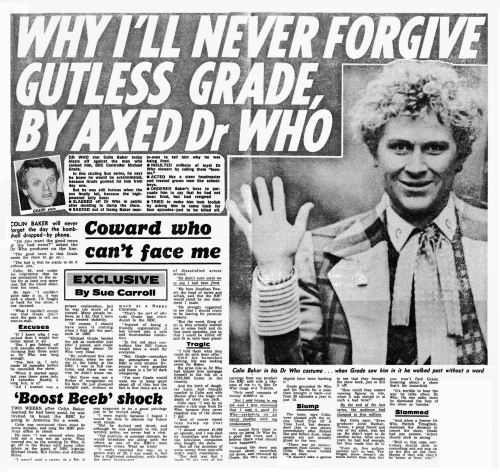
The 22nd Season of the classic series of Doctor Who was an unmitigated disaster.  Contrary to popular belief, I don't think it was the acting of the new Doctor, Colin Baker (who I'll hopefully meet at the end of this month!).  I don't think it was that the writing was bad.  It was because it was fucking gruesome.  A few years ago, a website called Topless Robot did a great article on why Colin Baker wasn't entirely to blame for the unpopular 6th Doctor era, because he was getting screwed left and right.  The most amazing one to me was the fact that BBC Controller, Michael Grade, who claimed to hate the show because of its poor production values (he controlled their budget), was fucking Colin Baker's ex-wife!  So Colin Baker had a target on his back from day one.

Besides the violence, the other main complaint was that the 6th Doctor was brash, pompous, and insensitive.  As the Topless Robot article points out, this was actually an attempt at an arc.  The 6th Doctor was supposed to regenerate as a dick, lose his companion, and gradually remember why he was the Doctor.  However, the fact that the Doctor got meaner and that the stories got darker made fans so upset that they never got to finish this arc.  Some of the fans started to join in with the chorus of critics who had been calling the show too violent for decades.  The season is solidly disturbing.  In "Vengeance on Varos," the most notorious serial, criminals were tortured on live television for the viewing pleasure of the people of Varos.  Two people fall into an acid bath, and, depending on how you interpret the scene, the Doctor might have pushed one of the guys into the acid bath.  Two different serials during the season were about cannibalism*.  But if you truly watch these episodes and pay attention to them, you'll see some really creative episodes, just not ones that you'd expect on a children's television show.  The sudden shift from Peter Davidson's friendly 5th Doctor and his science-oriented era to Colin Baker's ultra-pompous 6th Doctor with grim and dark morality tales was just too much for the audience to handle.  Michael Grade (I imagine on a phone call while he was literally inside Colin Baker's ex-wife) put the show on an 18 month hiatus.


An attempt was made to soften the change in tone by casting Colin Baker alongside Nicola Bryant's cleavage, high pitched screaming, and horrible fake American accent
When the show came back, executive producer Jonathan Nathan-Turner, and head writer Eric Saward, put together a season long plot line called "The Trial of a Time Lord."  The Doctor was put on trial by the Time Lords for the second time for the same offense:  interfering with the affairs of other species.  If you know the history of what was happening behind the scenes with Doctor Who's near cancellation, you'll notice that the season is a perfect metaphor for the show being "on trial" after Season 22.  The Doctor defends himself against allegations of being violent, and he claims that he only resorts to violence in the direst of emergencies.  However, there was quite a bit of argument between Nathan-Turner and Saward about how dark the story should be.  So some forced rewrites supposedly added to the highly confusing plotline I'm going to attempt to relate to you.  The writers of the show didn't successfully explain the Valeyard in 14 episodes.  I'm going to try to explain him in one blog post.  Here goes nothing:

The Doctor's prosecutor in this trial was known as The Valeyard.  Context suggests that the term "Valeyard" is a Gallifreyan word for "Court Prosecutor."  The Valeyard shows two of the Doctor's adventures as evidence of the Doctor's guilt, allowing two serials ("The Mysterious Planet" and "Mindwarp") to be aired within a larger framework of them being "evidence."  It is explained that every TARDIS has a device in it that records all the events that happen to anyone in the area, including people who the Doctor was not in contact with.  It could literally record the actions of side characters in the story when they weren't near the TARDIS or talking to the Doctor or his companion.

Oh, don't worry, this plot gets fucking weirder.

The Doctor then shows another serial as his defense ("Terror of the Vervoids"), which he claims is from his future.  If it seems ridiculous that the Doctor would find an adventure from his own future, show it, and then not significantly change the course of events when he got to that point in his timeline in the future, that's because it is ridiculous.  What's sillier is that the charge of genocide is added to the Doctor's charges after watching "Terror of the Vervoids" in court, despite the fact that it hadn't happened yet.  Apparently, on Gallifrey, you can be executed for future crimes.  However, it was an awkward but necessary plot device to explain the change of the Doctor's companion mid-season.  (Just trust me on this.  We're getting into such complicated shit here, I'm really worried about my sentences not making any sense.)


"Terror of the Vervoids" is actually a pretty good episode if you can look past the fact that the villains are walking vaginas.
The Valeyard seems to be a particularly harsh prosecutor as he calls several times for the Doctor to be given a death sentence.  The Doctor insists that the evidence being shown at his trial is all altered from what his TARDIS really recorded.  This defense falls on deaf ears, as everyone on Gallifrey insists that, since this information is all recorded in the Time Lords' "Matrix," it can't be altered because the Matrix is tamperproof.  Tamperproof is one of those words like "unsinkable":  It always seems to be a challenge.  In a bizarre twist (in a serial already full of bizarre twists), the Master shows up to prove that the Doctor is right and that there is absolutely a way to tamper with the Matrix by tampering with the Matrix himself.  He then reveals the truth about the Valeyard:

He's a future version of the Doctor.


Well, he's sort of a future version of the Doctor.  The Master describes The Valeyard as such:  "There is some evil in all of us, Doctor, even you. The Valeyard is an amalgamation of the darker sides of your nature, somewhere between your twelfth and final incarnation. And I may say, you do not improve with age."  The phrase "somewhere between your twelfth and final incarnation" is very confusing.  The Doctor is supposed to only have 12 regenerations, meaning there can only be 13 Doctors.  Therefore, I always took it to mean that somehow this creature spins off from the Doctor in the midst of his final regeneration, creating a physical manifestation of the Doctor's darker nature.  However, my friend Patrick pointed out the problem with this sentence of the Master's.  He said that it suggests that there have to be more than 13 Doctors for the Valeyard to have been created between the 12th and the final manifestations because "integers don't work that way."  But that assumes that the Valeyard is a full "Doctor."  I never took him to be as such.  Just a part of the Doctor, not one of his full regenerations.

The Time Lords had somehow screwed up and moved the Earth two light years through space, and renamed it Ravolox.  They made a deal with The Valeyard that he wouldn't rat out the Time Lords if they let him prosecute the Doctor and take his remaining regenerations.  The Valeyard, after being figured out, resorted to trying to blow up the courtroom.  The Doctor defeated the Valeyard in a bizarre, trippy battle inside the Matrix, but, in the final shot, we saw that the Valeyard was still alive, disguising himself as a member of the Time Lord high council--a cliff hanger that was never, ever picked up on.

Not a single moment of this story was written without the assistance of acid
"The Trial of a Time Lord" can be very interesting if you watch it closely and appreciate the subtext about Doctor Who and the BBC.  But the plot makes no sense whatsoever.  How can the Doctor look at future adventures of his own self without breaking laws of time?  How can the Valeyard be trying to kill the Doctor and get his future regenerations?  Shouldn't that kill the Valeyard himself?  How was the Valeyard created?  If the Valeyard survived and infiltrated the high council, what happened afterwards?  Why does the Valeyard wear a hat that makes him look like a penis?


The Valeyard is probably the most written about character in Doctor Who fan fiction, because everyone is still dying to figure out what the fuck he is.  I admit to writing a fan fiction myself that explained his creation in that the Dream Lord found a way to manifest himself in a physical form and then regenerated into the Valeyard.  It's as good of an explanation as any.

In 1991, Virgin launched the Virgin New Adventure Novels, a series of novels that continued the Doctor's adventures, and were often much more adult than the TV show ever was.  According to the Doctor Who Wiki (and we all know how trustworthy wikis are), the following memo was issued to writers of the novels:"Anything featuring the Valeyard is out — he's a continuity nightmare, and a rather dull villain."

The TV writers must have gotten a similar memo, because as soon as "The Trial of a Time Lord" was over, the Valeyard never came back, and neither did the 6th Doctor.  Colin Baker became the only actor to be fired from the role of the Doctor, forcing Sylvester McCoy to shoot the 6th Doctor's regeneration sequence the following season by wearing a blonde wig and never letting us get a good look at his face.  Officially, the 6th Doctor regenerated from hitting his head on the TARDIS console.  This might have been even more offensive to Colin Baker than being ousted by the guy who was fucking his ex-wife.


I can't stress enough how ridiculous and hilarious this is.
Baker was fired by the guy who was  fucking his ex-wife!
Thus, the writers seemed always gun shy about attempting to address the Valeyard again after he was such a train wreck.

A few attempts have been made to address the Valeyard in expanded universe media.  My favorite is He Jests at Scars..., a Doctor Who Unbound audio story that imagines an alternate Universe where the Doctor loses his battle against the Valeyard and the Valeyard takes over his regenerations.  It's horrendously depressing, as are all Doctor Who Unbound stories.  My friend Patrick informed me that there's one story where the Valeyard turns out to be Jack the Ripper.  By the transitive property, this means that Vastra ate the Valeyard.  Then again, every evil person in expanded universe media has been accused of being Jack the Ripper.

The timing is all wrong for John Hurt's Doctor to be the Valeyard.  If Hurt is not "True 9," as I believe he is, then when was he created?  The Valeyard is supposed to be created after, or during, the 12th Doctor's regeneration into the 13th Doctor.  Granted, I explained away the discrepancy when I wrote about the Valeyard in my fan fiction, and that could be done in the show just as easily.

The trouble is that nobody's wanted to touch the Valeyard with a Hazmat suit since 1986.  Sifting out the muddled story of the Valeyard would be hard enough if you were doing it with an audience who remembers who the hell the Valeyard is, let alone an audience that probably doesn't remember him.

But what is significant, however, is that the Great Intelligence, in "The Name of the Doctor," explicitly stated that the Doctor will someday take the name of The Valeyard.  I think a lot of people are seeing this as a hint.  But for the Valeyard to be addressed, it would have to be in a very subtle, roundabout way.  It would have to be a plot that fans of the classic series would recognize as being about the Valeyard, but which the new series fans would simply not understand.  It would have to be a plot that is so far in the background that the new series fans wouldn't even notice what was happening.  Even if he could find a way to pull it off, it would probably be career suicide if Moffat tried to address it, and Moffat doesn't like to dip into the past too much anyway.

Thus, I think the reference to The Valeyard was fleeting and not meant to hint at anything.  I think John Hurt is playing True 9, not The Valeyard, or any sort of pre-Hartnell Doctor.  That was the implication that Moffat wanted us to be left with.  Yes, Rule 1, Moffat often lies, and he misled us with the title "The Name of the Doctor."  But, if you remember the secret from "The Impossible Astronaut" as to who it was that shot the Doctor, and it turned out to be River, you'll realize that, sometimes, when we think Moffat is trying to be sneaky, he's actually being blatantly obvious.


*Assuming that you consider any intelligent humanoid eating another intelligent humanoid cannibalism.  If you consider such cross-species consumption to not be cannibalism, then only one serial is about cannibalism.

Wednesday, May 8, 2013

Cyber Bullying: A Doctor Who Book Report on The Cybermen


The Cybermen were first introduced in 1968's serial, "The Tenth Planet," which has the distinction of being the first serial to see a Doctor regenerate.  Somehow, they took hold of people's imaginations so much that, even though they are practically just Daleks with legs, they developed enough popularity to become part of what I call the "unholy trinity" of Doctor Who villains:  The Daleks, The Master, and The Cybermen.  These three villains have been used more than any other villain.

The fascination with the Cybermen probably began because their original design
make them look like a horrifying early prototype for The Human Centipede.
When Doctor Who was revived in 2005, Russell T. Davies had a lot of very good ideas about how to bring in new fans, not just please the old ones.  He really seemed to have learned from the 1996 movie, which did a great job of alienating both old and potential new fans.  The most famous change he made was the Great Time War, which just tossed aside a lot of the really long back story that had now been built up for both the Time Lords and the Daleks, allowing them to slowly reintroduce that back story.  The Cybermen, however, had no part in the Great Time War, and so another way had to be devised to bring back the Cybermen while erasing their backstory.  And, to be honest, the Cybermen's story had become far more overly complicated than either the Time Lords' or the Daleks'.  So Davies, who I always said was a better show runner than a writer, decided to do this by going to an alternate universe to create a new race of Cybermen.  These two separate sets of Cybermen are known by two different sets of names:  The Doctors' Universe/Pete's World Cybermen.  That one is a little bit bulky.  Instead, I like to refer to them by their more simple names.  The classic series Cybermen are "Mondas Cybermen" and the new series Cybermen are "Cybus Cybermen."  I'll explain.

Once upon a time, Earth had an identical twin planet called Mondas which had existed right along side Earth.  The only difference between Earth and Mondas was that the continents were flipped upside down.  Yet, while Earth remained in its orbit, Mondas drifted away, somewhere referred to as "the edge of space."  Without the heat of the sun, Mondasians needed to find ways to adapt using technology.  Over time, they eventually got to the point of replacing their own body parts with machines.

In 1986, Mondas had an energy crisis, so they found a way to pilot their planet back to Earth so they could invade it and take their energy to power Mondas.  This backfired as the energy overloaded their planet and destroyed it.  Many of the Cybermen's subsequent plans were designed to try to reshape time to save their own planet.

The Cybermen, desperate to find a new homeworld, found the planet Telos, which seemed to be abandoned.  The native inhabitants of Telos, the Cryons, could not live in temperatures above zero.  For a long time, Telos was cold enough for them.  But one day, the planet began to warm up to a sweltering still-cold-enough-for-a-human-to-freeze-their-tits-off and the Cryons had to build refrigeration units underground.  The Cybermen, who are dicks, came in, killed most of the Cryons, and used their refrigeration units to keep Cybermen that were in suspended animation.

The Mondas Cybermen had one really easy weakness to exploit.  They were essentially allergic to gold.  That's right.  Somehow, gold clogged up their respiratory systems and they choked to death.  This resulted in someone developing a defense against the Cybermen in the form of a "glitter gun" that shot gold at them.  Not kidding.

A website for a small group of Cybermen who actually prefer to be covered in gold glitter.

Now, we all know that, in the new series, the Cybermen are completely different.  They were started in a parallel universe where most things end up strikingly similar, but essentially different, to our universe.  Fuck free will.  This allowed a new race of Cybermen, the Cybus Cybermen, to be created, who would come across the void to invade our universe.  While the Doctor thought he got rid of them in "Doomsday" and "The Next Doctor," he seems to have failed.  There seem to still be Cybus Cybermen in this universe.

Starting around "A Good Man Goes to War" the Cybermen stopped featuring the Cybus logo on their chests.  This means one of two things:  either they're Mondas Cybermen, or they just decided that they have no loyalty to their creator anymore.  I think it's more likely that the current series' writers have an attitude of "Fuck it."  They're just Cybermen.  They don't care to specify which type of Cybermen they are.

The Doctor Who wiki, The TARDIS Data Core, says that this week's episode, "Nightmare in Silver," will feature Mondas Cybermen. The funny thing about a wiki is that, as long as you link to a source, people will assume that your information is correct and won't delete it.  Nobody bothers to check to make sure that the site that you linked to for your source actually gives the information you claimed that it does.  The link that supposedly proves that these are supposed to be Mondas Cybermen leads you to a page about the episode that mentions nothing of the sort.  I'd fix it if I knew how to delete such things.  So, it's possible that we're looking forward to a great Mondas Cybermen episode.  It's possible that we're looking forward to a great Cybus Cybermen episode.

What I'm certain about, though, is that it will be a great episode.

Moffat said he brought in Gaiman for this one because Moffat wanted to make the Cybermen scary again.  If "The Doctor's Wife" is any indication, when Gaiman thinks he's being terrifying, he's actually created something that's really just creepy.  I'll settle for creepy, though.  It's Neil Mother Fucking Gaiman.  It has to be awesome.

Tuesday, April 23, 2013

The Cartmel Masterplan: A Doctor Who Book Report

HUGE-ASS FREAKING SPOILERS!


So, I feel like I have to clarify some of what I'm talking about when I talk about the Cartmel Masterplan.  It's vital to what I think that Moffat is doing with the Doctor's name, and I've believed that since "Let's Kill Hitler," when I accurately predicted "the question."  I think Moffat is invoking the Cartmel Masterplan with the question.  So you have to understand the Masterplan to understand why I think the Doctor's name can never be said, and why an entire religion was formed to make sure it's never heard by anyone.  So this is a reprint of a note I posted on Facebook after "Let's Kill Hitler," which I have now updated:


Some of those who were involved with the “Masterplan” object to the name “Masterplan,” as it implies a much more thought out agenda than they really had in place  Essentially, script editor Andrew Cartmel and his writers, working on seasons 25 and 26 of the classic Doctor Who with Sylvester McCoy (the 7th Doctor), sought to bring back some of the original mystery of the 1963 Doctor whose origins were largely unknown to viewers.  By the time they got to the 25th season of the show, so much was known about the Doctor, that the writers wanted to create more of a backstory, more to discover.  The idea was for them to very gradually lay hints that the Doctor was actually the reincarnation of an ancient Time Lord known as “The Other,” who, along with Rassilon and Omega, created Time Lord society by inventing Time Travel.  By making the Doctor a reincarnation of “The Other,” it would have conferred a sort of God-like quality to the character.

So, what halted the Masterplan?  Well, long time producer Jonathan Nathan-Turner was somewhat opposed to the Masterplan, and often rejected scripts steeped too deeply in the Masterplan and would delete dialogue that referenced it.  A particular line in “Rememberance of the Daleks” was removed which suggested that the Doctor was “more than a normal Time Lord,” because Nathan-Turner thought some would be offended by the thought of the Doctor as a God.  The line turned, instead, into a fleeting inference, where the Doctor "accidentally" uses the word "we" to describe the founding fathers of the Time Lords.  When his companion asks him about it, he changes it to "they."

If you watch the Seventh Doctor episode “Ghost Light,” you’ll notice the episode makes no sense. The actors said they were confused by the script.  That’s because the episode’s first draft took place on Gallifrey and was about the Doctor’s history.  Jonathan Nathan-Turner vetoed that, and so the episode was rewritten to have nothing to do with Gallifrey or the Doctor’s background, which is why it’s one of the weirdest fucking episodes in the history of the series (watch it on drugs if you can, because it was clearly written on them).

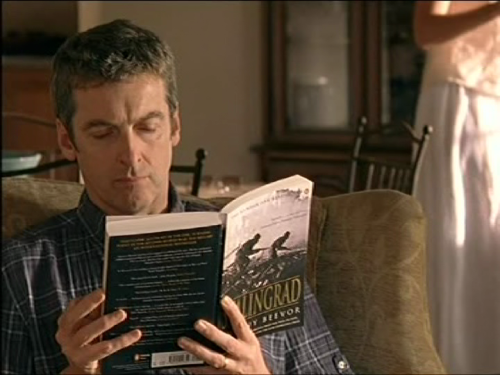
Furthermore, the Masterplan was halted by something much more simple but much more difficult to overcome:  the show’s cancellation in 1989.  At that point, Andrew Cartmel and some of his writers turned their attention to the Virgin New Adventure novels, where they implemented some of their concepts of the Masterplan, culminating in the novel which is supposed to be the true fulfillment of the plan:  Lungbarrow (which, admittedly, I have not read).

But this picture alone makes me want to read it
Some have suggested that the modern series does show some influence of the Masterplan.  At the very least, the new series does not contradict the Masterplan.  One of the examples fans often point out to suggest that the new series is following the Masterplan is the Season 3 finale, where the Doctor is able to overcome the Master through an act of worldwide prayer directed towards the Doctor, suggesting the Doctor does have some of those God-like qualities that Nathan-Turner objected to giving him.  Some have even gone so far as to try to analyze how many syllables River Song whispers to the Doctor in “Forest of the Dead” when she tells him his real name, claiming it’s possible that she was saying “The Other” (although, I’d like to point out, that whether or not The Doctor is really The Other, I doubt that either of these terms are his real name).

Now, I doubt that anyone would ever be so obvious as to say on screen “The Doctor is the Other.”  But if a big part of what we’re about to get into involves the Doctor’s true identity, I wouldn’t be surprised if we see some very vague, very subtle references back to the Masterplan.  So you might ask, why can't the Doctor's name be said?  Like I pointed out in the introduction, an entire religion (The Silence) was created to ensure that the Doctor's name is never said.  "Silence will fall," was their slogan.  As Dorion pointed out, "Silence must fall" would be a better translation.  When the Doctor reaches the fields of Trenzalore where nobody can fail to answer or answer falsely, the Doctor will be asked the question that must never be asked:  "Doctor who?"  Why can't this question be asked?

In Judaism, names of the divine are very sacred.  Rabbinical Judaism believes that the four letter name for God, YHWH, should never be uttered except the High Priest in the Holy Temple on Yom Kippur.  Jews are encouraged to substitute "G-d" for "God" and "L-d" for "Lord," as the name is considered to be extremely sacred.  Ancient Jews believed that there is a true name of God that can never be known to man, because the name has a power over God.  As God is all powerful, it is impossible (or, some believe, wrong) for God's true name to be said and for any man to gain power over God.*  A certain movie that I will not name because it could spoil it suggests that to know the true 216 name of God would destroy the human mind.  The other Abrahamic religions don't seem to share this belief, but have other rules about how God's name must be used.  A God's true name is considered to be dangerous.

If the name of a God cannot or should not be known, the Doctor uttering his true name could be extremely dangerous.  If it gives someone power over the Doctor, it's important that only someone who loves him can know his true name, such as River, who we know will eventually know his name.  One way or another, I believe that the reason that The Silence was formed was to commit deicide because the protection of the God's name is more important than the God itself.  The Doctor created the fake names "The Doctor" and "The Other" not only to protect himself, but to protect us.

River is the only one who can be trusted with it.

*Sources:  http://en.wikipedia.org/wiki/G*d#The_Tetragrammaton
http://wiki.answers.com/Q/What_is_the_name_of_God

Friday, April 12, 2013

The Ice Warriors: A Doctor Who Book Report

SPOILERS!


This week, the long awaited return of the Ice Warriors!

I can't say that I've done as much research on the Ice Warriors as I did on the Great Intelligence.  One reason is that I remember a little more about the Ice Warriors than I do about the GI.  The other reason is that they have a few more episodes.  Also, there's a ton about them in expanded universe, so many of the things we know about them are outside of actual canon.  But they're a very interesting villain.  They debuted in "The Ice Warriors," a 2nd Doctor episode.  While we have not seen the Ice Warriors since the 3rd Doctor era, interestingly enough, we haven't actually seen them as a villain since the 2nd Doctor era.  In both of their appearances in the 3rd Doctor era ("The Curse of Peladon" and "The Monster of Peladon"), they were a neutral force.  Seeing them come back this season is going to be interesting because, it seems, they're finally back as a villain.

So, who are the Ice Warriors?  Well, they're the ancient inhabitants of Mars.  How exactly did the barren planet of Mars ever produce life?  Good question!  In the Doctor Who universe, there was a huge, wonderful, thriving society on Mars.  The society existed millions of years before any life of any kind formed on Earth.  So by the time the Human Race developed the ability to even look into space, any sign of the ancient Martian civilization had long since been ground to rubble.  It's interesting that, in the 1960's, they came up with this plot, as decades later it would be proven that there are traces of there once having been water on Mars, and that there are signs of at least bacterial life having existed on Mars.  The show, strangely, predicted this correctly...sort of.

The early episodes depicted Ice Warriors who had managed to survive the destruction of their planet and wanted to restart their society on another planet.  In "The Ice Warriors," the Earth had undergone a massive temperature shift and was beginning to become an ice planet, making it a perfect planet for the Ice Warriors to try to conquer.  In the two "Peladon" episodes in the Third Doctor era, they had become a part of the Galactic Federation, meaning that somehow some of them survived and decided to become upstanding members of intergalactic society.

In deleted dialogue from "The Waters of Mars," it was explained that the virus that got into the water was something left behind by the Ice Warriors, possibly as a trap for anyone who would choose to disturb the remains of their civilization.  Regardless of that dialogue not being in the episode, there's no denying that the Ice Warriors are the unspoken ghost presiding over the episode.  Those infected by the virus had the ability to understand ancient north Martian, a language that, undoubtedly, was the language of some era of the Ice Warriors' culture.  They may not have appeared in the episode, but they were a major part of it.

They're a great classic villain, and they're properly creepy.  There are some similarities between them and the Silurians, in that both are cold blooded, reptilian, war like, and both want to take over Earth, not out of some sort of vain desire to rule a planet, but simply for the survival of their planet.  It's possible that the reason that we haven't seen the Ice Warriors in a while is because they are too much like the Silurians.  But, personally, I find the Ice Warriors really creepy, in a way that the Silurians could never hope to be.  And the way they speak is awesome!  There have been unfulfilled promises to bring the Ice Warriors back for several decades.  If there had been a season in 1990, there would have been an Ice Warriors episode that took place on a college campus in the 1960s.  Thankfully, they're finally back!

If only the episode was written by someone other than Mark Gatiss.  #anyonebutgatiss

Tuesday, April 9, 2013

The Great Intelligence: A Doctor Who Book Report


SPOILERS!


In the midst of two conference papers, trying to move, being sick and needing a lot of rest, and attending a conference in town on media reform, it’s been hard to find time to rewatch all of the Great Intelligence’s past episodes.  It doesn’t help that, while there are only two GI stories in official canon (one in questionable canon), the two stories are in the 2nd Doctor era where they were perfectly fine with saying “Yes, we’ll split this into six half-hour episodes.”  The two stores were each 3 hours long.  And both of them have been mostly lost to the BBC purge, with cruddy looking recons taking their place.  Plus, while it’s technically two 6-part stories, the two stories are intertwined, making it an unofficial 12-part episode.  If you throw in the one questionable canon film (Downtime), it’s practically a trilogy. So it’s been tough to go back and do the research.  But I got it done.  So now, a little bit about the Great Intelligence:

This is how the 2nd Doctor explained the Great Intelligence to (then Colonel) Alistair Gordon Lethbridge-Stewart:

"Well, I wish I could give you a precise answer. Perhaps the best way to describe it is a sort of formless, shapeless thing floating about in space like a cloud of mist, only with a mind and will."

The 2nd Doctor first met the Great Intelligence in Tibet in the 1930s.  He landed at a monastery where he hoped to meet an old friend, the head monk there.  Also hanging out at the monastery was a man named Professor Travers, who had gone to Tibet to find the elusive Yeti, a.k.a. “The Abominable Snowmen.”  They found a good share of Yeti, but it turned out that they were actually robot Yeti.  The Yeti were being controlled by a few of the monks, but the monks were being controlled by the GI.

The Great Intelligence showed an ability to take over the minds of humans, much like Kizlet and her minions in “The Bells of Saint John.”  Although it seemed to be a different type of mind control in “The Bells of Saint John.”  Most people who were controlled by the Great Intelligence in the 2nd Doctor era were a literal mouthpiece for the Great Intelligence.  He (or it, not sure how you refer to it) seems to have found some subtler form of mind control.  Although Dr. Simeon, while subject to some subtle mind control for most of his life, after he had been attacked by the memory word was turned into a GI mouthpiece.

What was interesting was that, in the Great Intelligence’s first episode, “The Abominable Snowmen,” the GI’s plan was not really revealed.  He was trying to create a small army of robot Yeti, but we didn’t know what it was about.  We just heard, from one of the possessed monks, that the GI was doing this simply as an experiment.  A pilot project, preparing for something bigger.  While not a satisfying ending, there was a reason for that:  they already had its second story prepared.  In a strange move for the history of Doctor Who, three stories later, in the exact same season, the episode “The Web of Fear” picked up the story 30 years later, after Professor Travers has brought back a Yeti robot for a museum, and his attempt to figure out how to reactivate one without the GI’s control attracted the Great Intelligence to come back.  That’s when we saw what its real plan was.

The Great Intelligence had been following the Doctor through time and space, observing how brilliant the Doctor was.  So he had created a machine specifically to drain the Doctor’s mind out of his body, leaving the Doctor with the mind of a child.  The Doctor crossed the wires on the machine so that, when the switch was thrown, the Doctor would absorb the Great Intelligence’s mind instead of the other way around.  This would have killed off the Great Intelligence, but the Doctor failed to inform his companions of his plan (he still needs to work on that), so they rescued him from the machine before the Doctor’s plan was carried out.  So the Great Intelligence was left alive.

Downtime is hilariously dumb.  My first impression was that this had to have been directed by someone who was moonlighting from his day job where he directed instructional videos for driver’s ed classes.  But, I looked it up, and it turns out that the director was actually a very long time director who had directed episodes from all the way back in the 1st Doctor era through to the 4th Doctor era.  The episode was very silly because the Great Intelligence’s plan was much stupider:  he just wanted to take over the world.  He had started a college that was a very thin front for a cult that worshiped him.  He managed to control their minds not unlike the way he controlled Kizlet and her minions.  The episode was interesting in that it brought back the Yeti and Professor Travers, as well as the Brigadier, who had been introduced in “The Web of Fear” before becoming one of the most iconic characters in the history of the show, and Victoria, the Doctor’s companion both times  he met the Great Intelligence.  It also had Sarah Jane Smith just because people love Sarah Jane.

Downtime may be silly, but what I do know for sure is that Moffat has seen it.  Two reasons why:  The first is that he brought Kate Lethbridge-Stewart back (well, he didn’t write the episode, but he was showrunner when she was introduced).  Kate appears in Downtime, played by a different actress, but it’s believable that they could be the same person.  Strangely in Downtime she was a single mother living in a trailer and not doing well.  How she went from that to heading U.N.I.T. is beyond me.  But her character was introduced in Downtime, and came back in another questionable canon film (Dæmos Rising), then appeared in two novels.  “The Power of Three” was her first officially canon appearance, and it appears that that means that Downtime is now official canon.  The other reason it’s clear that Moffat has seen Downtime is because in “The Bells of Saint John,” the Great Intelligence knew what U.N.I.T. was.  U.N.I.T. was originally formed in response to the Great Intelligence’s attack on London in “The Web of Fear,” but that happened after the episode so he couldn’t have known what it was unless he met them in Downtime.

I’ve noticed a few strictly aesthetic similarities between the 11th Doctor’s Great Intelligence episodes and the 2nd Doctor’s.  The first is that, where the 2nd Doctor met the Great Intelligence as it was controlling “Abominable Snowmen,” the 11th Doctor met it when it was controlling regular snowmen.  The name of the episodes were surprisingly similar:  “The Abominable Snowmen” and “The Snowmen.”  Funnily enough, “The Snowmen” is the first time the Great Intelligence didn’t have the Yeti as his army (at least in visual media, but I refuse to read the novels just for research).  The beginning of “The Bells of Saint John” featured the Doctor in a monastery, which is where the 2nd Doctor first met the Great Intelligence.  And, finally, “The Bells of Saint John” seems a lot like another pilot project.  Like the Great Intelligence was just experimenting for something much, much bigger.

How much the Great Intelligence remembers of the 2nd Doctor now is somewhat unclear.  It didn’t seem to recognize the Doctor in “The Snowmen,” but it certainly knew who he was in “The Bells of Saint John.”  It almost seems as if we’re looking at a different creature called “The Great Intelligence.”  (But, of course, that isn’t the case.)  The Doctor seems to have trouble remembering what the Great Intelligence is because, at the end of “The Snowmen,” he simply says that the name sounds familiar.  But don’t for get that it’s possible that as much as a millennium has passed in the Doctor’s timeline between the 2nd and 11th Doctors.  I can’t remember all of my friends in high school.  I don’t know how I’d remember anything from a millennium ago if I could live that long.

The blog Life, Doctor Who, and Combom, recently brought to my attention the fact that BBC South Africa recently released the one-line descriptions of all the plots of the episodes this season.  The last episode of the season, the title of which has yet to be released, is described as such:

“Someone is kidnapping the Doctor's friends, leading him towards the one place in all of time and space that he should never go.”

I think it’s pretty obvious that this means someone is trying to bring the Doctor to the fields of Trenzalore where he’ll be forced to say his name when it’s asked.  I have no doubt that that’s what this description means.  But is it the Great Intelligence who’s going to be leading him there?  If so…why?