Showing posts with label Twelfth Doctor. Show all posts

Saturday, September 26, 2015

Song for Your Enemy: An Overanalysis of "The Magician's Apprentice"


I was done, guys!  I was done writing this stupid blog.  I'm not entirely sure that anybody is reading, that anybody cares, or that there's any point to writing this stupid thing.  But then Steven Moffat wrote this little present for me, gift-wrapped it, and just dropped it in my lap and dared me to understand it.  What he seems to have given to me, and to all of us, is the long awaited spiritual sequel to the 1975 Tom Baker serial, "Genesis of the Daleks," where a gentle retcon of the Dalek backstory introduced us to Davros, the creator of the Daleks.  Frankly, I'm shocked that Moffat thinks that fans who have never seen the classic series have enough understanding of who and what Davros is to be able to follow this story just from what they learned about Davros from "The Stolen Earth"/"Journey's End."  But like the handmines (such a creepy idea!) that rose up from the ground to trap young Davros, Moffat's most epic script to date grabs us and refuses to let go, and I felt compelled to give another overanalysis this time around.  Perhaps the Horror of Fan Blog will live on this season.

We're going to go over the plot of "Genesis of the Daleks," which is actually a good, if overly long, classic series serial, so if you want to see it and never have, you'll want to stop reading.  But I'm going into it, because it's an important part of what we're talking about here, and I know that some people who read this blog have not watched all of the classic series and may be a little lost.

Genesis!
In "Genesis," the Time Lords intercept the Doctor and his companions and give him a mission:  To go back in time to the creation of the Daleks to either keep them from ever being created, or to change their development so that they never become such destructive, brutal killers.  The Doctor goes back to the end of the war that created the Daleks, the war between the Kaleds and the Thals on the planet Skaro.  Davros, the head of the Kaleds' science division, has promised his army a great and powerful new weapon:  The Daleks.  What they really are are genetic experiments that Davros has created out of the mutated remains of Kaled DNA left behind after the war turned nuclear.  He considered them to be the ultimate life form, which I always thought was strange considering that they were made partially by accident, and are incapable of surviving outside of a large metal shell.  But he created them to be the ultimate, genetically superior life-form and designed them to believe that it was imperative for them to kill all other lesser life forms, including Davros's fellow Kaleds.  He didn't care about winning the war for the Kaleds, he only cared about creating his Daleks, and beginning his great war against all other life in the Universe.  Unfortunately for Davros, when he designed the Daleks to want to destroy all other life in the Universe due to its inferiority, he forgot to teach them to treat him as the exception to that rule, and his Daleks turned on him and killed him, for the first time.  In fact, almost every Davros episode ends with his death, only for the following episode to show him resurrected with a hastily slapped together explanation.  Anyway, at the end of "Genesis of the Daleks," the Doctor finds himself unable to halt the Daleks' creation, and explains it to his companions with the following speech:


"If someone who knew the future pointed out a child to you and told you that that child would grow up totally evil, to be a ruthless dictator who would destroy millions of lives, could you then kill that child?"

Let's kill Davros!
If Davros and Moffat were both being a little too subtle about the links between this episode and "Genesis," they both played back that clip from that episode, and even went so far as to make sure that it was the one and only clip that was played alone and was focused on.  The plot of "The Magician's Apprentice"was literally laid out in another episode 30 years earlier.

Absolutely no explanation is given for why Davros is still alive, when we last saw him die at the end of "Journey's End." This is probably for the best because, when I'm in the middle of a great episode like "The Magician's Apprentice," the last thing I want to think about is a masturbatory shit show like "Journey's End."  There may still be some cursory explanation given in "The Witch's Familiar," but I got the impression that Moffat is past caring at this point.  Considering how flimsy the explanations always are on this show when a character is brought back from the dead, why not just gloss over it entirely?  Frankly, Moffat has been glossing over a lot of the details about the Daleks.  After giving Gatiss the task of bringing the Daleks back on a more permanent basis than they had been in the Davies era, the Daleks re-established themselves as a power in the Universe quite quickly, and the fact that they had ever been gone from the Universe was pretty much forgotten.  In "Asylum of the Daleks," some of the Daleks in The Asylum were survivors of classic series episodes, which is impossible considering that the new Dalek paradigm is made up of a completely new set of Daleks made from The Progenitor.  The Seventh Doctor tricked the Daleks into destroying their own planet, Skaro, back in "Remembrance of the Daleks" in 1988, but yet it seems surprisingly in tact in the 1996 movie, in "Asylum of the Daleks," and now in "The Magician's Apprentice," and nobody seems to care to explain it.  Viewers can plug in their own explanations, whatever they may decide those to be.  This is postmodern Who.  We have no time left for explanations.

Besides, in a Universe where Rory, Clara, and Jack can all die over and over again, who cares anyway?
Missy's return, however, is a little bit more immediately on our minds, her death only having happened about two episodes, and Moffat made sure to acknowledge her surprise return from the dead, even if that acknowledgement quite deliberately refused an explanation, and an explanation was not immediately forthcoming. I think her explanation isn't going to get glossed over at all, and that there will be a real reason why she's come back.  Moffat has a pretty big long game that he's been thinking about for a while now, and I think that Missy is more than just a passenger on this adventure.  Moffat has a great grasp on the Doctor/Master relationship, and Missy's description of it being infinitely complex was pretty perfect.

Oh, and by the way, Moffat has made a lot of very every day things scary over the years:  stone statues, dust in the shadows, WiFi, etc.  I have to say, though, 80's one-hit-wonders were not something I thought he was ever going to try to make terrifying.  Oh boy has he, though:

To be fair, though, this video was pretty creepy to begin with.

But Missy is playing a game here that we're not in on, and I wouldn't be surprised if she has a lot more to do with this than we originally thought.  The last few moments of this episode felt strangely dreamlike, with a strange sense of impermanence to everything.  Maybe it's just because both Clara and Missy were killed off, and we all know that that Moffat won't let that stand by the end of "The Witch's Familiar," so something about their death felt unreal.  The fact that Missy practically invites her own death, as well, makes me feel like something strange is up, as that's largely out of character for her.  The larger point that Davros is trying to make here isn't that far from the point that Missy was trying to make to the Doctor at the end of "Death in Heaven."  I wonder if perhaps everything we're seeing here is an extension of the lesson that Missy has been trying to teach the Doctor, and that a lot of this is an illusion, or possibly just a situation she set up.  Maybe Missy got her hands on some dream crabs.  In all of these scenarios, though, I remain cautiously optimistic because, like I said at Christmas, I think Moffat knows he can't use the dream crabs and things like that to Dallas too much of the show (yes, "Dallas" is now a verb) without a pretty big fan revolt.

By the way, if anyone is wondering where I came up with the title for this blog post, it's from an album that I've been listening to lately with quite obsessive fervor, American Spring by Anti-Flag.  The particular song, "Song for Your Enemy," keeps playing in my head when I think of this episode, and somehow, they remind me of each other.  You can hear it for yourself:


In the season to come, we have the promise of an explanation for the Doctor's face that Davies thought up and never implemented before leaving the show, we have the return of Jamie Matheson (co-writing an episode with Steven Moffat!), a guest appearance from Game of Thrones star Maisie Williams, and an episode to feature the Doctor alone without another character appearing in the entire episode, as well as the triumphant return of River Song for the Christmas special!  Moffat promised that these episodes will bleed together in such a way that it will be hard to tell when something is or is not a 2-parter, which is exactly the way I want to see this show run.  The "no 2-parters" rule from series 7 has mercifully been thrown out the window.  I never thought that rule was really Moffat's idea, and it feels like he's finally returned to what he knows he excels at.  At the end of Season 7, I wondered if Moffat had lost his touch, but I no longer feel that way and I have a feeling that this season is going to be as epic as its opening.  So Geronimo! 

Thursday, December 26, 2013

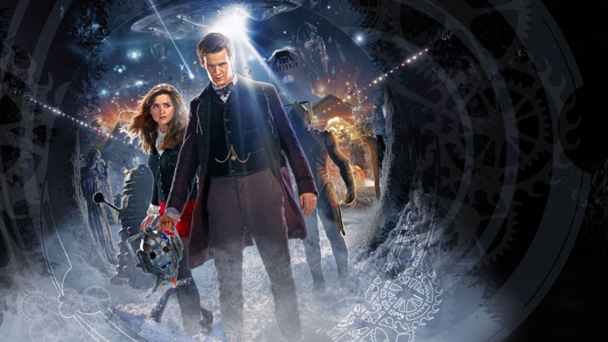
The Doctor is Dead; Long Live the Doctor: An Overanalysis of "The Time of the Doctor"

Not what I expected the severed head of a Cyberman to be.
Regeneration episodes are desperate.  The Doctor, more or less, dies.  So it has to be a story that is at least partially about defeat.  The Doctor saves the day, but at the cost of his own life.  The Doctor, therefore, is usually in an extra-desperate situation, because that's the kind of situation where he's likely to die.  It's something you don't get in most shows:  a hero that is, at least partially, defeated every few years.  Superman died once.  Imagine if Superman died every few years!

But Steven Moffat has never been one to follow past patterns, and so he decided to do something that had never been done before.  For the first time in the history of Doctor Who...the Doctor's very death itself was his victory, not his defeat.

I have some friends (from the now defunct 900 Year Diary) who like to criticize a lot of things as "Deus Ex Machinas."  I've heard these same friends of mine use those three words for tons of Doctor Who episodes, as well as other things like Dexter.   They use it so often, I'm starting to think they don't know what those words mean.  So, in the spirit of Inigo Montoya, I'd like to explain that this phrase might not mean what you think it means. From Dictionary.com:
1.   (in ancient Greek and Roman drama) a god introduced into a play to resolve the entanglements of the plot.
2.  any artificial or improbable device resolving the difficulties of a plot.
The key point of a Deus Ex Machina is that it has to be introduced at the time that it resolves the plot.  Otherwise, it's been set up already, and not only is it not a Deus Ex Machina, there's really no reason to even complain about it.  The Doctor-Donna is a Deus Ex Machina.  The Time Lords were not.  The Time Lords were in the episode from the very beginning, and not just because they were necessary to save the day at the end of the episode.  The Time Lords were necessary to the plot of this entire episode.  It couldn't have happened without them.  As for their power to hand out more regenerations, while it may have been rude for Moffat not to re-explain this to those who have never seen the classic series, it doesn't change the fact that the Time Lords' ability to hand out new regeneration cycles was established already in "The Five Doctors."  So nothing about it was a Deus Ex Machina.

Now, were there holes in the plot?  Yes.  The regeneration energy does seem to be a little more destructive than it was before "The End of Time," and I always took the destruction in "The End of Time" to be due to him releasing the radiation he absorbed.  But you could explain that away in a million ways, including it being some sort of help that the Time Lords gave him or the side effect of it being such a long time since the last regeneration, or it being a by-product of it being his first of a new cycle of regenerations.  The thing that would have been a little more satisfying to me is if Clara saved the day by giving the Time Lords the Doctor's true name, which she should know!  I thought that was going to be the solution, and it would have been much neater, and might have shut some people up to boot.  Of course, that would have brought the Time Lords right back into a battle with the Daleks, and then everything that happened in "The Day of the Doctor" would have been for nothing.

It might also seem unsatisfying that Gallifrey wasn't released from the crack in the end.  For a moment, I thought maybe the Doctor had fought this whole war for nothing.  But really, that's not the case.  Had any of the Doctor's enemies gotten to the planet, they could have gone through the crack and destroyed Gallifrey at its most vulnerable.  The Doctor didn't succeed in bringing Gallifrey back in this episode, but he did keep it hidden and protected to be found another day.  That's still a big victory.

But even if you weren't satisfied with how the end of the episode resolved the situation set up in the beginning of the episode, how about the way that this whole episode resolved all of the Matt Smith era?  Because it did that very well.  I was completely wrong about why the Doctor's name was dangerous to say.  I never imagined that it would be a situation in which the Doctor would want to say his own name.  It proved that Moffat had taken the 50th Anniversary special into account when he started writing "The Eleventh Hour."  Everything has been planned for the past 4 years, and that became glaringly obvious.

Except for the fucking cot!  Moffat promised to solve all of the mysteries.  He even solved the mystery of what was behind Door 11 (I still like my friend Gary's theory about Adric better).  But not the cot!  What the hell was the deal with the cot?  Did he forget about it?  Because it's still dangling out there, waiting to be solved, Steven!

It became clear that, while Moffat had the idea for this episode from the beginning of the 11th Doctor era, he never intended it to be the Christmas Special.  But I think he did a good job of making it Christmassy.  Setting it in a town where it's Christmas all the time may have seemed a little forced, but at least it was better than "The End of Time" where someone has to suddenly remember every 20-30 minutes or so "Oh yeah, we haven't mentioned for a while that it's Christmas."

The Silence, my favorite villains, return and we find...that they are nothing like what we thought they were.  Really, they were priests.  Priests!  I had my best Doctor Who nightmares ever about priests!  I guess, as a former Catholic, that's strangely appropriate.

Truly, a lot of the stuff about the Papal Mainframe and the Anglican Marines was really confusing before this episode.  In "The Time of Angels"/"Flesh and Stone," they not only seem to be helping the Doctor, but are participating in the punishment of the woman who killed him.  Then, in "A Good Man Goes to War," they are fighting against him and supporting those that created the woman who killed the Doctor.  This was easily explained away in one line "The Kovarian chapter broke away."  Simple, yet satisfying, explanation.  Most of the events of Season 5 and 6 were the result of one small sect within the Papal Mainframe going rogue and trying to stop the Doctor by going back in his timeline.  It's unclear, though, why this sect was referred to, in the Tesselecta's computer, as "The Silence," where Tasha Lem, in narration, referred to the creatures themselves as "The Silence."  The naming is super confusing now.  So let's just call the creatures "The Silence," call that sect "The Kovarian Chapter," and assume that the Tesselecta was just talking out of its ass.

Most of the spoilers that I knew about that had been printed in the Sun turned out to be accurate, which means somebody is a huge dick and really did tell all the plot points to a newspaper, which actually had the nerve to print the damn things.  Why would someone do that?  That's not journalism.  That's just being a douche.  The only spoiler that I know that they got wrong was that they said the Doctor would lose a leg before he regenerated, which would have been extra dark.  The spoilers also claimed that the episode would take place over 300 years.  That was partially true.  The first time we checked back in with the Doctor, 300 years had passed.  But who knows how many years had passed for him at the end.  It could have been another 300, 500, maybe even 1,000.  My guess is that the Doctor is now around 2000 years old, making the 11th Doctor the longest living regeneration the Doctor has ever had.

And it confirmed that the Doctor can age within a regeneration.  I mean, we already knew this to an extent, as the 1st Doctor couldn't have been born looking like William Hartnell.  But we've never seen him significantly age within the same regeneration.  But there's one big advantage that this gives us, and, as the guy who had to write and cast the 50th Anniversary special, I'm sure that Moffat did this intentionally:  Matt Smith can now be brought back for future specials no matter how old he is when the special airs.  For the 75th Anniversary Special, for example, they can simply bring him back and his increased age can be chalked up to him being taken from a point in his own timeline during "The Time of the Doctor."  Was it a little bit of a cop out to reset the Doctor to a younger version of himself for his final speech?  Sure.  But didn't we all want to see that anyway?  And I thought it was cool that a very old 11th Doctor looked a lot like the 1st Doctor.

The cameo from Amy was awesome and unexpected.  Two actors wearing wigs because they shaved their heads for other roles stood across from each other: one with a believable wig, the other with a very fake looking one.  But there was one thing about that brief cameo that bothered me, and that's the weird way that the Doctor and Amy touched each other.  It looked like they were going to kiss each other.  Russel T. Davies did away with Jonathan Nathan-Turner's classic series "no hanky-panky in the TARDIS" rule by bringing the Doctor and Rose together.  This angered a lot of the classic series fans, as well as some of the actors from the classic series.  Colin Baker said at this year's Denver Comic Con, he didn't believe the Doctor and his companion should even notice that they're of different genders.  Moffat has done a nice job of kind of playing both sides.  Amy and the Doctor had romantic overtones, but they had to do more with Amy's fear of commitment than any real romantic feelings towards the Doctor.  Amy ended up with Rory, as she was always supposed to.  Even Clara's attraction to the Doctor, which was brought to further light in this episode, is a fleeting thing we know will never come to anything, especially now that she'll be opposite Peter Capaldi's Doctor.  (Somehow, I don't think any young twentysomethings are going to be kissing Peter Capaldi on this show.)  So the way that the Doctor and Amy touched each other in that scene seemed just...inappropriate.  I would have preferred a good, tight, friendly hug between them.

Were there flaws in it?  Yes.  After the episode, I had a debate (which I alluded to above) with some friends from The 900 Year Diary who I almost never agree with.  They loved "The Name of the Doctor," where I hated it (although it's still growing on me).  I loved "The Big Bang," where they found that to be (surprise) a Deus Ex Machina.  (We all liked "The Day of the Doctor," though.)  They pointed out some things to me that I had to admit they were right about.  But, to be honest, not one of those things popped into my head during the episode.  The flaws didn't get in the way of my enjoying my favorite Doctor's last episode.  And, unlike them and some other people, I had no complaints about the episode's pacing.  Moffat hooked me in with his typical hyper-imaginative and complex plot (and the mental image of Clara naked), and kept me hanging on through to the end with the 11th Doctor's greatest speech ever:
“We all change when you think about it. We’re all different people all through our lives. And that’s okay. That’s good, you’ve got to keep moving, so long as you remember all the people that you used to be.”
And then, we were given the greatest Christmas present of all:  Peter Capaldi's first few lines as the Doctor!  They weren't much, but they were enough for us to see how much fun he's going to be.  Was it my favorite episode?  My favorite 11th Doctor episode?  My favorite Christmas Special?  No on all accounts.  But it was one hell of an episode, nonetheless.

So may I wish you a Merry Christmas, and a wonderful new Regeneration!

Friday, October 4, 2013

The Adventures of Pete, Pete, and Pete: An Update on the Twelfth Doctor


I needed to make an emergency blog post after I found an article on Doctor Who TV about the link between Peter Capaldi's past characters in the Whoniverse and his Twelfth Doctor.  This was about the most fascinating thing I've heard about the Twelfth Doctor, and I can't wait to see what it does.

Here's the amazing quote from Steven Moffat:

“We are aware that Peter Capaldi’s played a big old part in Doctor Who and Torchwood before and we are not going to ignore the fact.
“I remember Russell [T Davies] told me that he had a big old plan as to why there were two Peter Capaldi’s in the Who universe: one in Pompeii and one in Torchwood. When I cast Peter and Russell got in touch to say how pleased he was, I said, ‘Okay, what was your theory and does it still work?' and he said, ‘Yes it does. Here it is…’"
(Moffat apparently really likes the phrase "big old.")
So let's see:  there's a plot arc that was started by Davies and will be fulfilled by Moffat.  What?!  That could be a pretty fantastic idea.  Or pretty horrible.  It depends.  If you've read this blog through, you should know about my strongly mixed feelings on Davies.  While a great show runner, his individual episodes were often...silly.  His ideas for how the show should run as a whole, however, were excellent.  So to have one of those ideas carried out by a much better writer is a great prospect (assuming that Series 8 isn't anything like Series 7).
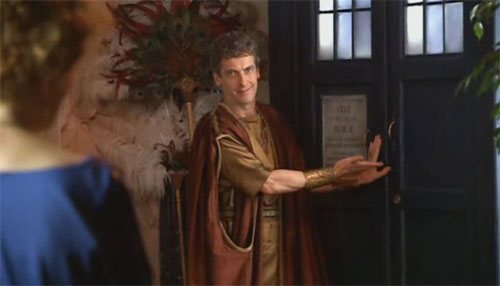
So this opens up a new mystery:  What do Caecilius and John Forbisher have to do with the 12th Doctor?  God, this is just the kind of Doctor Who mystery that I love to speculate about!  Thank you, founding fathers of New Who!
“The face is not set from birth. It’s not like he was always going to be one day Peter Capaldi. We know that’s the case because in The War Games [sic] he has a choice of faces. So we know it’s not set, so where does he get those faces from? They can’t just be randomly generated because they’ve got lines. They’ve aged. When he turns into Peter he’ll actually have lines on his face. So where did that face come from?”
Good point, Moffat, but not the best example to illustrate this point.  In "The War Games," there was a choice of faces because it was a forced regeneration.  The Doctor was being forced to regenerate as a punishment by the Time Lords.  They gave him a choice of faces.  I always took it to mean that the Time Lords had a special way of forcing a regeneration that would allow them to pick his face.
There are two much better examples, though.  One is Commander Maxil, the Time Lord guard who oversaw the attempted execution of the 5th Doctor in "Arc of Infinity."  Commander Maxil was played by Colin Baker, who would later go on to play the 6th Doctor.  This led to Colin Baker commenting that he was the first actor to get the role of the Doctor by killing off his predecessor.  But why did the Doctor regenerate into Maxil's body?  Did he have a choice?  If so, why choose such an insignificant person in his life to regenerate into?  Not to mention such an unattractive one.  (Sorry, but at least in comparison to Peter Davison, Colin Baker was not much of a looker).  Also, the Sixth Doctor needed to see a mirror before he knew what he looked like, suggesting that it wasn't much of a choice.  And the 5th Doctor's death was a strange one, where he thought he was going to die outright.  How did he find time to "choose" his face?
The next very significant example is Romana II.  Romana was one of only two Time Lord companions that the Doctor ever had, and since the first, Susan, left before the words "Time Lord" were ever spoken on screen, Romana is more or less the only Time Lord companion.  She's also one of the few characters besides the Doctor to regenerate on screen (only one of the Master's regenerations actually happened on screen).  Romana seemed to have a very clear ability to choose her regeneration.  Rather than explaining it to you, why don't I just show it to you, since someone was kind enough to upload it to YouTube:


A lot of people have suggested that Romana wasted a whole bunch of regenerations in her indecisiveness.  However, more recent episodes point to the possibility that this all only counted as one regeneration.  The main clue is the 10th Doctor in "The Christmas Invasion" grows a new hand after it's chopped off.  Likewise, after Mels regenerated into River, her body could be riddled with bullets, only for her to regenerate them away into the Nazi soldiers.  A lot of people have pointed to this to suggest that Romana's several bodies in this sequence only constituted one regeneration, as the regeneration process seems to last more than a single instant.  The concerning part is that she seems to be regenerating just for fun.  But this scene did air before the 12 regenerations rule was established in "Marwyn Undead."  It's a shame that nobody told the writers in the 70's that writers 30-40 years later would be trying to make a real continuity out of all this.

But why did she have so much choice in her regeneration?  No other Time Lord has ever shown this ability.  The closest example is when Mels regenerated into River Song, she said she had to "concentrate on a dress size."  I wrote a fan fiction one time where I said that this was a special ability Time Ladies had that Time Lords did not:  the ability to choose one's own appearance in regeneration.  Frankly, I think it's about as good of an explanation as any.

But even if the Doctor can choose his appearance, that only explains one of the other Capaldi's in the Whoniverse.  If there was one other Capaldi out there, that would explain the 11th Doctor regenerating into a Capaldi Doctor.  But why are there two other Capaldi's out there?  It seems a lot like the Clara mystery, except it could hardly be the same thing.  Somehow, it seems the Doctor has been split across time.  I could almost buy that Caecilius was the Doctor undercover.  The episode also features Karen Gillan in a pre-Amy role.  Imagine an episode in which we find that the 12th Doctor was there undercover, so was Amy, and Captain Jack is there too (he said he was in Pompeii on "Volcano Day"). 

But John Frobisher is definitely not an undercover Doctor.  Frobisher does a lot of things that the Doctor would find despicable.  And the murder/suicide of Frobisher pretty much rules him out as an undercover Doctor.

So I guess I've left you with more questions than answers, but I feel like that's my role more than anything:  raising the questions that need to be asked.  And they're questions we'll be pondering until Capaldi's debut, which won't happen for about a year.

Wednesday, July 17, 2013

Five "Potential" Twelfth Doctors Everyone Needs to Stop Talking About

Part of the reason that I'm not posting much anymore is that all that people want to talk about in Doctor Who fandom right now is who they think is going to be the next Doctor.  I think that all of that speculation is ridiculous.  None of us have any idea who the next Doctor is going to be.  But, while all of this speculation is silly, I'm going to talk about the names people are throwing around as possible 12th Doctors that are absolutely ridiculous and who will never become the Doctor.

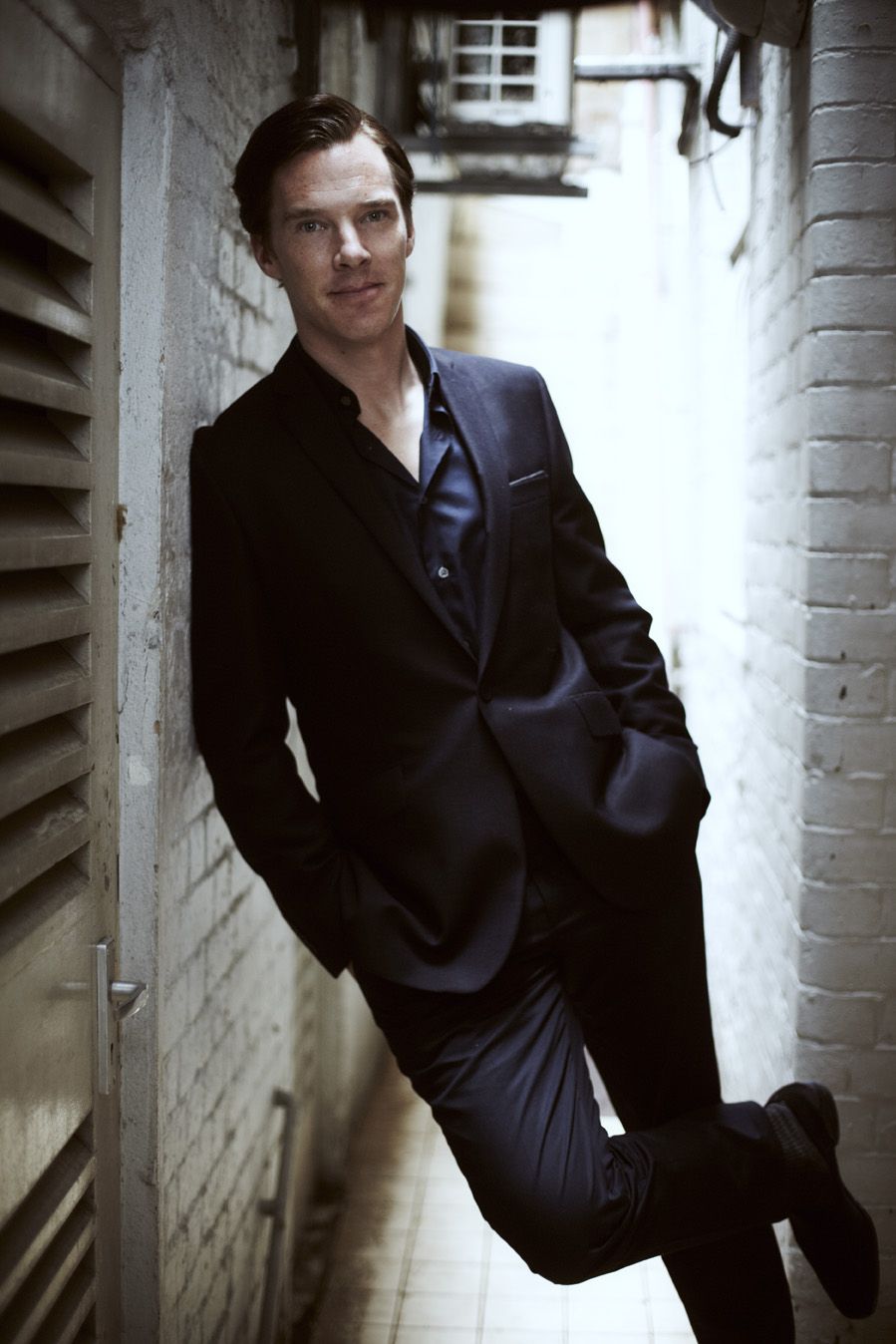
5.  Benedict Cumberbatch

Much like with David Tennant, it's very hard to pick out the sexiest picture
of Benedict Cumberbatch on the Internet.
People have been talking about Cumberbatch as the Doctor since his first episode of Sherlock.  First of all, it's bad enough that we have the show runner splitting his attention between Doctor Who and Sherlock without the star doing the same thing.  Having two big hit shows on the BBC with the same head writer and star would be, at the very least...a bit weird.

But here's the biggest problem with Cumberbatch:  Have you ever seen him play a lighthearted, good, happy character?  His version of Sherlock Holmes makes Sir Arthur Conan Doyle's look like a happy little wood nymph.  There's a certain way in which the original Holmes was a bit of a dark loner and a pompous ass, but Cumberbatch's portrayal takes it to a truly darker level.  It's all summed up in some of his final lines from the last episode, "The Reichenbach Fall":  "Oh, I may be on the side of the angels, but don't think for one second that I am one of them"

The only time I saw Cumberbatch as a potential Doctor was from this past week's episode of Top Gear when Cumberbatch was their Star in the Reasonably Priced Car.  Cumberbatch, in his interview, was laid back, friendly, and personable.  But I've yet to see him put that forward in any of his characters.  They're always dark, cold, and distant.  Those are things the Doctor absolutely cannot be.

The main point, though, is that he can't be Sherlock and the Doctor at the same time.  And playing the Doctor, Sherlock Holmes, and Khan Noonien Singh might be too much awesome for any one person's career.  But most importantly...he'd make a much better Master!


4.  Dame Helen Mirren

Sexiest woman over 60 in the world!
I've given my opinions on the idea of a female Doctor in a previous blog.  And I agree with people who say that Mirren might very well be the only actress who could pull off the Doctor's first gender transition.  But there are two things standing in the way:  the fans don't want a woman, and she doesn't want to do it.  Those are fairly big hurdles to overcome before she could become the Doctor.

The simple fact is that a lot of people don't want to see a female Doctor.  Moffat ran a poll at a conference and everyone said they'd stop watching.  No, I don't think all of the people who say they don't want a female Doctor are sexist.  Some of them are, but some of them just don't think that Time Lords should be able to change genders between regenerations.  There's not a clear example of it happening in canon.

Helen Mirren stated pretty unequivocally that she doesn't want to do it.  She did say, however, that she wanted a "gay, black, woman Doctor."  I understand the desire to see either a black or female Doctor, but can the show, at this point, really said to be lacking in LGBT advocacy?  So yes, I think it would be absolutely fascinating to see Helen Mirren in the role, but you will never, ever see it.

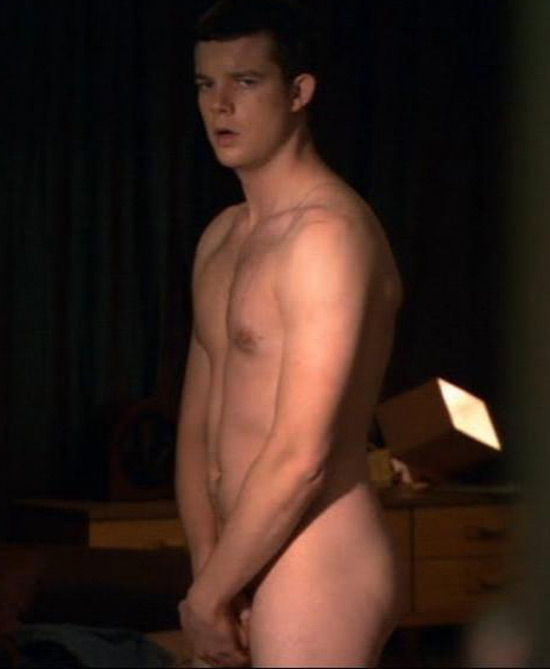
3.  Russell Tovey

Oh come on, if you were searching Google Images for a picture of
Russell Tovey and this came up, you'd choose this one too.
Are you kidding me?!  If Cumberbatch has been typecast as cold and dark, Tovey only plays shy and awkward.  His performance in Being Human is brilliant because the whole idea is: "what if the most socially awkward and kind person in the world became a werewolf and had to deal with all of the emotional baggage that comes with being a supernatural killer?"  His role as Midshipman Alonzo Frame in "Voyage of the Damned" (and briefly again in "The End of Time (Part 2)") was endearing because he was so meek, but put aside that meekness to show his bravery when it was absolutely necessary.  Even his character in the Sherlock episode, "The Hounds of Baskerville," was shy and skiddish.

I know every actor has to have range, but I haven't seen it yet from Russell Tovey, and I've probably seen more of his work than I've seen of the work of anyone else I've put on this list.  He's kind of like a British version of Michael Cerra:  they both play the same "adorably" shy character in every role they're cast in.  I can't imagine Russell Tovey bouncing around the TARDIS with a big smile on his face, or threatening the Daleks with a steely stare.  Maybe he could surprise me, but he hasn't shown me enough to believe that he could be the Doctor.

2.  Rupert Grint

This is not remotely a metaphor for impotence.
I'm not even going to dignify this one with a response.

...okay, it seems like you're going to make me.  Ron Weasley cannot be the Doctor.  Period.  I'd love to see Rupert Grint branch out into other roles that are really different from what he did in Harry Potter, but there's no way he's going to be allowed to do it as the Doctor.  He's too recognizable in one role right now.  He needs to become established in more diverse roles before he'd even be considered for another big, iconic role.  Furthermore, Doctor Who is not really new territory for Rupert Grint.  He'd just be moving from a fantasy franchise to a science-fiction franchise which, if it didn't have its very, very thin scientific rationales, would pretty much be a fantasy franchise.  It would be a bad decision for both Doctor Who and for Grint's career.

1.  David Tennant

I'm going to stab the next fangirl who asks me to come back.
One month ago I read a report that said that Skybet had placed 50/1 odds on David Tennant coming back.  I can't find any such bets on Skybet at the moment.  Hopefully, someone realized that it was a ridiculous thing to bet on because every single person would lose as nobody has any idea who is going to be the next Doctor.

But I would bet everything I own (which, admittedly, isn't much) that David Tennant will never, ever return to the role full time.  Doctors don't come back.  No actor ever has, ever will, or ever should become the Doctor.  Nobody is going to Grover Cleveland this thing.  Doctor Who is a show about time travel.  Much like time travel, it's a show that has to move both forwards and backwards at the same time.  It can bring back past enemies and past monsters, but it absolutely cannot move back to a previous regeneration of the Doctor.  It would be a cheap ploy that any true fan would reject, leaving nothing but a fan base of 13 year old girls.

It simply will never happen.  Get over it.

Friday, June 7, 2013

The Fall of the Eleventh: Some Thoughts on Matt Smith's Departure and the Search for the 12th Doctor


Sadly, it seems that my campaign to make Richard Ayoade the next Doctor is in vain, because Wil Wheaton claims to have known who the next Doctor is for weeks.  Perhaps I needed to start my Richard Ayoade campaign a year ago.  That's a shame.  Maybe I can get him in next time.  Unless Wil Wheaton is just the spitting image of his fictional portrayal of himself on The Big Bang Theory--which makes him look like a completely petty douche--then I think he's probably telling the truth.  Unless this falls into Rule 2:  Moffat gets other people to lie for him.  But why Wil Wheaton?  Certainly, Star Trek has always been a sister franchise to Doctor Who, as each started in approximately the same year and each one is about as popular in its own country as the other one is in it's country.  There's a long list of actors that have appeared in both franchises--such as Daphne Ashbrook and John de Lancie--but nobody has been a significantly important part of both franchises.  So why does Wil Wheaton, an American who is mostly known as an ironic, post-modern camp celebrity who has somehow reopened the door to his former popularity with his online presence know who the 12th Doctor is?  Why would he be privvy to this information?

My only guess is that, by coincidence, Wheaton happens to be friends with whoever is cast.  However, I wasn't aware that Wheaton had a lot of friends who are British actors.  When it comes to British actors that Wheaton is close to, there's only one name that pops up as glaringly obvious:  Patrick Stewart.  I put this as an unlikely option, though, but it would be an interesting and bold choice.  Stewart would not play the character with as much whimsy as the last few.  I can't imagine Stewart being whimsical.  Furthermore, he'd have the most epic science-fiction career ever, having played The Doctor, a Star Trek captain, and Professor Xavier.  He'd go down as the greatest science-fiction icon in history.  Still, I don't like this option.  The change from Matt Smith would be too abrupt and I don't think that the fans would follow.

The shirt isn't just a visual joke, it's also a statement about the infinite capacity of Wheaton's ego.
Colin Baker at Comic Con said last week that he really wants the next Doctor to be an older man, or black, or maybe even a woman.  Apparently a "Helen Mirren for Doctor" campaign started in Denver.  However, Moffat recently polled an audience at a comic con and more than half of the audience said that they'd stop watching if there was a female Doctor.  The thing is, we assume these were men who don't want to see a female Doctor, but the last few Doctors have become sex symbols.  Maybe the women don't want a female Doctor, either.  Regardless of my own mixed feelings on the subject, whether or not a female Doctor would be a progressive and positive thing to do is irrelevant:  It's such an unpopular concept that it would likely sink the show.  (Although, I don't doubt for a second that River would carry on her romance with a female Doctor.)

Skybet has started placing odds on who the 12th Doctor will be, allowing people with way too much money to actually bet on it.  If you look at the odds, you'll notice one thing:  they're fucking stupid.  What possible information could there be to predict this?  Sports have Vegas-style odds because you can analyze the strength of the teams and the players and estimate the likeliness of each team winning.  Horses are similar, you can judge them on their past performances.  Even the odds that are put out on the Oscars are based on some inside industry insight.  How can you possibly create odds based on zero clues?  Clues are being kept under very tight raps until the announcement (with the exception being that somehow the news has leaked to Leslie Crusher).  I feel like those that are being given good odds are given those because the odds makers want a certain Doctor to be cast.  It would be like a more underhanded version of my Richard Ayoade campaign.  If I put out that the odds were good that Richard Ayoade would be the Doctor, that might help me get him cast in the role.

Nothing about a website that offers you your first bet for free makes them sound like scam artists or drug dealers.  Nothing at all.
The biggest bullshit about these numbers is this:  Skybet put a fluctuating number on the possibility of David Tennant coming back to take over the role again, floating his odds between 15/1 and 50/1.  50 is a pretty low number in that situation.  If it were me making this list, that first number would have a lot more digits on it.  You could be hit by lightning in a submarine full of gay, black, Jewish rednecks before David Tennant came back to the role of the Doctor.  These people are making these up based on wishful thinking.  If they actually believe that the chance of David Tennant's return to the role is high enough that it might actually happen, then they fail to understand how Doctor Who works.

Of the actors that are being tossed around, there are three that usually fall near the top:  Ben Singer from Law and Order:  UK, Chiwetel Ejiofor who won a Lawrence Olivier award in 2008 for Othello, and Russel Tovey from Being Human.  I know nothing about Singer, but I love Being Human, and Russel Tovey was the main part of that.  The thing is, he's already appeared on Doctor Who twice playing the same role, Alonzo Frame, in "Voyage of the Damned" and "The End of Time (Part 2)."  However, there is precedent in the franchise to suggest that Time Lords do have (at least limited) control over how they're going to look when they regenerate, and some of them, such as Romana or, depending on how you interpret it, the 6th Doctor may have intentionally based his new image on Commander Maxil as that was Colin Baker's role before he became a Doctor.  Even River in "Let's Kill Hitler" said, as she regenerated from Mels into River, that she was "trying to focus on a dress size," but it seems mostly random.  You might even suggest that Time Ladies can do it and Time Lords can't

The problem is, Tovey pretty much always plays excruciatingly shy characters.  I can't imagine Tovey playing such an extroverted character as the Doctor.  A shy Doctor is an oxymoron.  I can't even imagine it.  And I simply can't imagine Tovey as an extrovert.


A real Doctor wouldn't need to hide anything.
I don't know much about Eijofor, other than that he was in Dirty Pretty Things, a movie that I watched for no other reason than the fact that it was Audrey Tautou's first English speaking movie (because I was in Emerson film school, and everyone on campus was all about Amelie that year).  I've been told he was also in Serenity, the film that wrapped up the plot of Joss Whedon's science-fiction franchise, Firefly.  While I've certainly seen Serenity (I am a Buffy nerd, too, after all), it's not a movie that I've watched more than once.  Personally, when it comes to post-Angel Whedon, I lean more towards Dollhouse than Firefly.

Even though I don't know much about him, Eijofor is my first choice of the names being batted around, simply because I think it is long past time for the Doctor to stop being a white man.  Of course I would prefer Ayoade, but I'd be happy to see a black Doctor.  I just hope that the first black Doctor is brilliant.  I don't want it to be a poor performance that can be used as some ridiculous excuse for all the future Doctors to be white.  Of all the dumb excuses I've heard as to why the Doctor shouldn't be a woman, one was someone citing the way a female captain screwed up the Star Trek franchise.  Which is bullshit because Kate Mulgrew should be considered a national treasure.

Yet, there's one important thing to remember:  When David Tennant stepped down, the Internet was filled with people speculating over who the next Doctor would be.  And wouldn't you know it, not only did they pull out an actor nobody had been speculating about, they pulled out someone nobody had ever heard of.  Apart from a supporting role on a show called Party Animals, Smith was primarily a stage actor when he was cast as the Doctor.  Neil Gaiman recently said that he thought the Doctor should be played by an unknown actor because he wanted the Doctor to be the Doctor and didn't want to think of all the famous work that this actor had done instead of thinking of him as the Doctor.  I totally understand that.  Most Doctors started as character actors, really.  It's actually a subset of the acting community that is uniquely suited to play the role of the Doctor.  And the Doctor is pretty much the only role that can give these actors such a high level of notoriety.

So what I'm saying is that, while I love the speculation, we have to acknowledge that all of our guesses are probably wrong.  I wonder how much money Skybet makes if nobody on their list is chosen?  Hmm...sounds suspicious to me.


And, with the introduction of the John Hurt Doctor--which technically makes Matt Smith the 12th Doctor, not the 11th--and the announcement that Matt Smith is leaving at the Christmas special, that means that the Doctor is actually going to have his final regeneration this Christmas.  Of course, there's going to be more regenerations in the future, I just hope there's an explanation why the Doctor gets more regenerations.

But my point is that, if this is his last natural regeneration...where is the Valeyard?