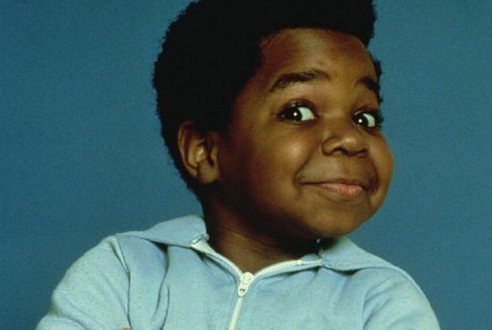
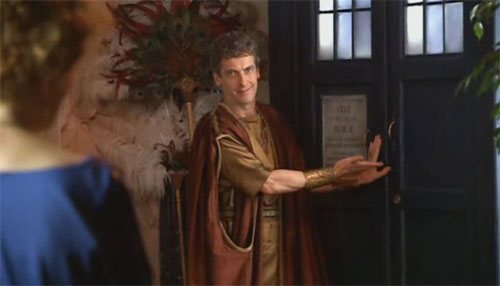
"Now that we have a black person, we're officially a Benetton ad!"
Once upon a time, in the Russel T. Davies era, Season 4, there was a plan for a Cops-style episode, where the Doctor goes on a reality show like Cops and solves a mystery while Donna watches the episode from home. Davies, however, scrapped the episode because he felt like it was too similar in tone to "The Unicorn and the Wasp," even though the two episodes would have taken place approximately 82 years apart. Instead, he quickly wrote "Midnight," his best episode, and put that in its place. I tell you this story because I don't understand how Davies could see the similar tones in what sound like very dissimilar stories, and Steven Moffat (admittedly, one of my heroes) couldn't see that within three weeks he had two episodes with similar monsters with the exact same way of killing people. In "Knock Knock," the monsters are tiny creatures that make up the very structure but can come loose to form a swarm that eats people. Where have I heard of that before?
The two robots represent the old man
This was a pretty mediocre episode, with a lot of plot holes. Why does he need to let the bugs eat people in order for them to keep his mother alive? Those seem like pretty unrelated things. As Shelley pointed out, why does the mother only restore this particular group of young people and not the hundreds of others that he's done this to? Why do the bugs kill everyone else but for the mother they keep her alive? Why did everyone accept the Doctor as Bill's grandfather without asking the inevitable racist question, which is easily answered by anyone with half a brain, but still would inevitably be asked in that situation?
This was an interesting to see, though, in the week before I move in with some new roommates. Oh, and it was the week before Mother's Day. Ew.
Is it my imagination or, when Bill claims to be the Doctor's granddaughter, it's on a day where her clothes and hair look rather Susan-ish? They've been trying to remind us a lot of Susan this year. Could they finally be hinting at some sort of return?
After this episode, I'm more certain than ever that the Master is in that vault, and it's probably Missy. I mean, could that have been a more obvious hint? It's someone whose company the Doctor enjoys who delights in the suffering of others. That's Missy. I know that John Simm is coming back to play the Saxon Master at some point this season, but I can't imagine Simm's Master playfully communicating with the Doctor through piano music. I'm thinking that Simm is just back to film a flashback scene where we see his Master regenerate into Missy. I don't want to see him steal Missy's spotlight. He was a great Master, but his Master was very much designed to play against David Tennant's Doctor, and Missy was just made for Peter Capaldi's 12th Doctor.
That's going to have to be it for now. I've got packing to do for my move this weekend. Next week we have an episode from Jamie Mathieson, so that looks promising. Until next time:
If on your journey should you encounter God, God will be cut.
I stand by my belief that an episode being "co-written" by Steven Moffat is just a sign that Moffat wanted to insert some of the season-long plot arc's narrative into the script and give himself credit for it. There was absolutely nothing Moffat-esque about this episode. The episode wasn't particularly creepy, there was nothing darkly fantastic about it, and nothing mundane was trying to kill people. There wasn't even really anything that rung of the writing style of Jamie Mathieson, who gave us last season's "Mummy on the Orient Express" and "Flatline," two episodes so good that it led both myself and my podcast co-host Shelly to start calling for him to become the next in line to Moffat's throne when he's ready to leave the show, even though Mathieson had only given us two episodes so far. Really, there was nothing about this episode that was exciting and super fun, but it felt like it was a huge build up for something. I have no doubt anymore that "The Hybrid" is this season's plot arc. Now it's a question of where is it going, what does "The Hybrid" refer to, and, the clue I forgot to speculate on last week: Who the hell is the minister of War?
THAT NAME IS SO METAL, MAN!
The episode, by and large, was setting up something, and I predicted that it was probably going to be the first part of a two-parter. Moffat has told us that he's going to make it hard to tell whether something's a two-parter or not this season and, even though "The Girl Who Died" wasn't officially listed as a two-parter, I noticed that the episode following it was going to be called "The Woman Who Lived," and I assumed the titles were implying that they were connected. Because now the Doctor has created something that has gone a step too far. A young girl who can never die and, from the looks of what's coming up, will never even be able to age, suggesting that the chip the Doctor put in her head will interpret any sign of aging as damage and correct it, keeping her a child forever.
Trust me, Ashildr, it sucks!
Also, I was really excited when I heard that Moffat was putting into place Davies idea about why there are multiple Peter Capaldi's in the Doctor Who universe, and that Mathieson would be writing the first episode about it. I even rewatched "Fires of Pompeii" that morning to get me prepared for "The Girl Who Died." However, what came up could not have been the infamous plan that Davies thought up, and that Moffat asked him about when Davies called to compliment him about choosing Capaldi for the 12th Doctor. Davies was thinking of writing this idea into the show at a time when there was no plan to make Capaldi the Doctor yet. Davies's plan was supposed to be to explain why Caecilius and John Frobisher had the same face. So either something's changed about the plan, or there's more to come about the connections between Pete, Pete, and Pete.
There have been reports out in the press questioning about whether Maisie Williams's character is going to be coming back after "The Woman Who Lived." I feel like the idea of a girl who can never die is such an interesting idea that I can't see this just being an idea for a two-parter. I feel like this has to come around to the larger season arc.
But how? The dialogue hinted at there being some connection to The Hybrid, but a lot of dialogue in Doctor Who that hints at being connected to the larger plot arc turns out to be a complete red herring. Remember the ending to "Vampires of Venice" where the Doctor pointed out that there was some strange silence in Venice? Remember how that had absolutely nothing to do with what The Silence were (even though we flashed back to this moment anyway when The Silence were first identified by name)? It could be a pretty simple mislead. But The Hybrid is coming up a lot this season, which leaves me wondering, are the Daleks created in "The Witch's Familiar" The Hybrid, or is Ashildr? Or were both mentions misleads and The Hybrid is something completely different? If you think about it, a lot of things in the Doctor Who universe could be called hybrids. Both Daleks and Cybermen are, by definition, hybrid creatures. Donna Noble is a hybrid. If you take the most hated line from the 1996 Doctor Who movie to be true, the Doctor himself is a hybrid. So it could be anything.
It could even be...
I'm half attractive, half horrifying
I still stand by the fact that I think there's something more that's going to happen to explain the events of "Listen," so I do think it's possible that Danny is coming back some how.
Also, Davros was a little vague about this prophesy of The Hybrid. What's supposed to be so terrible about it? Why is the Doctor running from it? What makes it so terrifying?
I made this blog primarily to make predictions about the show based on clues, and I totally forgot to pick up on the huge, huge, huge clue that was dropped last week, when O'Donnell, who like Osgood seems to be a real life Doctor fan (and who, liked Osgood, is dead because of it), mentioned a whole bunch of stuff that happened to the Doctor between 1980 and 2119 and she brought up one phrase that the Doctor did not recognize yet: "The Minister of War." Sure, it could be a throw away line that has no bearing on anything, but I really feel like Whithouse was just shouting "Clue!" at us pretty loudly at that moment. It's possible that it's not a clue for this season's finale, as we all know that, in the Moffat era, big twists can be set up many seasons in advance ("Silence Will Fall," "The Woman in the Shop"), but I have a feeling that Missy is the Minister of War, possibly the title she's assumed by staying behind on Skaro to join forces with the Daleks.
Moffat hasn't left us this vague of a mystery in a while, but it's an interesting one to start speculating on. I'm really curious to see where this is going. Missy has a plan, I'm sure of it, the Hybrid is a dubious evil lurking in the background, and Ashieldr is now a poor, cursed girl who can never die or even age. So what's the connection? How does this all lead us to a season finale two-parter called "Heaven Sent" and "Hell Bent," the former of which is supposed to have no other actors but Peter Capaldi in it for the whole thing?! I'm so curious about what Moffat is building here. But I'm ready for the ride, because so far, it's been fun. While this wasn't my favorite episode, I get the feeling it's building so, so, so much more, and I'm really intrigued to see where we go from here.
Next week, I look forward to Torchwood writer Catherine Tregenna becoming the first woman to write an episode of Doctor Who since "The Sontaran Stratagem"/"The Poison Sky." Really, that writing staff has been far too much of a sausage party for several seasons now, and this season we have not one, but two different female writers for the first time in far too long. Catherine Tregenna is the only writer to have been nominated for a Hugo award for working on Torchwood, so hopefully we're going to get something really special next week. I really look forward to it!
“We are aware that Peter Capaldi’s played a big old part in Doctor Who and Torchwood before and we are not going to ignore the fact.
“I remember Russell [T Davies] told me that he had a big old plan as to why there were two Peter Capaldi’s in the Who universe: one in Pompeii and one in Torchwood. When I cast Peter and Russell got in touch to say how pleased he was, I said, ‘Okay, what was your theory and does it still work?' and he said, ‘Yes it does. Here it is…’"
(Moffat apparently really likes the phrase "big old.")
So let's see: there's a plot arc that was started by Davies and will be fulfilled by Moffat. What?! That could be a pretty fantastic idea. Or pretty horrible. It depends. If you've read this blog through, you should know about my strongly mixed feelings on Davies. While a great show runner, his individual episodes were often...silly. His ideas for how the show should run as a whole, however, were excellent. So to have one of those ideas carried out by a much better writer is a great prospect (assuming that Series 8 isn't anything like Series 7).
So this opens up a new mystery: What do Caecilius and John Forbisher have to do with the 12th Doctor? God, this is just the kind of Doctor Who mystery that I love to speculate about! Thank you, founding fathers of New Who!
“The face is not set from birth. It’s not like he was always going to be one day Peter Capaldi. We know that’s the case because in The War Games [sic] he has a choice of faces. So we know it’s not set, so where does he get those faces from? They can’t just be randomly generated because they’ve got lines. They’ve aged. When he turns into Peter he’ll actually have lines on his face. So where did that face come from?”
Good point, Moffat, but not the best example to illustrate this point. In "The War Games," there was a choice of faces because it was a forced regeneration. The Doctor was being forced to regenerate as a punishment by the Time Lords. They gave him a choice of faces. I always took it to mean that the Time Lords had a special way of forcing a regeneration that would allow them to pick his face.
There are two much better examples, though. One is Commander Maxil, the Time Lord guard who oversaw the attempted execution of the 5th Doctor in "Arc of Infinity." Commander Maxil was played by Colin Baker, who would later go on to play the 6th Doctor. This led to Colin Baker commenting that he was the first actor to get the role of the Doctor by killing off his predecessor. But why did the Doctor regenerate into Maxil's body? Did he have a choice? If so, why choose such an insignificant person in his life to regenerate into? Not to mention such an unattractive one. (Sorry, but at least in comparison to Peter Davison, Colin Baker was not much of a looker). Also, the Sixth Doctor needed to see a mirror before he knew what he looked like, suggesting that it wasn't much of a choice. And the 5th Doctor's death was a strange one, where he thought he was going to die outright. How did he find time to "choose" his face?
The next very significant example is Romana II. Romana was one of only two Time Lord companions that the Doctor ever had, and since the first, Susan, left before the words "Time Lord" were ever spoken on screen, Romana is more or less the only Time Lord companion. She's also one of the few characters besides the Doctor to regenerate on screen (only one of the Master's regenerations actually happened on screen). Romana seemed to have a very clear ability to choose her regeneration. Rather than explaining it to you, why don't I just show it to you, since someone was kind enough to upload it to YouTube:
A lot of people have suggested that Romana wasted a whole bunch of regenerations in her indecisiveness. However, more recent episodes point to the possibility that this all only counted as one regeneration. The main clue is the 10th Doctor in "The Christmas Invasion" grows a new hand after it's chopped off. Likewise, after Mels regenerated into River, her body could be riddled with bullets, only for her to regenerate them away into the Nazi soldiers. A lot of people have pointed to this to suggest that Romana's several bodies in this sequence only constituted one regeneration, as the regeneration process seems to last more than a single instant. The concerning part is that she seems to be regenerating just for fun. But this scene did air before the 12 regenerations rule was established in "Marwyn Undead." It's a shame that nobody told the writers in the 70's that writers 30-40 years later would be trying to make a real continuity out of all this.
But why did she have so much choice in her regeneration? No other Time Lord has ever shown this ability. The closest example is when Mels regenerated into River Song, she said she had to "concentrate on a dress size." I wrote a fan fiction one time where I said that this was a special ability Time Ladies had that Time Lords did not: the ability to choose one's own appearance in regeneration. Frankly, I think it's about as good of an explanation as any.
But even if the Doctor can choose his appearance, that only explains one of the other Capaldi's in the Whoniverse. If there was one other Capaldi out there, that would explain the 11th Doctor regenerating into a Capaldi Doctor. But why are there two other Capaldi's out there? It seems a lot like the Clara mystery, except it could hardly be the same thing. Somehow, it seems the Doctor has been split across time. I could almost buy that Caecilius was the Doctor undercover. The episode also features Karen Gillan in a pre-Amy role. Imagine an episode in which we find that the 12th Doctor was there undercover, so was Amy, and Captain Jack is there too (he said he was in Pompeii on "Volcano Day").
But John Frobisher is definitely not an undercover Doctor. Frobisher does a lot of things that the Doctor would find despicable. And the murder/suicide of Frobisher pretty much rules him out as an undercover Doctor.
So I guess I've left you with more questions than answers, but I feel like that's my role more than anything: raising the questions that need to be asked. And they're questions we'll be pondering until Capaldi's debut, which won't happen for about a year.
Why is there a monkey dressed as a German soldier in WWI?
"When they came [to America] to launch The Eleventh Hour, I went along to this screening in LA and journalists put their hands up, and one of the first questions was, 'WHat will happen when he reaches the thirteenth regeneration?' There's a fascinating academic study to be made out of how some facts stick and some don't--how Jon Pertwee's Doctor could say he was thousands of years old, and no-one listens to that, and yet someone once says he's only got thirteen lives, and it becomes lore. It's really interesting, I think. That's why I'm quite serious that that 507 thing won't stick, because the 13 is too deeply ingrained in the public consciousness. But how? How did that get there?"
-Russell T. Davies
I've said sometimes that Moffat bases his version of Doctor Who on a mis-remembering of what the classic series really was. This quote makes it clear that Davies is mis-remembering the classic series as well. The Doctor's age has fluctuated so much over the years that, no, nobody remembers him saying that he was thousands of years old. The First Doctor claimed to be about 100, the Fourth Doctor claimed to be about 700, and then pretty much every Doctor between 6 and 11 claimed to be 900. How could any of these numbers stick in anybody's head? We've all just assumed he's lying. Rule 1, after all.
It was first established in the Fifth Doctor episode "Mawdryn Undead" that Time Lords can only regenerate 12 times. For those who failed elementary school math, you'll realize that that doesn't mean that there can only be 12 Doctors, but that there can only be 13. Davies, as shown above, seems to mis-remember the number of times the 13 Doctor's issue was brought up. He thinks it was just once. He is very wrong. It was not a minor plot point in "Mawdryn Undead," as the episode was about someone trying to steal the Doctor's remaining 8 regenerations. The Valeyard was said, by the Master, to be created between the Doctor's 12th and final incarnations. It was established in the Fourth Doctor episode "The Deadly Assassin" that the Master had already used up all of his regenerations, which is why he was clinging to life and needed to steal a body. The Eighth Doctor said in the narration to the Doctor Who that the Master had used up all of his thirteen lives. There were a few other casual references, but it was used as main plot points in a number of episodes. That's why 13 stuck in the public consciousness, Russell.
When Davies mentions the number 507 here, he is referring to the fact that, the one time he got to write for the Eleventh Doctor, in his guest appearance in the Sarah Jane Adventures episode "Death of the Doctor," the Doctor was asked how many times he could regenerate, and he answered "507." The number was Davies's little "fuck you" to the fans, as the digits in that number add up to--you guessed it--thirteen! 507 has not only failed to stick in the public consciousness, fans are rejecting it because we flat out find it insulting that he thinks you can just throw away a piece of the mythology like that. It's easier to throw away the Doctor's claim of 507 under Rule 1.
Now we find ourselves in an interesting situation. The number thirteen was obviously chosen during the Fifth Doctor era because nobody thought they had to worry about the show going through another 8 regenerations. Now we're here decades later and Moffat has decided to speed up the process. By adding "True 9," or the "John Hurt Doctor," every Doctor number since 9 has to be bumped up by one. Eccleston was truly the 10th Doctor, Tennant the 11th, Smith the 12th, and the new Doctor who will take over for Smith in December...will technically be the 13th, and final, Doctor! That means that Steven Moffat will most likely be the person to decide how the 13th Doctor problem is to be resolved. Moffat is going to decide how to pull off the impossible regeneration.
So why do I call this the Thirteen Doctors Problem? The first reason is that it's a narrative problem. We have no doubt that this show is going to keep going, so it's a narrative hurdle we know that they have to overcome before the show moves forward. But my biggest concern is whether or not they're even going to bother addressing it. To use Davies's solution--to take Route 507, if you will--would be insulting to the fan base.
We know the lore better than you do. Don't try to change it without really thinking about it and researching it and coming up with a solution that doesn't insult our intelligence. So my fear that Moffat is going to listen to Davies and just ignore the issue is the main "problem" to which I refer.
Someone at Comic Con mentioned to me his theory: that, in "Let's Kill Hitler," when River saved the Doctor with her regeneration energy, it was said she used up the rest of her regenerations to save him, so maybe she gave him her remaining regenerations. We only know for sure that she had regenerated at least 2 times before that. It's unlikely that she regenerated any more than two times (but it's not impossible). Thus, she would give him probably 9 more regenerations, and keep us from having to deal with this problem again for another few decades. Interesting idea.
Do Gallifreyan sex-ed teachers teach you that sex can lead to things like babies, STDs, or losing 9 of your lives?
Personally, I think the Cartmel Masterplan gets us easily out of the problem. The Doctor is a god, so how can he die? I do believe in the Cartmel Masterplan, as you know if you've been reading me for a while. But I don't think anybody will--or necessarily should--state explicitly on the show that the Cartmel Masterplan is canon.
I'm going to do something I don't do often and tell you what I would do if I was the head writer of Doctor Who (and, damn, do I wish I was): The Doctor is injured one last time. As he starts to become weaker, he starts to say his goodbyes to those around him, thinking the true end has finally come. Suddenly, he regenerates, and the 13th Doctor appears and says "That's not possible!" Then I'd wait for a while to explain it, if I bothered to explain it at all. Nobody explained what regeneration even was until the 3rd time it happened. Maybe I'd just let the mystery of why the Doctor can still regenerate hang around for a while for someone far down the line from me to solve. I think that adding some of that mystery back to the show would be a lot of fun.
Also, as we get closer to the "final" regeneration, it's important to ask: Will the Doctor start to become more afraid of his death since he thinks the last one is coming soon? Being in your final regeneration must be pretty terrifying for a Time Lord. Will he start to become more cautious? Or will he become even more reckless, hoping to squeeze as much as he can out of the last of his lives? If I know Moffat's writing, I think the latter is more likely.
I'm really glad that Davies is not in the driver's seat right now, but it's not entirely clear where Steven Moffat stands on this issue. So let this be my plea to Moffat: When the time comes for the "12th" Doctor to regenerate, address the Thirteen Doctors Problem. I don't give a single shit how you do it, as long as it's something that does not insult our intelligence (like Route 507). Just address it. Somehow.
Oh, and also, make Richard Ayoade the 12th Doctor!