Showing posts with label Series 9. Show all posts

Friday, January 1, 2016

Hybrid Moments: An Overanalysis of "Hell Bent"

If you want to scream, scream with me!
At this point, I'm starting my damn blog post so late that, by the time it's finished and published, we'll be welcoming Rupert Grint as the 16th Doctor (that sounds like a Mark Gatiss casting choice if I've ever heard one), but I guess better late than never, so here we go...

Star Trek:  Deep Space Nine had an amazing episode in the fourth season in which a freak accident causes Captain Sisko to wander lost through time, never able to decide where or how long he will appear, and his son, Jake, spends his entire life trying to figure out how to save him. Executive producer Ira Steven Behr said about the episode: "A love stronger than death. Usually that's romantic love, but for this show, this series, we chose the love between a father and son. And it worked like gangbusters. Everyone could relate to it."  It's true that when people think of great love stories, they think of romantic love.  But for most of us, our significant other isn't the only person we love so much that we're willing to go to any lengths to save them.  For many of us, that's also a parent, a sibling, a child, or even a friend.  "Hell Bent" is the great story of one man's love for a friend.  Not a romantic love--well, there was a little flirting towards the beginning of their relationship--but the slightly paternal, always challenging, strong friendship between two people, and a non-romantic love between them so strong that one was willing to literally break the Universe in half to save the other.  And that makes for a beautiful story.

I watched this episode at a viewing party at a bar with my friends from Mile High Who, with a bunch of new members there to join us, so I was trying my hardest not to start bawling openly during this episode, but at the moment when the Twelfth General told Clara that the Doctor spent 4.5 billion years trapped in the confession dial, I lost it and couldn't stop myself from crying.
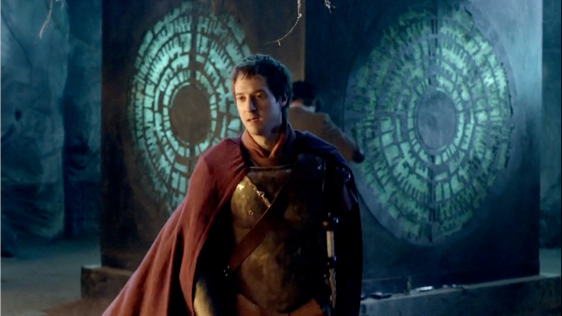
Mostly the Doctor was just trying to one-up Rory.

A lot of people, since this episode have aired, have claimed that this revelation now means that the Doctor is even older, clocking in at a whopping 4,500,002,000 years old.  However we need to remember that, while "Heaven Sent" takes place over the course of 4.5 billion years, it only occurred to the Doctor as 3 days.  He may have experienced it over and over again, but he was essentially reborn each time and never retained the memories of his previous times through the confession dial, so from his perspective only added 3 days to his lifetime.  I think we can still say that the Doctor is about 2,000 years old.  He didn't really live and feel the 4.5 billion years, so I don't think that can count as his age.

I predicted that the Doctor's statement at the end of "Heaven Sent" meant that he was the Hybrid because he's half human and half Time Lord according to an often ignored line from the 1996 movie where the Eighth Doctor says that he is "half human on [his] mother's side." My Mile High Who cohost Shelley said that she thought his statement meant that Ashildr was the Hybrid.  As Shelley and I were both in the same room together as we watched this episode, we both shouted "No!" at the screen when Ashildr asked if the Doctor truly was half human.  We were both quite pleased at where Moffat went with that bit of the script, managing to quite deftly avoid a huge civil war within the fandom, or a straight up Han-Shot-First style revolt, by refusing to either confirm or deny the "half human" line.  The Doctor's simple response of "Does it matter?" doesn't force Moffat to do any major rewrites of cannon, but also makes it quite clear that we are not going to explore the possibility, even if it is true, and I'm fine with leaving it there.

The episode never specifically names who exactly the Hybrid is, but I actually like Ashildr's suggestion that the Hybrid doesn't actually refer to a single person, but the combination of two people, who together become the most dangerous creature in the Universe.  I was originally skeptical of the part about the Doctor and Clara playing Russian roulette with a mind eraser, but in hindsight, it makes perfect sense.  It wasn't just because the Doctor wanted to keep Clara safe, but to destroy the Hybrid, one of them had to stop remembering the other, or else the Universe would be at risk of fracturing as the Doctor tried to save Clara.  Many people at the event I went to called this the "Donna Noble thing," but I had to correct them and remind them that, in fact, in the series as a whole, Donna was the third companion to have her memory of the Doctor erased upon departing the TARDIS.  It happened to Jamie and Zoe before her (although, admittedly, that was retconned in a weird combination of fan theories and external Universe material called "Season 6b" that the BBC has inexplicably declared to be cannon).  Still, I feel very bad for the Doctor in losing his best friend.  He'll probably need some cheering up (from River, of course!).

Fear the hybrid!


I had this inkling in the back of my head that I never quite expressed out loud that Steven Moffat might just put some sort of twist on Clara's death.  I find that Moffat, whenever he kills off a character, likes to find a way to allow them to sort of keep living but not really.  River got saved in The Library.  Amy and Rory got to live out the rest of their lives, just not in their own time period.  It only makes sense that he would have found a way to kind of save Clara while still killing her off.  As some of the people around me at the viewing party suggested, a spin-off about Clara and Ashildr traveling through time together in a TARDIS disguised as a 50's themed diner would be pretty amazing.

And I loved Clara's take on her death, because it really put a weirdly positive spin on it.  Her insistence on not having her memory erased spoke so much about who Clara is now and who she has become.  She never asked the Doctor for safety, that's true.  She wanted to live the life she could with the Doctor, regardless of the consequences.  There were episodes this season that hinted that Clara was getting to be too much of a daredevil, a thrill seeker, an adrenaline junkie, that she was starting to act like she was immortal.  Quite the contrary, she simply didn't care because the risk of death was always worth it to experience life with the Doctor in the TARDIS.  It's a different take on being a companion than I've ever seen before, and certainly gave her a dignity in death that the only other dead companion, Adric, never achieved.  The little trick of this episode bringing her back only temporarily, trapped in a moment in time, also gives her the chance to say everything that's important for her to say to the Doctor before she leaves him.  He needed more than just her warning at the end of "Face the Raven" to keep him from turning cruel and hateful from the death of his companion.  He needed a partial memory wipe combined with a big cathartic sense of closure with Clara, followed by a reminder that what made him special to her in the first place was that he was never cruel nor cowardly.  I'm not saying it will erase the pain of losing Clara completely, but it's probably just what he needed to keep him from spinning completely out of control in Clara's absence.

I have to say, from watching "The Day of the Doctor," I somewhat wondered if Moffat had forgotten about the events of "The End of Time."  I know many people are going to respond to that by saying that "I wish I could forget that episode, too," and they're not wrong.  It's not a very good episode, but it has excellent parts to it.  To be more precise, I really think there's a very good 42 minute episode in there that got excruciatingly dragged out into 2 1/2 hours.  The revelation of why the Doctor had to destroy the Time Lords was mind-blowing and perfectly dark, and I really wanted to see that followed up on, yet "The Day of the Doctor" seems to go out of its way to avoid talking about the evils that the Time Lords have committed, namely wanting to destroy the Universe.  Yet Moffat didn't forget about these atrocities, but was perhaps just keeping them out of "The Day of the Doctor" to avoid turning such a celebratory anniversary episode into a humungous bummer.  But "Hell Bent" makes it quite clear that Moffat has forgotten nothing about what happened in "The End of Time," and the Doctor's showdown with Rassilon makes that quite clear.  Rassilon has now regenerated into Donald Sumpter, as Timothy Dalton was busy, but it gave them an opportunity to make him probably the only actor to ever appear alongside both the 3rd and 12th Doctors in an episode.  That the Doctor begins by banishing Rassilon and the High Council from Gallifrey works perfectly and lines up very neatly with cannon, allowing us now to reestablish Gallifrey in the Doctor Who Universe without the complications brought into it from "The End of Time."  Gallifrey will be a rebuilding planet, certainly, and the Doctor is, again, the Lord President for the umpteen millionth time in his life, but I'm pretty sure he handed that duty off to someone else shortly after the events of this episode, most likely The General.

I do have to comment on the brand new Sonic Screwdriver.  I know a lot of crybabies complained about the temporary retirement of the screwdriver at the beginning of this season, but I liked it, as it forced the writers to find some other ways to get around things.  Plus, the Sonic Sunglasses look really good on Peter Capaldi.  Since I'm writing this after "The Husbands of River Song"aired, I know that the Sonic Sunglasses have not been retired now that the Sonic Screwdriver is back, and I'm fine with that.  The Screwdriver got a much deserved short rest.  But I do have to say that the new one, while a nice pretty blue color, is the most phallic design they've ever done for a Sonic.
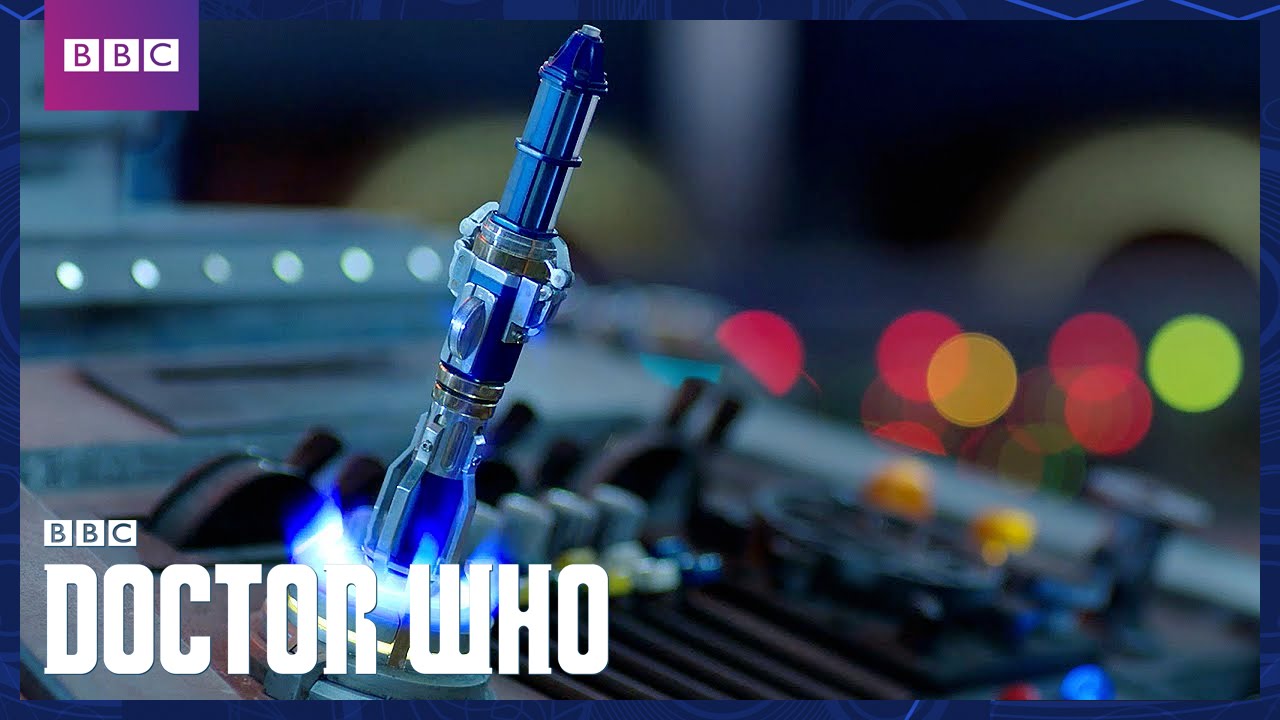
It looks like a Transformer's robot penis.

One thing I'm not entirely sure about, and this is something that many of the Mile High Whovians also brought up, is where Gallifrey stands now.  Is it back in the Universe?  Or is it still hiding in a corner somewhere, terrified to reestablish its presence.  I guess that's for us to see next season.  But first, it's time to revisit our old friend, River Song, for Christmas!


Thursday, December 3, 2015

Dead Friend: An Overanalysis of "Face the Raven"


Companions rarely die.  The Doctor talks about them like they do all the time, but they rarely ever do.  They wind up in parallel dimensions or get their memories of him erased (this has actually happened more than once) or they end up stuck in a specific time period that the Doctor can't get to. These things are like death to the Doctor because he can never get back to them again, but they aren't really deaths.  The companions go on to continue their lives without him.  More often than not in the classic series, they just went home, or met someone and fell in love (never, before the Moffat era, was a companion allowed to stay on the TARDIS after falling in love).  Only one other full time companion has ever died while traveling with the Doctor on the TV series without bring brought back from the dead later.  One off companions have died many times, and expanded universe sources have given us a few more companion deaths, but still not that many.  Really, Adric remains as the only regular companion to have really formed a connection with the Doctor before being tragically killed at a young age without being brought back later.  That is until "Face the Raven."

"I saw a whole planet rushing towards me.  I tried to surrender to it, but it did me no good.  That usually works!"

Much like Adric's death, Clara's isn't heroic, but more of a failed attempt at a heroic act.  Adric died trying to stop a Cybership from crashing into Earth, failing to understand that the ship he was on wasn't going to destroy humanity, but was rather the "asteroid" that crashed into Earth killing the dinosaurs, thus allowing humanity to spread and thrive.  Clara's death was something this whole season has been building up to, as we've seen the Doctor grow more and more concerned about her recklessness and thrill-seeking behavior.  In the end, it wasn't a heroic act that killed her, as Rigsy would have survived if Clara had never come up with her brilliant idea.  It was solely her recklessness that killed her.  In a weird way, it's a very disgraceful death, which is probably going to make the Doctor even angrier about it.

A few people have brought up the possibility that Clara's death isn't going to stick, and it wouldn't be unprecedented for Doctor Who to bring back a character we assumed was dead.  Moffat has insisted that Clara would not return once she left the show, but we all remember Rule 1.  One of the main reasons people are suspicious is the fact that Steven Moffat did not write the episode.  It is shockingly out of character for Moffat, who has yet to let another writer write even one word of dialogue for River Song (Big Finish's recent announcement not withstanding), to allow another writer to kill off a companion that he created.  If he were to hand that task over to another writer, you would think he'd give it to one of his close friends like his Sherlock co-writers Mark Gatiss and Stephen Thompson, not a first time Doctor Who writer like Sarah Dollard, an Australian writer whose writing credits are actually relatively sparse.  She has a lot of credits as a script editor for major BBC shows like Merlin and Primevil, but the number of episodes she's written by herself for TV shows is significantly smaller than what you'd find on most Doctor Who writers' resumes.  However, one of her writing credits is a 2013 episode she wrote of Being Human, a show that was created and run by Doctor Who writer Toby Whithouse, so perhaps Moffat had a good recommendation for her.  Also, the show has been notably lacking in female writers since the revival, and perhaps Moffat felt it would be appropriate for a female writer to kill off Clara.

Another reason that the fandom has been a little skeptical about the permanence of Clara's death is that it came at a very odd point in the season.  We've never gone into a season finale without the companion before.  In fact, only once before in the entire series, modern or classic, has there been an episode with no companion, not even a one-off companion to fill in for the episode.  That was the 4th Doctor serial with the title that is now quite appropriately mocked for its redundancy, "The Deadly Assassin," and supposedly the reason for that was that Tom Baker was trying to convince the production staff that he could carry the show on his own without a co-star.  He failed in that, and a new companion was brought in for the very next serial.

"My oversized teeth can be my companion!"
I would like to take a moment, while discussing this episode, to talk about Clara's brief reference to her "love" of Jane Austen, which she followed up with "Take that how you like."  This was a pretty obvious callback to a line from "The Magician's Apprentice" where Clara commented on Jane Austen being an excellent kisser.  When asked about this at a recent con and if this meant that Clara is bisexual, Jenna Coleman responded by simply saying that Clara's sexuality is open to interpretation.  I think it's beyond interpretation at this point.  Doctor Who is a proudly LGBTQ friendly television show, and I think this is just the latest iteration of that.  Kudos as always to the writers of Doctor Who for always insisting that LGBTQ content is appropriate in a children's television show.

I still kept holding out a thought in the back of my mind that Danny was going to come back, that "Listen" was really going to turn out to be prophetic, and that somehow Clara and Danny would live happily ever after.  Moffat went on record as saying that there were plenty of other possible explanations for how everything went down in "Listen," and that Orson Pink could be a descendent of Danny's brother, who always heard the family story of the great Danny Pink and Clara Oswald and what they went through to save the world.  Still, I assumed that was just Moffat being Moffat and bullshitting us as usual.  I guess that, unless he intends to undo two deaths very abruptly (which probably wouldn't go over well with the fandom) this is how the Clara and Danny story ends.  If there is an afterlife, that's the only happy ending they get together.

I keep thinking of all the times that the Doctor saved Clara.  This is not to claim that she's been a damsel in distress, as she has saved the Doctor herself many times.  But I think of the Doctor's promise not to let her die again after letting two other Clara's die in other time periods.  I think of the Doctor jumping into his own timestream to rescue Clara after she saved him from the Great Intelligence.  I think of all those moments, and how futile they seem now that she died anyway.  It's a dark direction for the show to go, and I'm frankly surprised that they went there.  A shadow has now been cast over so much of Clara's era, and I can't watch any of her old episodes the same way again, knowing that all of this was just leading to her tragic death.

The Doctor's fury at Ashildr was certainly founded at this moment, but Clara's insistence that he promise not to take revenge was a very important moment.  Remember Donna's warning that the Doctor needs someone to stop him sometimes.  Clara knows this better than anyone.  She's the one who stopped him from destroying his own planet and his own people.  She's seen the worst of what he can be.  Clara knows that, without her, he's likely to go rogue, and that a promise to a dying friend might be enough to keep him from turning into the War Doctor all over again.  As I'm late writing this blog (sorry) we now know exactly who set this trap for the Doctor, and we know he's not entirely keeping his promise, but the promise is what's going to keep him from completely going off the deep end.

But it was a trap, quite maliciously set for the Doctor, and one of his companions got caught in it.  There will absolutely be hell to pay, and the Doctor is going to be, as the title of the final episode of the season suggests, hell bent on shutting down whoever and whatever is responsible for this trap, even if Clara's death was an unintended consequence.  This is time for the angriest, rashest, and unfriendliest regeneration of the Doctor that we've seen in a long time to set things right in the Universe and, before its all over, things are going to get ugly.  The only way I see this lightening up is if somehow Moffat is going to pull a rug out from under us and find some way to save Clara, or at least semi-save her (think River in "Silence in the Library"/"Forest of the Dead").  Perhaps something to do with the stupid machine from "Sleep No More"?  But more than likely, this is the end for Clara, and there will be hell to pay.

But for now, in honor of Jenna-Louise Coleman (RESPECT THE HYPHEN!) and her amazing performance as Clara Oswald, a companion named in honor of Elizabeth Clara Sladen, the actress who played Sarah Jane Smith, and a companion who died with more grace and dignity than anyone in the history of the show.  If you are gone for good, which I really think you are, we're going to miss you Clara Oswald, our dead friend:

Wednesday, November 4, 2015

Diamonds and Guns: An Overanalysis of "The Woman Who Lived"

She looks like Zorro, if Zorro was a little girl.  Then again, so did Antonio Banderas.

Sorry about the lateness again.  I started a new job last week, and it requires a lot more mental energy than my last one.  On top of that, my new "companion" and I had the best Halloween weekend of our lives, so I was quite busy having fun.  But I'm here, and it's time to play catch up.  So, on with the show:

I've seen every episode of the classic series, and I love the classic series, but it never dove into the heart of the Doctor's character  the way that the new series does.  In fact, I would argue that the classic series's one and only real attempt to do a strong emotional character arc failed so spectacularly that it ultimately killed the show.  Well, okay, it wasn't the only reason the show was cancelled in 1989, but it was a big part of it.  (I could literally write an entire paper about the very complex confluence of factors that came together to cause the show's original cancellation, but its failed attempt at a Sixth Doctor character arc is certainly one of those factors.)  Some call it a sign that the classic series wasn't very good or that the writers didn't know how to write, but actually using very shallow characters to examine a fascinating scientific concept, thus putting the focus on the concept first and foremost, is kind of what science fiction has traditionally been all about.  Isaac Asimov is still considered one of the greatest science fiction authors of all times, and with very good reason (the Robot series notwithstanding), and his books featured virtually no depth of character whatsoever.  Getting deep into character like this is more of a characteristic of post-Star Trek science-fiction, a fusion of science-fiction with drama and melodrama.  Thankfully, Doctor Who's current writing staff are very good at what they do (yes, even Mark Gatiss, as mixed as my feelings are about him) and know how to blend that character depth and conceptual science fiction without sacrificing either side of it.  No, Doctor Who isn't hard science, as little real theory ever appears in the scripts, but it proposes some truly classic science fiction concepts, from 2-dimensional universes to the bootstrap paradox to the very concept of immortality.

"The Woman Who Lived" isn't the first time that the new series has shown us an immortal character.  As if conceding that, the episode even goes so far as to point it out in dialogue.  That Torchwood writer Catherine Tregenna penned this episode feels like another tip of the hat.  It's almost as if the show is specifically asking permission from its audience to do this again, which I appreciated.  However, the fact that they had done this before made me wonder about Ashildr's moments of forgetfulness.  The explanation given was that Ashildr has the Doctor's lifespan, but a human brain, making it difficult to retain all of her memories.  Yet, Captain Jack never had a similar problem.  Yes, it's true that Jack is about 1/8 the age of Ashildr at this point, but he can remember every detail in startling clarity, from his childhood on another planet through the entire 20th century until the present.  But Ashildr also has a child's mind, which might be a part of it.

Speaking of which, wasn't Ashildr a child when she was made immortal?  This made for a few terrifying implications when you think about it.  She lost three children to the Plague, but the stork didn't bring those babies to her.  Someone clearly had sex with her at some point, and most likely those weren't triplets, so it happened at least three times.  Furthermore, everyone seems to be flirting with her current incarnation, Lady Me, in a way that seems very inappropriate considering that she's trapped in the body of a child.  I did some research, and it looks like Maisie Williams was 17 when these episodes were shot, and yes, as anyone who had to read any Victorian literature in school knows, in past centuries dirty old men married teenage girls and it was treated like it was completely normal.

"You're almost 14 years old, it's high time I sold you into a marriage to one of my 50 year old business partners!"
But Maisie Williams was chosen for this role because of the fact that she looks a lot younger than she really is.  I don't think the character she plays on Game of Thrones is supposed to be anywhere near adulthood.  And Ashildr was referred to as a young girl in "The Girl Who Died." Hell, look at the title of that episode!  "The Girl Who Died"!  The follow up episode became "The Woman Who Lived" because, after 800 years, she certainly is a woman mentally, but physically she still looks like a child.  So...ew.

Ashildr is an interesting character to throw into the Doctor's path, because she understands him on a level that no other companion ever really has, other than possibly Romana.  Some of my friends thought it was a tortured logic that the Doctor uses to explain why the Doctor can't take Ashildr with him as a companion.  To me, it made perfect sense, he was just phrasing it more delicately than he phrased it in his head.  Perhaps this was another one of Clara's cards about how to be polite.  What the Doctor really meant to say was "I don't want to bring you with me because, if you're as immortal as I am, you'll never be that impressed with me, so I have no use for you."  Again, the only companions that even approached the Doctor's longevity were Romana, who was forced upon him, and Jack Harkness and River Song, both of whom he has refused to ever take on as full time companions (although, in a moment of weakness, he did ask River).  He has little use for an equal in his TARDIS.  He needs someone very different from himself.

The Doctor prefers companions that are weak and can die.  Preferably ones that can die often.
Speaking of companions, this was a weirdly companion-lite episode, to the joy of millions of Clara haters around the world.  It's obvious that Clara is gearing up for a really sad exit from the show, as a lot of the discussion about Clara is mirroring the discussions about Amy and Rory from their final handful of episodes in Series 7.  The Doctor is worrying about how close he's getting to Clara, and how hard it will be to lose her.  Moffat has hinted in interviews that her departure is going to be very big, very heartbreaking, and very final.  Will she become the first full-time companion since Adric (not counting expanded Universe) to actually die while travelling with the Doctor?  Because, if so, that's going to send shockwaves through his character, and take us to a darker place than we've ever gone before with the Doctor.

"Sam Swift the Quick," also known as "Sam the Redundant Who Always Repeats Himself" is saved in much the same way that Ashildr is, but the Doctor implies in dialogue that Sam may or may not have the same immortality as Ashildr.  This leaves a lot of potentiality open, or perhaps this was just Tregenna trying to explain away why Sam Swift will never be coming back.  But there's one thing I'm sure of that I said in the last write-up:  this is not the last we will see of Ashildr.  No way.  I don't think that she's The Hybrid that we keep getting hints about, but as soon as we saw her become immortal at the end of "The Girl Who Died," I was sure we were going to see her again after "The Woman Who Lived," and her brief appearance in the 21st century at the end of this episode confirmed that for me.  In fact, much of this episode felt like the enemy and the crisis in it was perfunctory, just thrown into the background while we spend most of our time chatting with Ashildr to set up her presence and her immortality so that we can bring it back around and use it again later.  Mark my words, Ashildr will be back.

And now, this!:


Saturday, October 10, 2015

The World's a Mess; It's in My Kiss: An Overanalysis of "Under the Lake"

Day Mode.  Whoa-oh.  Fighter of the Night Mode.
Every time I try to think about why I love "Under the Lake," words and specifics fail me. I can't really give a good reason why it's special, why it's anything more than a middling, filler episode. There's not a huge, glaring reason to point to why this episode is significantly better than some of the other "Who cares?" boring episodes like "Curse of the Black Spot," or "Rings of Aka-Something or Other"--or, to pull from the same writer as this episode, an episode like "Vampires of Venice." And yet, every time I go back to rewatch "Under the Lake," I fall in love all over again. I don't know what it was I loved about this episode. Perhaps it's that the show's brilliant music producer, Murray Gold, has outdone himself yet again with this episode. Perhaps first-time Doctor Who director Daniel O'Hara is just the best director the show has ever seen and we've just never seen him before. Perhaps it's the stellar performances all around, including the most dignified characterization and portrayal of a deaf person I have ever seen seen in media (admittedly, I've never seen Children of a Lesser God). Perhaps it's that Toby Whithouse is a pretty amazing writer, albeit with a few duds here and there. Or maybe it's a combination of all of those things that results in an episode that fires on all cylinders.

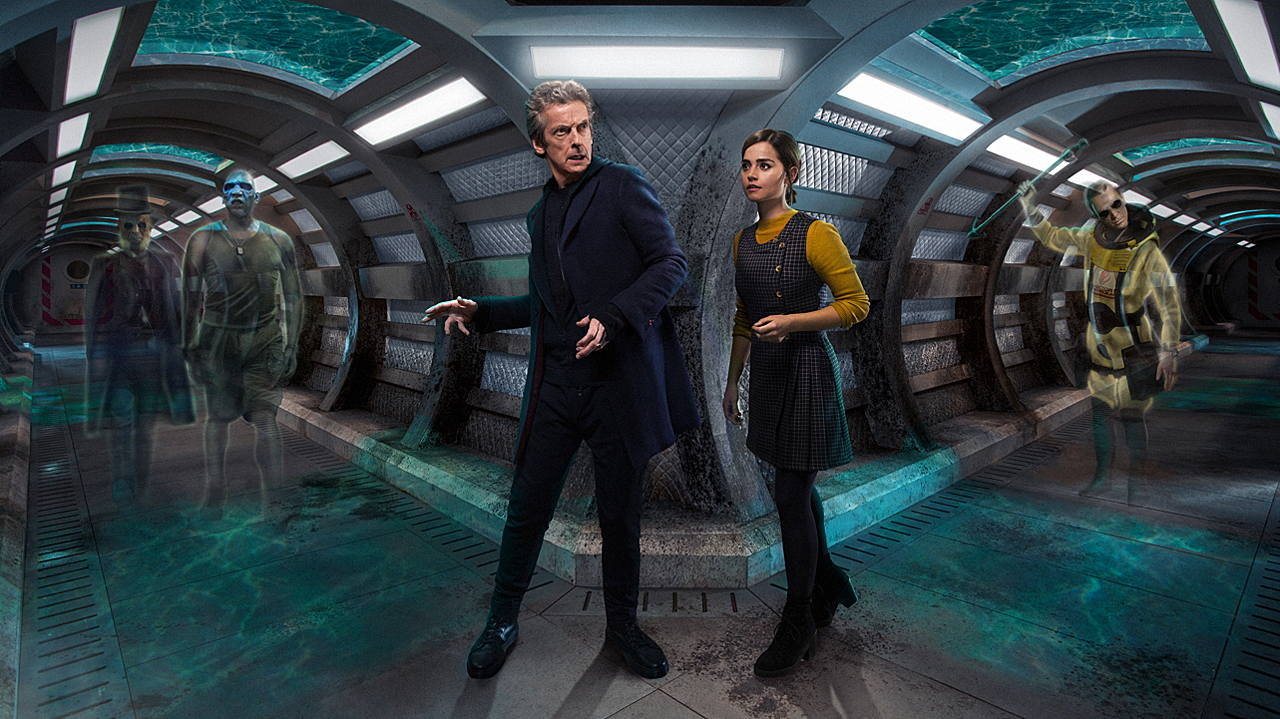
It was so exciting that, at the point of the episode where the Doctor looks at the ghosts and says "What are you?" I caught myself literally saying the same thing as the Doctor at the exact same time. He owes me a coke.
I only accept Mexican Coke, Doctor.  Fuck corn syrup.
Toby Whithouse has been rumored more than once to be the successor to Steven Moffat for when he's ready to leave the show.  Moffat has not really given any indication that he's quitting anytime soon, but Whithouse has been thought of as a natural successor.  As I've been mostly saying I just want #anyonebutgatiss, I'd be happy to see Whithouse take over.  If we think back on his few episodes he's written, there are some pretty good ones.  He brought us the fun romp of "School Reunion" where he triumphantly brought back the most popular companion(s) of the classic series.  "The God Complex" is one of the smartest episodes of its or any other season.  The worst episodes he's written, "Vampires in Venice" and "A Town Called Mercy" are really only guilty of being dull, never of being silly or stupid.  Perhaps "Vampires in Venice" was always as riveting as "Under the Lake" in Whithouse's head, and the director and cast could never fully pull off his vision.  Whithouse is, of course, also responsible for the show "Being Human," which I still need to go back and finish, but which I do highly recommend (what I've seen of it, anyway) and I've even heard positive comments about the American adaptation of it.  So, overall, I wouldn't hate it if he took over for Moffat eventually.  Him or Jamie Mathieson.  Or Neil Gaiman, but that's a pipe dream and we all know it.

Whithouse is already building his own trademarks, though, as this episode actually sees the return of a species he created for one of his previous episodes.  Remember the Tivolian from "The God Complex"?  The most invaded race in the galaxy?  The one who surrenders so easily that their planet's anthem is called "Glory to <Insert Name Here>"?  


It's like having an entire planet full of Adrics!
Yeah, in case you didn't catch it because he was speaking so fast, the Doctor did identify the first ghost in this episode as another Tivolian, and points out how odd it is for them to become violent like that, because they're known for surrendering so easily.  The Tivolian is named "Prentis," something we only know so far from press releases and credits, because he didn't speak a single time in this episode, but he's clearly meant to be a much larger character in the next episode.  Creating your own recurring species?  That sounds like someone is setting up the Doctor Who universe for some plans he has down the road when he becomes showrunner.  However, where Steven Moffat did that in the Davies era with some of his creepier monsters like the Weeping Angles, Whithouse's creation of the Tivolians seems less terrifying, and more Terry Pratchett-esque in nature.  (The girl I'm dating has me reading the Night Watch books.  I'm hooked.)

I keep trying to think up some way that this episode is going to link into larger plot arcs in the greater series, and I keep coming up with nothing.  I get the feeling this two parter is probably going to be self-contained, but then again, you never know.  Remember how much "The Rebel Flesh"/"The Almost People" felt like a self contained episode until about 30 seconds before the ending?  I keep wanting the coordinates that the ghosts are shouting out to be the coordinates to Gallifrey, but try as I might, I can't quite get that scenario to make sense in my head, and I don't think we're going there in the next episode.


In the next episode, the Doctor blindly follows the coordinates like an idiot following a GPS.
Also, I have to take a moment to acknowledge the brilliance of the Doctor's cards.  Not just a great one-off joke, but also something that really taps into who the Doctor is right now as a character.  Plus, one of them, if you freeze frame the episode, is a joke about the Fourth Doctor dropping Sarah Jane Smith off in the wrong town, something that Toby Whithouse also referenced when he brought Sarah Jane back in "School Reunion."

I also have to give Whithouse some real credit for his diversity of characters.  In "The God Complex," I was very impressed not only that he included a Muslim woman as a character, but that in an episode about religion, Islam was the only major, real-life religion actually referenced.  Whithouse gave a lot of dignity to a religious and ethnic minority that is often maligned in media, and I thought it was very refreshing.  He does that again, this time for the hearing impaired, as Cass is not only a strong and capable deaf woman, but one that the Doctor refers to as the smartest person in the room.  She's a powerful leader, and a loyal one to her people, too.  I think Whithouse should be applauded for that characterization.

I'm really curious to see what these ghosts are.  They aren't just going to be ghosts.  As the Doctor already figured out, these are not a naturally occurring phenomenon.  Someone has created this situation, and trapped these souls somehow to be used as communication tools.  The Doctor is tremendously curious right now, and his curiosity is infectious.  But, in the end, they're not going to be significantly different than other types of "ghosts" we've seen in Doctor Who, from the digitally saved consciousnesses in "Silence in the Library"/"Forest of the Dead" or even in "Dark Water"/"Death in Heaven," to the psychic impressions left behind in Amy's house in "The Pandorica Opens," to the woman trapped in time in "Hide."  The Doctor is thrilled about finally having found real "ghosts, but ultimately, these souls are somehow trapped in something that's specifically linked to this ship, and that's going to turn out to be very technological, not otherworldly.  In Doctor Who, the explanations are almost always scientific and never otherworldly (with the ambiguous exception of "The Impossible Planet"/"The Satan Pit"), although, as we were reminded back in "The Shakespeare Code," there's a thin line between science and fantasy in the Doctor Who universe.

A theme that Whithouse is playing with here, and one that I don't think is seized on enough, is the idea of the Doctor as an adrenaline junkie.  Clara's catching it, too, and it's starting to scare the Doctor, as witnessed by his little speech in the TARDIS.  But clearly, there's a sense that the Doctor is too invested in his own thrill seeking right now, and the ghost of his future self that appears at the very end of the episode suggests a Doctor that inevitably lets his addiction to adventure take him down a dark and dangerous path.  In a way, he lost his last set of companions, and I don't think he's going to take it very well if he and Clara are separated, not by choice, but by force.  The Doctor might be learning by the end of part two that he needs to slow down a little.  But while he may have to, the pace of this two-part episode doesn't have to slow down at all, and I'm excited to see where it goes from here.

When I first heard the "I want to kiss it to death" line in the trailer, it really bugged me, but I like it in context.  So in honor, here's a little X!: